



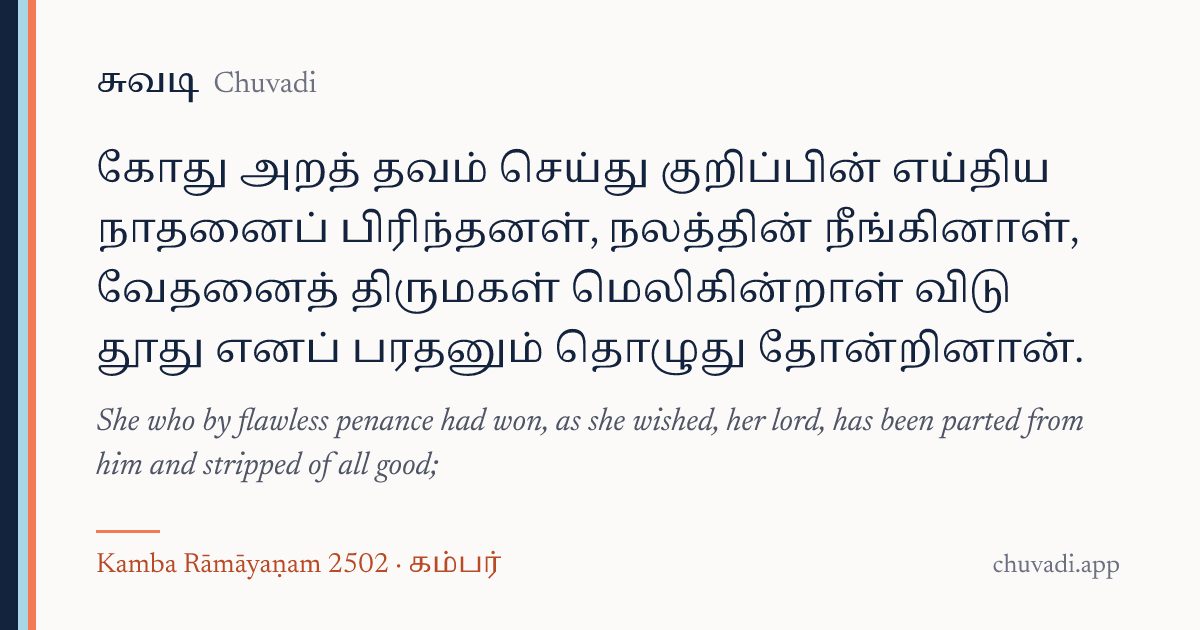
கம்பராமாயணம் 2502 · அயோத்தியா 12.53
பாடல் · The poem
Tap a word to see its gloss in the commentary and where else it occurs.
பாட வேறுபாடு · Project Madurai reads
பொருள் · Meaning in Tamil
கோது அறத் தவம் செய்து - குற்றமில்லாமல் நல்ல தவத்தைச் செய்து; குறிப்பின் எய்திய - தன் மனக்கருத்தின் வண்ணம் பெற்ற; நாதனை - தன் நாயகனை; பிரிந்தனள் - பிரிந்து; நலத்தின் நீங்கினாள் - எல்லா நன்மைகளிலிருந்தும் நீங்கிய; வேதனை மெலிகின்றாள் - துன்பத்தால் மெலிகின்ற, திருமகள் - இராச்சிய லட்சுமி; விடு தூது என - (இராமநாயகன் பால்) அனுப்பிய தூது போல; பரதனும் -; தொழுது - வணங்கி, தோன்றினான்...
பன்னெடுங்காலம் செய்த நற்றவத்தால் இராமனை அரசனாகப் பெறும் பாக்கியம் கோசல அரசுக்குக் கிடைத்தது. அது உடனே இழக்கப்பெற்றபடியால் இவ்வாறு கூறினார். மீண்டும் கோசல அரசை இராமன் ஏற்க வேண்டுதற்கு வந்தவன் பரதன் ஆதலின் “விடு தூது” எனப் பெற்றான். தற்குறிப்பேற்ற வணி.
ஆங்கிலம் · English translationAI
Translation
- She who by flawless penance had won, as she wished,
- her lord, has been parted from him and stripped of all good;
- and as if that goddess of fortune, wasting in her pain, had sent him
- as her envoy, Paratan appeared, his hands joined in worship.
What the poem says
Paratan comes into Irāmaṉ's presence with joined hands. The poet imagines him as a messenger from Tirumakaḷ, the goddess of royal fortune, who had won Irāmaṉ as her lord after long penance and then lost him at once, and is now pining away.
In other words, the kingdom of Kōcalam, which had earned the blessing of Irāmaṉ as its king, lost him immediately, and Paratan has come to beg him to take it back. The poet imagines this purpose for Paratan's coming.