



கம்பராமாயணம் 2506 · அயோத்தியா 12.57
பாடல் · The poem
Tap a word to see its gloss in the commentary and where else it occurs.
பொருள் · Meaning in Tamil
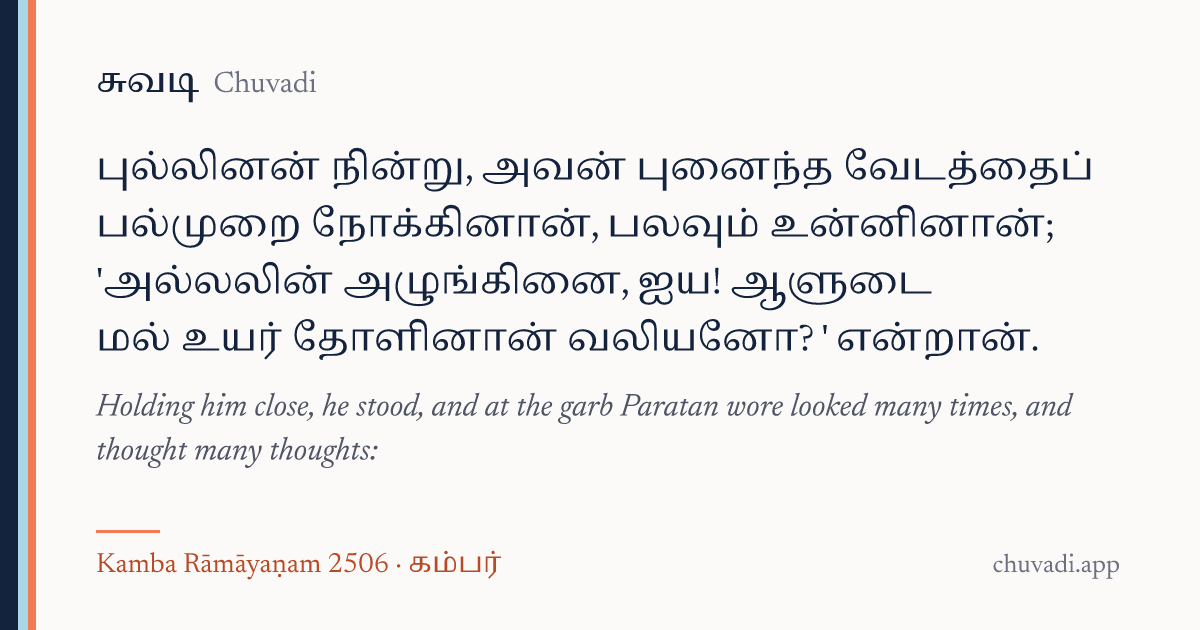
புல்லினன் நின்று - தழுவி நின்று; அவன் புனைந்த வேடத்தை - அப்பரதன் அணிந்திருந்த மரவுரியாகிய தவவேடத்தை; பல் முறை - பலமுறை; நோக்கினான் - உற்றுப் பார்த்து; பலவும் உன்னினான் - பலபடியாகக் கருதி; “ஐய! - பரதனே; அல்லலின் அழுங்கினை - துன்பத்தால் மிகவும் சோர்ந்துள்ளாய்; ஆளுடை மல் உயர் தோளினான் - ஆளுதலுடைய மற்போரிற் சிறந்த தோள் உடையவனாகிய தயரதன்; வலியனோ? - திடமாக இருக்கின்றானா?; என்றான் - என்று வினாவினான்.
பன் முறை நோக்கல், பலவும் உன்னுதல் என்பது பரதனது வேடம், துக்கம், வந்துள்ள நேரம் இவைபற்றி இராமனுக்கு எழுந்த சிந்தனைகளாம். ‘வலியனோ’ என்பது ‘நலமாக உள்ளானா’ என்ற விசாரிப்பு. இப்பொருளில் இது வருதலை, “வலிய என்றவர் கூற மகிழ்ந்தனன்” (2104) என்பது கொண்டு அறிக.
ஆங்கிலம் · English translationAI
Translation
- Holding him close, he stood, and at the garb Paratan wore
- looked many times, and thought many thoughts:
- 'You are sunk in sorrow, my dear! Is our lord
- of the mighty wrestler's shoulders, who rules us, well?' he said.
What the poem says
Still holding Paratan, Irāmaṉ looks again and again at his ascetic's dress of bark, and many thoughts pass through his mind: the bark garments, the grief, the timing of this visit.
He notes that Paratan is crushed with sorrow and asks whether their father Tacarataṉ is well. The word he uses literally means 'strong', but was an ordinary way of asking after someone's health.