



கம்பராமாயணம் 2510 · அயோத்தியா 12.61
பாடல் · The poem
Tap a word to see its gloss in the commentary and where else it occurs.
பாட வேறுபாடு · Project Madurai reads
பொருள் · Meaning in Tamil
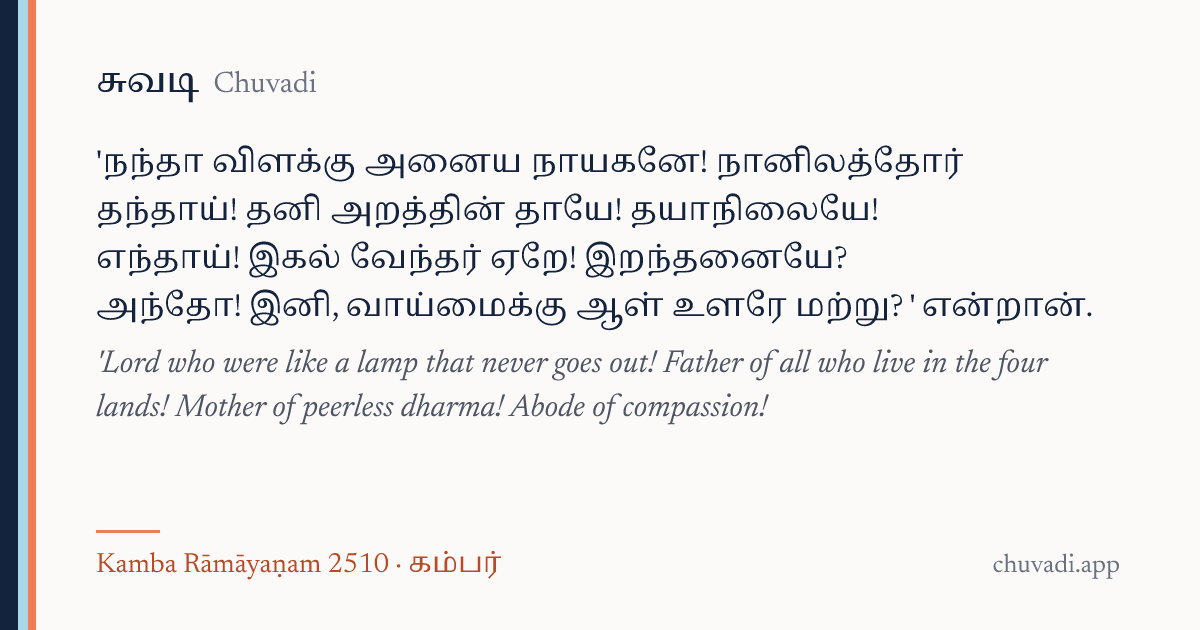
“நந்தா விளக்கு அனைய நாயகனே!” - அணையாத விளக்கைப் போல (இரவும் பகலும்) புகழோடு விளங்கிய தலைவனே!; நானிலத்தோர் - இம் மண்ணுலகில் உள்ளார்க்கு; தந்தாய்! - தந்தையொப்பவனே!; தனி அறத்தின் - ஒப்பற்ற அறம் என்னும் குழந்தைக்கு; தாயே! - (பெற்று வளர்த்த) தாயே!; தயா நிலையே! - பேரருளுக்கு இருப்பிடம் ஆனவனே!; எந்தாய் - என் தந்தையே!; இகல் வேந்தர் ஏறே! - பகையரசர்களாகிய யானைகளுக்குச் சிங்கம் போன்றவனே! இறந்தனையே - இறந்து போய் விட்டாயே; இனி வாய்மைக்கு மற்று யார் உளர்? - இனிமேல் சத்தியத்தைக் காப்பதற்கு வேறு யார் இருக்கின்றார்கள்; அந்தோ - ஐயோ;” என்றான்...
நந்தா விளக்கு - தூண்டா விளக்கு. பிறர் தூண்ட வேண்டாது எரியும் விளக்குப் போல, தன்னால் தானே புகழுடையனாய் விளங்கியவன் தயரதன். நால் நிலம் - முல்லை, குறிஞ்சி, மருதம், நெய்தல் - உலகம் இப்பகுதிக்குள் அடங்குதலின் நானிலம் எனவே உலகம் என்றாம். ஏகாரங்கள் இரக்கப் பொருளில் வந்துள்ளன.
ஆங்கிலம் · English translationAI
Translation
- 'Lord who were like a lamp that never goes out! Father
- of all who live in the four lands! Mother of peerless dharma! Abode of compassion!
- My father! Lion among warring kings! Have you died?
- Alas! Is there anyone left now to stand for truth?' he said.
What the poem says
Irāmaṉ begins his lament for his father. Tacarataṉ was like a lamp that burns without needing to be trimmed, shining by his own fame; a father to everyone in the four kinds of land that make up the world; a mother who bore and raised dharma.
With him gone, Irāmaṉ asks, who is left to uphold truth? Tacarataṉ died rather than break his word. The repeated vocatives are cries of grief.