



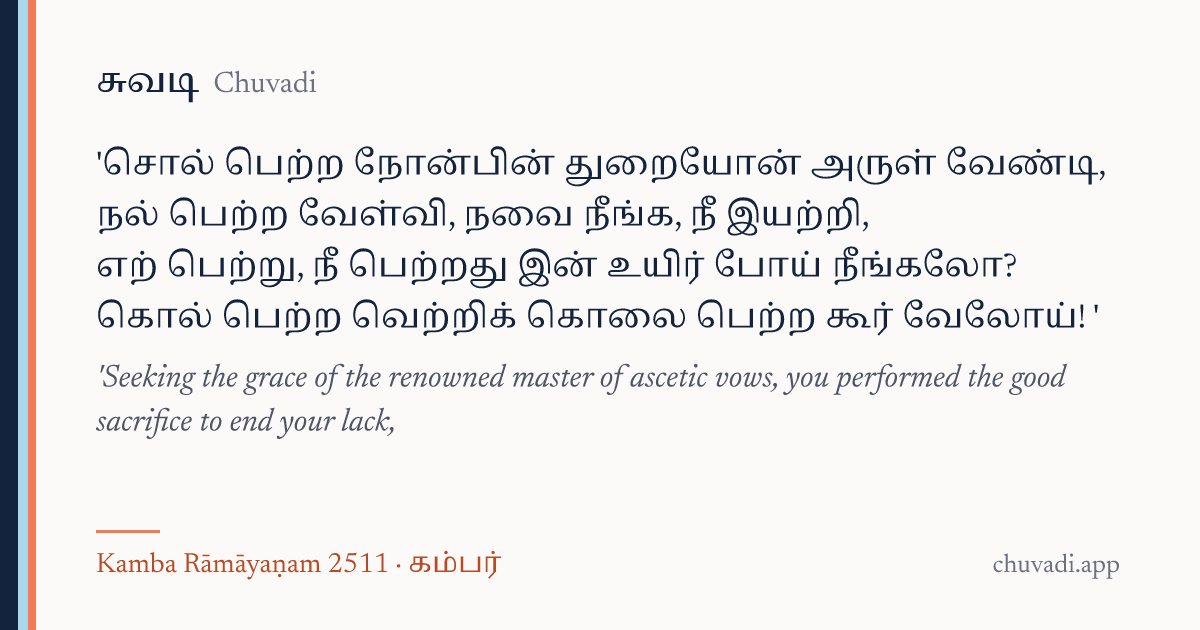
கம்பராமாயணம் 2511 · அயோத்தியா 12.62
பாடல் · The poem
Tap a word to see its gloss in the commentary and where else it occurs.
பொருள் · Meaning in Tamil
“கொன் பெற்ற - அச்சம் தருதலை உடைய; வெற்றிக் கொலை பெற்ற - தமக்கு வெற்றி உண்டாகும் கொலைத் தொழிலை உடைய; கூர் வேலோய் - கூரிய வேற்படையை உடைய தயரதனே; சொல்பெற்ற - புகழ் உடைய; நோன்பின் துறையோன் - தவத்துறையில் சிறந்த கலைக்கோட்டு முனிவனது; அருள் வேண்டி - கருணையை வேண்டிப்பெற்று; நல் பெற்ற வேள்வி - நல்ல புத்திர காமேஷ்டியோடு கூடிய பரிமேத வேள்வியை; நவை நீங்க - பிள்ளை இல்லாக் குறை தீர; நீ இயற்றி - நீ செய்து; என்பெற்று - என்னை மகனாகப் பெற்று; நீ பெற்றது - நீ அடைந்த பயன்தான்; இன் உயிர் போய் நீங்கலோ? - இனிய உயிர் போய் இறக்கப் பெறுதல்தானோ?
சொல் - புகழ். கலைக்கோட்டு முனிவரை அரிதின் கொண்டுவந்து வேள்வி இயற்றி இராமனைப் பெற்றானாதலின் இங்ஙனம் கூறப்பெற்றான். மக்களைப் பெற்று மகிழ எண்ணியவன் அம்மக்களைப் பிரிந்த துன்பத்தாலே உயிர் போகப் பெறுதலால் இரக்கம் பெரிதாயிற்று. தயரதன் இறப்புக்குத் தானே காரணமானோம் என்று இராமன் இரங்கினன். கொன் - அச்சம், பெருமை எனப் பொருள்படும். உரிச்சொல் - இனி, கொல் பெற்ற எனில் கொலையாம், பின்னரும் கொலைபெற்ற என வருதலின் அங்ஙனம் பிரித்தல் ஏலாதாம். வேள்வியால் மக்கள் நால்வர் தயரதனுக்கு உளர் ஆயினும் தயரதன் இறப்புக்கு இராமன் து ஒன்றே காரணம் ஆதலின் “எற்பெற்று” என்று கூறியதாகக் கருதுக.
ஆங்கிலம் · English translationAI
Translation
- 'Seeking the grace of the renowned master of ascetic vows,
- you performed the good sacrifice to end your lack,
- and got me; and what you got from it is that your sweet life has left you?
- You of the sharp spear, dread-inspiring, triumphant in slaughter!'
What the poem says
Irāmaṉ blames himself for his father's death. Tacarataṉ had no son until, with great effort, he brought the famous ascetic Kalaikkōṭṭu Muṉivaṉ to perform the sacrifice for offspring. Irāmaṉ was born of it, and now all the king has got from having him is death through grief at his departure.
Four sons were born of the sacrifice, but Irāmaṉ says 'having got me' because his exile alone caused the king's death. The commentary takes the opening word as one meaning 'dread' or 'greatness' rather than 'killing', since killing is mentioned again later in the same line.