



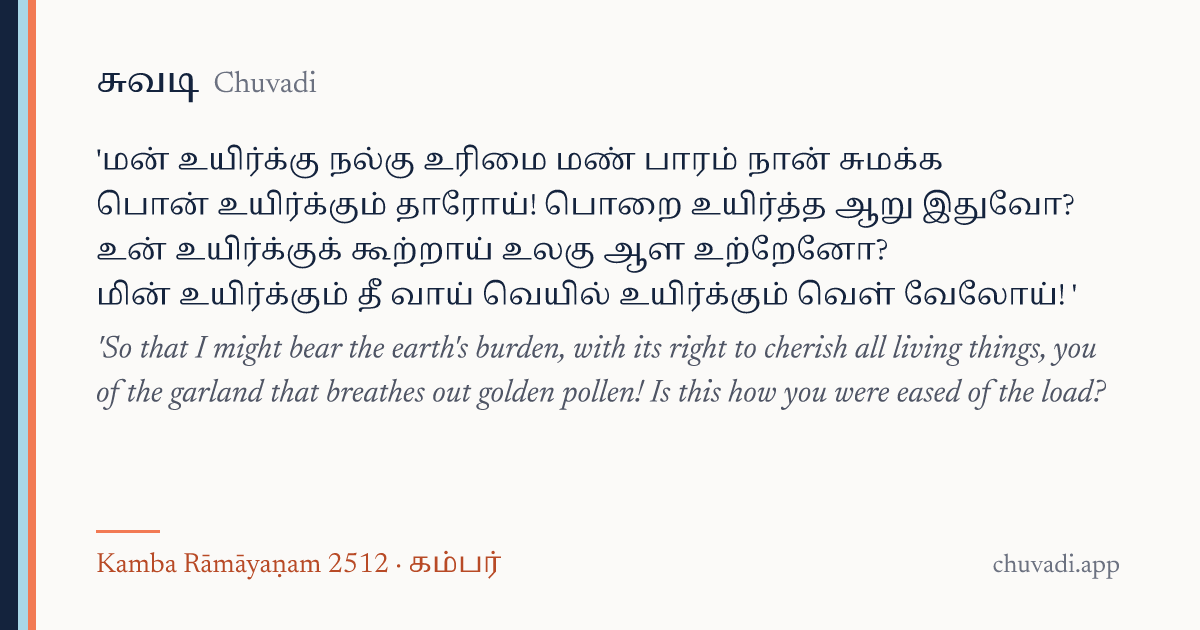
கம்பராமாயணம் 2512 · அயோத்தியா 12.63
பாடல் · The poem
Tap a word to see its gloss in the commentary and where else it occurs.
பொருள் · Meaning in Tamil
“பொன் உயிர்க்கும் தாரோய்! - பொன் மயமான தாதுக்களை உதிர்க்கும் பூமாலையை அணிந்தவனே!; மின் உயிர்க்கும் - ஒளி வீசுகிற; தீ வாய் - நெருப்பு சிந்தும் வாயினை உடைய; வெயில் உயிர்க்கும் - சூரியன் ஒளி சிந்துகிற; வெள் - வெண்மையான; வேலோய்! - வேலை உடைய தயரதனே; மன் உயிர்க்கு - நிலை பெற்ற எல்லா உயிர்களுக்கும்; நல்கு உரிமை - அருள் செய்கிற உரிமையுடைய; மண் பாரம் - (உன்) அரசாட்சி என்கிற சுமையை; நான் சுமக்க - நான் ஏற்றுக்கொள்ள; பொறை - அப்பூமி பாரம்; (நீ நீங்கி) உயிர்த்த ஆறு இதுவோ? - இளைப்பாறிய விதம் இது தானோ?; உன் உயிர்க்குக் கூற்றாய் - உன் உயிர்க்கு யமனாக; உலகு ஆள உற்றேனோ - உலகத்தை ஆளப் பிறந்தேனோ?
“அரும்பொறை இனிச் சிறிது ஆற்ற ஆற்றலேன்” எனவும், “வியல் இடப் பெரும் பரம் விசித்த தொய்யல் மாநிலச் சுமை உறு சிறை துறந்து” எனவும், (1328, 1374) முன்னர் உரைத்தலின் “பொறை உயிர்த்த ஆறு இதுவோ” என்று இங்கு இராமன் புலம்பியதாகக் கூறினார். இராமனை அரசனாக அறிவித்த பிறகே தயரதன் இறப்பு முதலிய இவ்வளவும் ஆயிற்றாதலின், ‘உன் உயிர்க்குக் கூற்றாய் உலகு ஆள உற்றேனோ’ என்று இராமன் புலம்பினன். இராமனுக்கு வந்த துயரங்களுக்குப் பரதன், தானே காரணம் என்று வருந்தியது போல, தயரதன் இறப்புக்குத் தானே காரணம் என்று இராமன் வருந்தினனாதல் கண்கூடு. “ஓ” இரக்கக் குறிப்பு.
ஆங்கிலம் · English translationAI
Translation
- 'So that I might bear the earth's burden, with its right to cherish all living things,
- you of the garland that breathes out golden pollen! Is this how you were eased of the load?
- Did I set out to rule the world by becoming Death to your life,
- you of the bright spear whose fiery tip breathes lightning and breathes sunlight?'
What the poem says
Irāmaṉ recalls that his father had said he could no longer bear the weight of the kingdom and longed to lay it down, which was why he planned to crown Irāmaṉ. Is this, Irāmaṉ asks bitterly, how he was relieved of the load: by dying?
Everything began when Tacarataṉ named Irāmaṉ king, so Irāmaṉ feels that in accepting the crown he became Death to his own father. Just as Paratan blamed himself for Irāmaṉ's sorrows, Irāmaṉ blames himself for his father's death.