



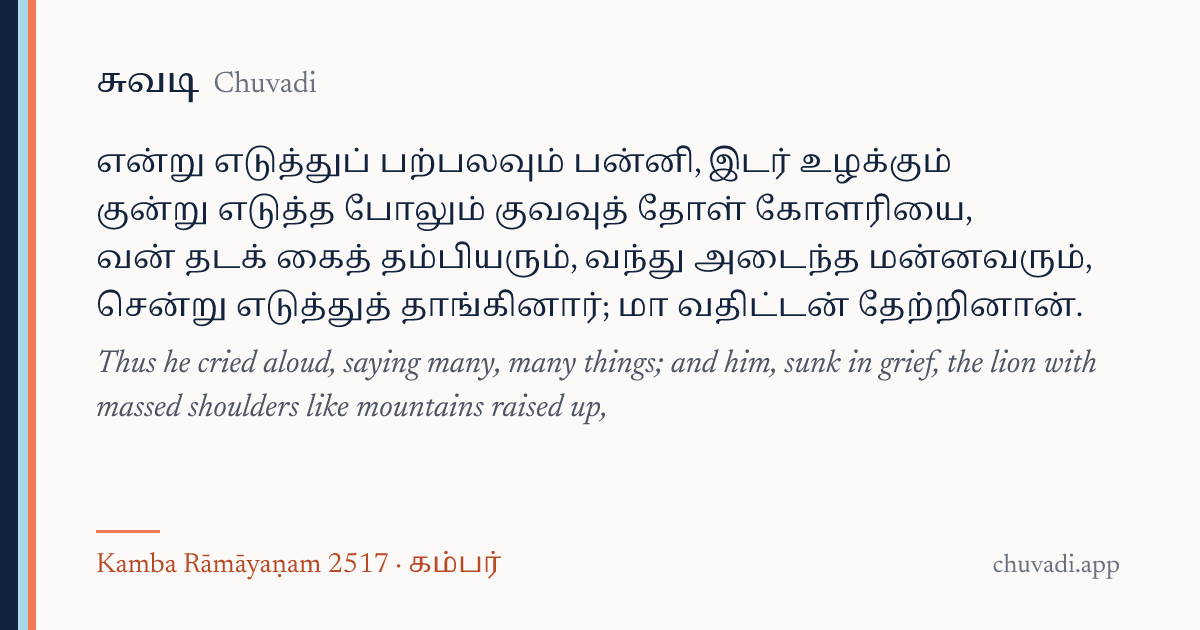
கம்பராமாயணம் 2517 · அயோத்தியா 12.68
பாடல் · The poem
Tap a word to see its gloss in the commentary and where else it occurs.
பொருள் · Meaning in Tamil
என்று எடுத்துப் பற்பலவும் பன்னி - என்று மிகுந்த குரலாற் பல பலவார்த்தைகளையும் திரும்பத் திரும்பப் பலமுறை சொல்லி; இடர் உழக்கும் - துன்பத்தில் மூழ்கியுள்ள; குன்று எடுத்த போலும் குவவுத் தோள் கோளரியை - மலையைத் தூக்கி நிறுத்தினாற் போலும் திரண்ட தோள்களையுடைய சிங்கம் போன்ற இராமனை; வன்தடக்கைத் தம்பியரும் - வலிய பெரிய கைகளை உடைய தம்பிமார் மூவரும்; வந்து அடைந்த மன்னவரும் - (அங்கு) வந்து சேர்ந்த அரசர்களும்; சென்று - நெருங்க; எடுத்து - தூக்கி அணைத்து; தாங்கினார் - பரிகரித்தார்கள்; மா வதிட்டன் - பெருமையுடைய வசிட்ட முனிவன்; தேற்றினான் - தேறுதல் வார்த்தைகளைக் கூறினான்.
வசிட்டன் - இந்திரியங்களை வசப்படுத்தியவன், ஞானத்திற் குடி கொண்டவன், பிரம ஒளி மிக்கவன் என்று பொருள். மன்னர்கள் பின் வந்து சேர்ந்தனர் என்பதை “வந்து அடைந்த மன்னவர்” என்பதனால் அறியலாம்.
ஆங்கிலம் · English translationAI
Translation
- Thus he cried aloud, saying many, many things; and him, sunk in grief,
- the lion with massed shoulders like mountains raised up,
- his strong, long-armed younger brothers and the kings who had arrived
- went to and lifted and held up; and the great Vatiṭṭaṉ consoled him.
What the poem says
Irāmaṉ's lament ends. His three brothers and the kings who have now arrived from the army lift him up and support him, and the great sage Vatiṭṭaṉ, the family priest, begins to comfort him.
The sage's name is explained as one who has mastered his senses, who dwells in wisdom and shines with holy radiance. The phrase 'the kings who had arrived' shows that they came up after Paratan.