



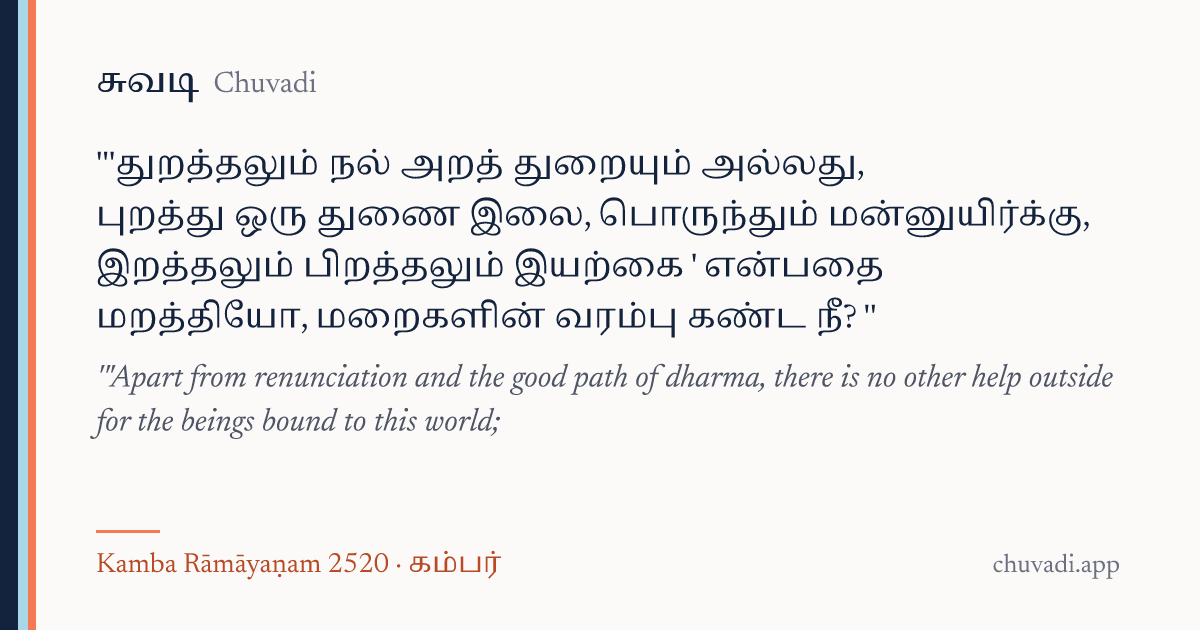
கம்பராமாயணம் 2520 · அயோத்தியா 12.71
பாடல் · The poem
Tap a word to see its gloss in the commentary and where else it occurs.
பொருள் · Meaning in Tamil
“மறைகளின் வரம்பு கண்ட நீ - வேதங்களின் எல்லையை அளவிட்டறிந்த நீ; பொருந்தும் மன்னுயிர்க்கு - (உலகத்தில்) பொருந்திய நிலைபெற்ற உயிர்களுக்கு; “இறத்தலும் பிறத்தலும் இயற்கை” - மரணம், சனனம் இரண்டும் இயல்பே; துறத்தலும் - துறவற நெறியில் சேர்தலும்; நல் அறத் துறையும் - அறத்தாற்றின் இல்வாழ்க்கை நடத்தலும்; அல்லது - அல்லாமல்; புறத்து - வெளியே; ஒரு துணை இல்லை - வேறு ஒரு துணையும் இல்லை; என்பதை - என்கின்ற செய்தியை; மறத்தியோ - மறந்துவிட்டாயோ,
பிறத்தல் இறத்தல் இயற்கை ஆதலின், தயரதன் இறந்ததுபற்றி வருந்தல் வேண்டா. உயிர்க்குத் துணை அறவழியில் இல்லறம் ஆற்றல், அல்லது துறவறம் ஆதலின் அறவழியில் அரசாட்சி நடத்தி விண்ணுலகு சென்று இன்பம் துய்க்கும் தயரதன்பற்றி வருந்தல் வேதங்களை நன்குணர்ந்த உனக்குக் கூடாது என்று வசிட்டன் இராமனுக்கு எடுத்துக்கூறினான். வீடுபேற்றுக்குச் சிறந்த வழியாதலின் துறவு முற்கூறப்பட்டது. “ஓ” காரம் வினாப்பொருட்டு.
ஆங்கிலம் · English translationAI
Translation
- '"Apart from renunciation and the good path of dharma,
- there is no other help outside for the beings bound to this world;
- dying and being born are the way of nature": this
- would you forget, you who have seen to the bounds of the Vedas?'
What the poem says
Vatiṭṭaṉ reminds Irāmaṉ of what he already knows from the Vedas. Birth and death are simply the nature of things, and the only true support a soul has is renunciation or a righteous householder's life.
Tacarataṉ ruled justly and has gone to enjoy heaven, so a man as learned as Irāmaṉ should not grieve for him. Renunciation is named first because it is the surer road to liberation.