



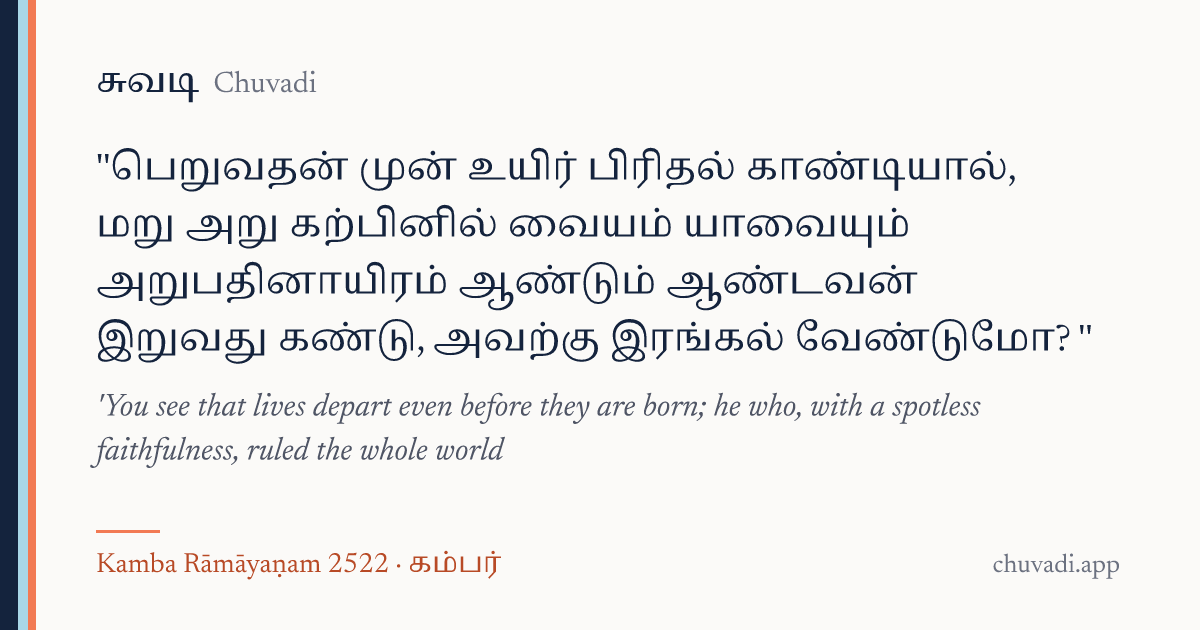
கம்பராமாயணம் 2522 · அயோத்தியா 12.73
பாடல் · The poem
Tap a word to see its gloss in the commentary and where else it occurs.
பொருள் · Meaning in Tamil
“பெறுவதன் முன் - தாய் ஈனுவதற்கு முன்பாகவே; உயிர் பிரிதல் - சில உயிர்கள் உடல் விட்டு நீங்கி இறப்பதை; காண்டி - பார்க்கின்றாய்; (அங்ஙனமாக) வையம் யாவையும் மறு அறு கற்பினில் - இந்த உலகம் எல்லாவற்றையும் குற்றமற்ற கற்பினால்; அறுபதினாயிரம் ஆண்டும் ஆண்டவன் - அறுபதினாயிரம் ஆண்டுகள் அரசாண்ட சக்கரவர்த்தி; இறுவது கண்டு - இறத்தலைப் பார்த்து; அவற்கு - அவன்பொருட்டு; இரங்கல் வேண்டுமோ - மனம் வருந்த வேண்டுமோ? (வேண்டாம் என்றபடி)
பிறக்கும்போதே இறக்கும் தன்மை உடைய உயிர் அறுபதாயிரம் ஆண்டுகள் புகழோடு ஆண்டு பின்னர் இறப்பதற்கு மகிழ வேண்டுமே அன்றி வருந்துதலா செய்வது என்றான். ‘ஆல்’ தேற்றப்பொருள். “பீட்பிதுக்கிப் பிள்ளையைத் தாய் அலறக் கோடலான்” என்று (நாலடி. 20.) வருவது காண்க. வையத்தைக் கற்பினால் ஆளுதலாவது பிற வேந்தர்க்கும் பூமி பொதுவாகாமல் தன்னொருவனுக்கே உரியதாக ஆளுதலாம். ‘ஓ’ வினா.
ஆங்கிலம் · English translationAI
Translation
- 'You see that lives depart even before they are born;
- he who, with a spotless faithfulness, ruled the whole world
- for sixty thousand years — seeing him
- come to his end, must one grieve for him?'
What the poem says
Some lives end even in the womb, as a line of the Nālaṭiyār observes. So when a king has ruled gloriously for sixty thousand years and then dies, there is reason to rejoice rather than mourn.
Tacarataṉ ruled the earth 'with chastity': the earth was his alone, like a faithful wife, and was never shared with any other king.