



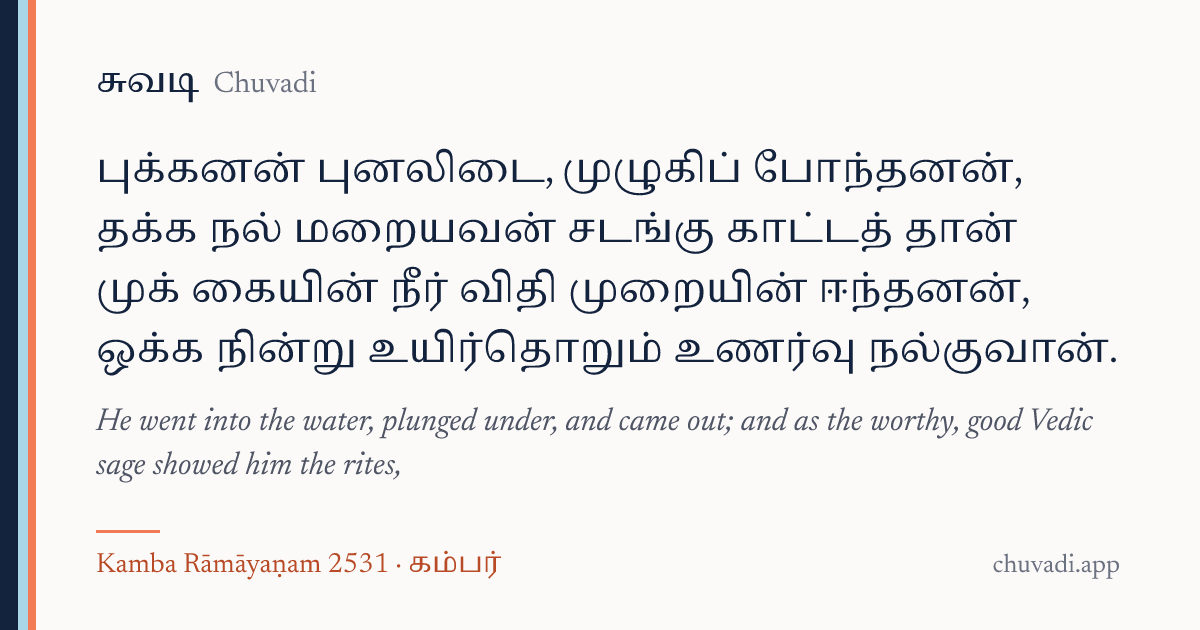
கம்பராமாயணம் 2531 · அயோத்தியா 12.82
பாடல் · The poem
Tap a word to see its gloss in the commentary and where else it occurs.
பாட வேறுபாடு · Project Madurai reads
பொருள் · Meaning in Tamil
உயிர்தொறும் - எல்லா உயிர்களிடத்தும்; ஒக்க நின்று - ஒரு தன்மையாக உள்ளிருந்து; உணர்வு நல்குவான் - அவற்றிற்கு உணரும் தன்மையை அருளுபவனாகிய (பரம்பொருள்) இராமன்; புனலிடை புக்கனன் - நதிநீரிற் புகுந்து; முழுகி - நீராடி; போந்தனன் - வெளியேறி; தக்க நல் மறையவன் - சிறந்த நல்ல வேதங்களை உணர்ந்தவனாகிய வசிட்டன்; சடங்கு காட்ட - செய்ய வேண்டிய சிறந்த கிரியைகளை வழிப்படுத்த; தான் -; முக்கையின் நீர் - கையினால் மூன்றுமுறை முகந்து எடுத்துவிடும் தருப்பண நீரை; விதிமுறையின் - நூல்களில் விதித்த முறைப்படி; ஈந்தனன் - (தன் தந்தையை நினைத்து) கொடுத்தான்.
எல்லா உயிர்களுக்கும் உள்ளுறைந்து உணர்வு தரும் பரம்பொருள், இராமன் என இப்போது மானுட வேடத்தில் வந்தான் ஆதலின் அதற்கேற்ப வேதவிதிப்படி சடங்குகள் காட்டத் தருப்பணம் செய்த தந்தையை வழிபட்டான் என்பதாம்.
ஆங்கிலம் · English translationAI
Translation
- He went into the water, plunged under, and came out;
- and as the worthy, good Vedic sage showed him the rites,
- he offered, by the rule, water taken up three times in his hands:
- he who dwells alike in every living being and grants it awareness.
What the poem says
Irāmaṉ bathes in the river and, guided by Vatiṭṭaṉ, offers his father the libation of water scooped up three times in his joined hands, as the scriptures prescribe.
The poet reminds us who is performing this humble rite: the Supreme Being who lives within every creature and gives it consciousness. Because he has taken human form, he follows the human rules of mourning.