



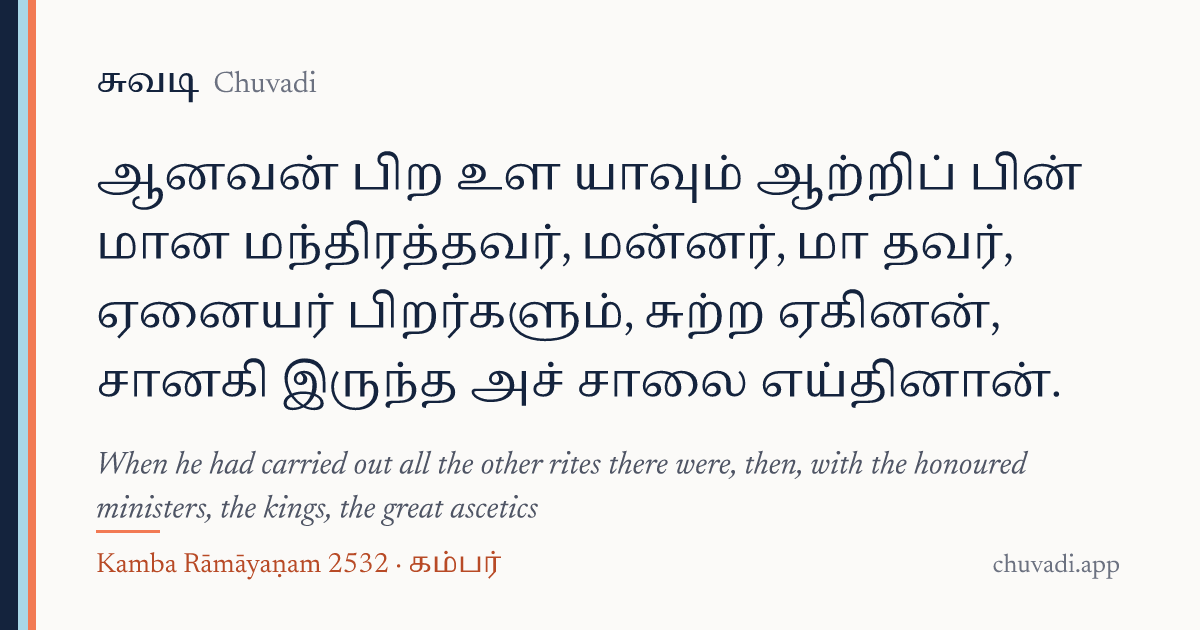
கம்பராமாயணம் 2532 · அயோத்தியா 12.83
பாடல் · The poem
Tap a word to see its gloss in the commentary and where else it occurs.
பொருள் · Meaning in Tamil
ஆனவன் - தருப்பணம் செய்தவனான இராமன்; பிற உள யாவும் ஆற்றி - வேறு பிண்டம் அளித்தல் முதலாக உள்ள சடங்குகளையும் செய்து முடித்து; பின் - பிறகு; மான மந்திரத்தவர் - பெருமை படைத்த மந்திரிகளும்; மன்னர் - அரசரும்; மா தவர் - பெரிய முனிவர்களும்; ஏனையர் பிறர்களும் - மற்றும் உள்ளவர்களும்; சுற்ற - தன்னைச் சுற்றிவர; ஏகினன் - சென்று; சானகி இருந்த அச்சாலை - சீதா பிராட்டி இருந்த அந்தக் குடிலை; எய்தினான் - அடைந்தான்.
“பிற உள” என்பது நீர்க்கடன் செய்த பின்னர் அளிக்கப்படுவதாகிய பிண்டம் முதலியவற்றைக் குறிக்கும். இராமன் தயரதனின் மூத்த மகனாதலின் இறந்த முதல் நாள் தொட்டுப் பதின்மூன்றாம் நாள்வரை செய்யத் தகும் கருமங்கள் அனைத்தும் செய்ய வேண்டியவனாவான் என்பதுபற்றி இவ்வாறு கூறினார். மான - பெருமை. “மானம் நோக்கின் கவரிமா அனைய நீரார்” என்று (1319) மந்திரப் படலத்துள் அமைச்சரைக் கூறியது காண்க. ஏனையர் என்பது தன்னோடு தொடர்புடையாரையும், பிறர்களும் என்பது தொடர்பில்லாதவர்களையும் குறித்ததாகக் கொள்க; பலரும் சுற்ற என்பது கருத்து. நீர்க்கடன் முதலிய செய்த பின்னரே சீதை இருந்த இடத்துக்குச் செல்கின்றான் என்று கம்பர் கூறியது ஈண்டுக் கருதி உணரத்தக்கது.
ஆங்கிலம் · English translationAI
Translation
- When he had carried out all the other rites there were, then,
- with the honoured ministers, the kings, the great ascetics
- and all the others besides around him, he went on
- and reached the hut where Cāṉaki was.
What the poem says
As the eldest son, Irāmaṉ must perform the full series of funeral rites from the first to the thirteenth day, including the offering of rice balls to the dead. He completes them all.
Only then, surrounded by ministers, kings, sages and everyone else, does he return to the hut where Cītai, called here Cāṉaki, daughter of Caṉakaṉ, has been waiting. The commentary notes that the poet takes care to have him finish the rites before going to her.