



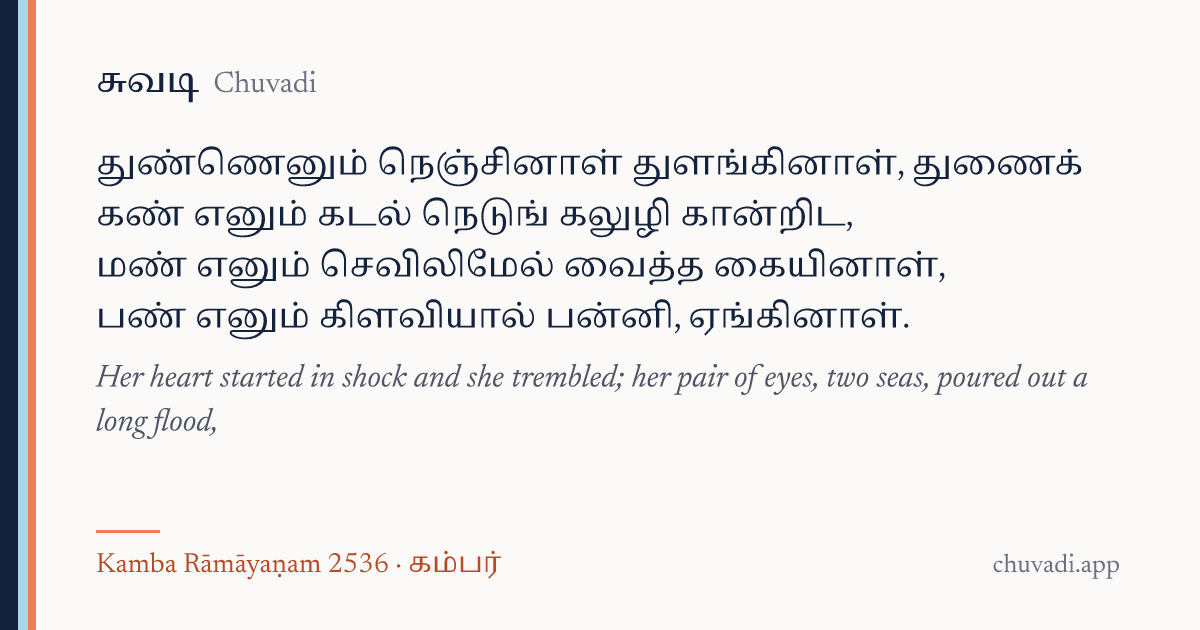
கம்பராமாயணம் 2536 · அயோத்தியா 12.87
பாடல் · The poem
Tap a word to see its gloss in the commentary and where else it occurs.
பொருள் · Meaning in Tamil
(அதுகேட்ட சீதை) துண்ணெனும் நெஞ்சினாள் - திடுக்கிட்ட மனம் உடையவளாய்; துளங்கினாள் - நடுங்கி; துணைக் கண் எனும் கடல் - இரண்டாகிய கண்கள் எனும் கடல்; நெடுங் கலுழி கான்றிட - நீண்ட கண்ணீர் வெள்ளத்தைக் கக்க; மண் எனும் செவிலி மேல் வைத்த கையினாள் - பூமி என்கிற செவிலித்தாயின்மேல் வைத்த கைகளை உடையவளாய்; பண் எனும் கிளவியால் - இசைப்பாடல் என்று சொல்லத்தக்க சொற்களால்; பன்னி - பலபடியாகப் புலம்பி; ஏங்கினாள் - வருந்தினாள்.
இதுவரை துயரம் என்பது இன்னதென அறியாதவள் ஆதலின், தயரதன் இறந்த செய்தி கேட்டுத் திடுக்குற்றாள் என்க. கண்ணைக் கடல் எனவும் கண்ணீரைக் கலங்கல் எனவும் உருவகித்தார். நிலத்தில் கையூன்றி வருந்தினாள் என்பதனை நிலம் என்னும் செவிலித்தாய்மேல் வைத்த கையினாள் எனத் தற்குறிப்பேற்றமாகக் கூறினார்.
ஆங்கிலம் · English translationAI
Translation
- Her heart started in shock and she trembled; her pair
- of eyes, two seas, poured out a long flood,
- and with her hands resting on her nurse, the earth,
- she lamented in words like music, and wept.
What the poem says
Cītai has never known real sorrow, so the news of her father-in-law's death shocks her. She trembles, floods of tears pour from her eyes, and she laments in a voice that sounds like song.
She props herself on the ground with her hands. The poet makes this the gesture of a girl leaning on her nurse: the earth, from which Cītai was born, is her foster-mother.