



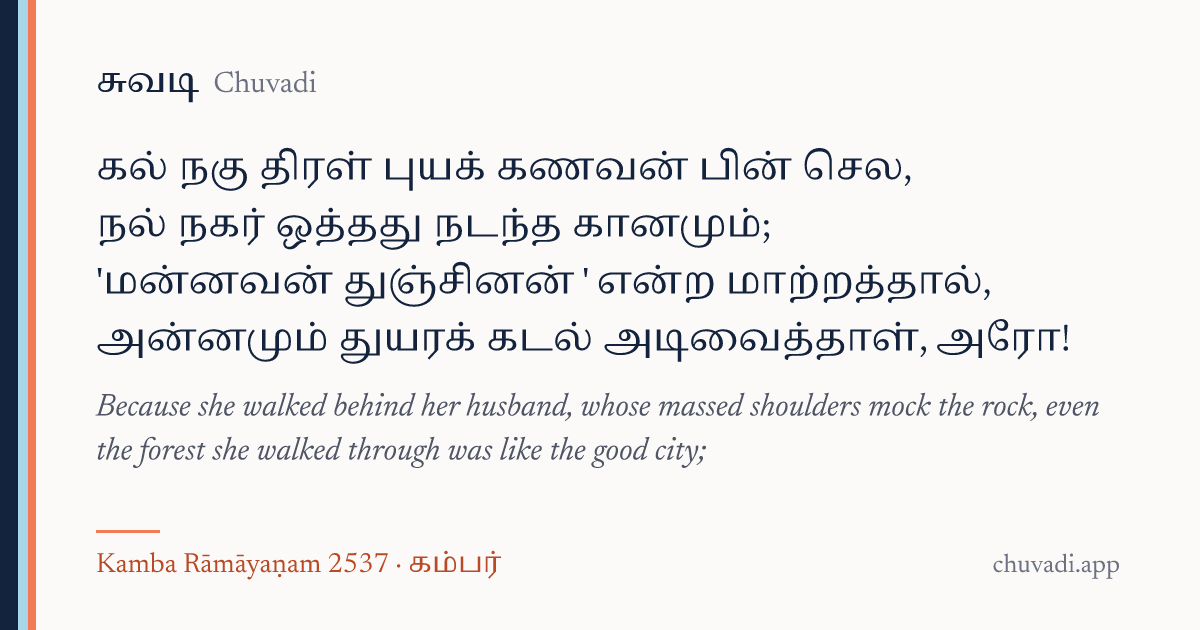
கம்பராமாயணம் 2537 · அயோத்தியா 12.88
பாடல் · The poem
Tap a word to see its gloss in the commentary and where else it occurs.
பொருள் · Meaning in Tamil
கல் நகு - கல்லை இகழ்கிற; திரள் புயக் கணவன் - திரண்ட தோளை உடைய கணவனாகிய இராமன்; பின் செல - பின்னே செல்லுதலால்; நடந்த கானமும் - சீதை நடந்து சென்ற காடும்; நல் நகர் ஒத்தது - (அவளுக்குத் துயரைத் தராமல்) நல்ல அயோத்தி நகரைப் போலவே இருந்தது; (இப்போது) “மன்னவன் துஞ்சினன்” என்ற மாற்றத்தால் - தயரதன் இறந்தான் என்ற வார்த்தையால்; அன்னமும் - சீதையும்; துயர்க்கடல் - துக்கம் என்ற கடலில்; அடி வைத்தாள் - கால் வைத்து நடக்கத்தொடங்கியவள் ஆனாள்.
இராமனுடன் சென்ற காரணத்தால் காடு புகுந்தும் துயரை அறியாமல் இருந்தவள், தயரதன் இறந்தான் என்று கேட்டபோது முதன்முதலில் துன்பம் என்பது இன்னதென அறிந்தாள் என்பதை இவ்வாறு கூறினார். ‘அரோ’ - அசை.
ஆங்கிலம் · English translationAI
Translation
- Because she walked behind her husband, whose massed shoulders mock the rock,
- even the forest she walked through was like the good city;
- but at the words 'The king is dead',
- she too, the swan, set foot in the sea of sorrow.
What the poem says
So long as Cītai walked behind her husband, the forest was as pleasant to her as Ayōttī itself, and she knew no hardship there.
Now, at the news of the king's death, she steps for the first time into the sea of sorrow. The poet calls her a swan, a conventional image for a graceful woman.