



கம்பராமாயணம் 2539 · அயோத்தியா 12.90
பாடல் · The poem
Tap a word to see its gloss in the commentary and where else it occurs.
பொருள் · Meaning in Tamil
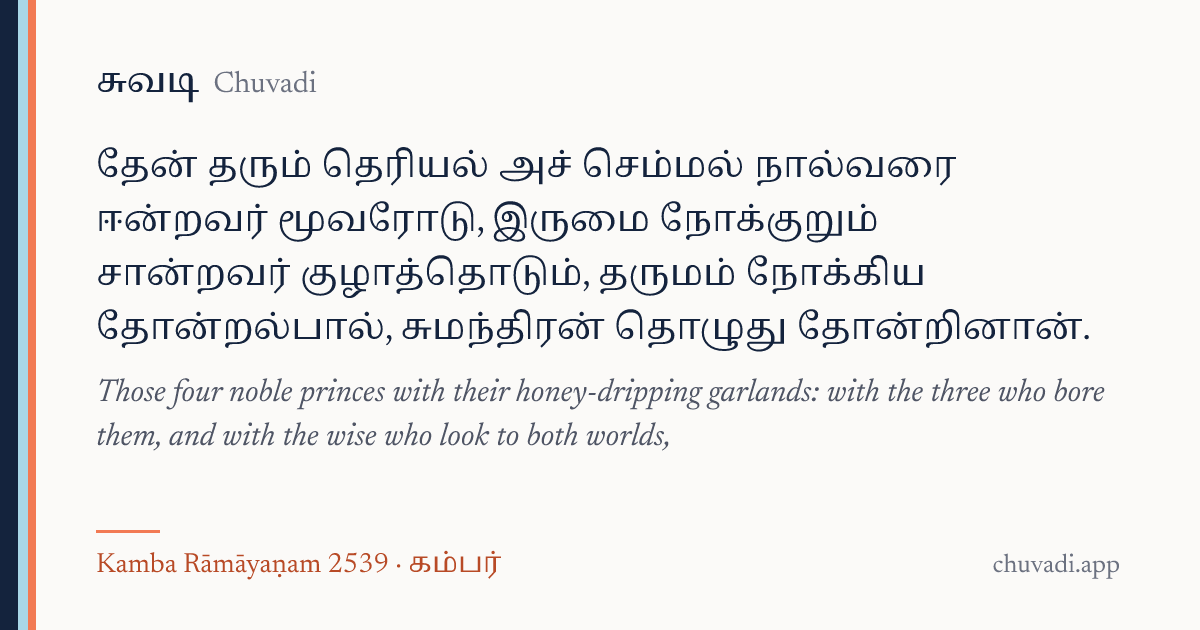
தேன் தரும் தெரியல் - தேனைச் சொரிகின்ற பூமாலை அணிந்த; அச்செம்மல் நால்வரை - அத்தலைமைப்பாடு உடைய இராமன், இலக்குவன், பரதன், சத்துருக்கனன் என்ற நான்கு பிள்ளைகளையும்; ஈன்றவர் மூவரோடு - பெற்ற தாயராகிய கோசலை, சுமித்திரை, கைகேயி என்ற மூவரோடும்; இருமை நோக்குறும் - இம்மை மறுமை என்னும் இரண்டையும் ஆராய்ந்து அறிகின்ற, சான்றவர் குழாத்தொடும் - பெரியோர் கூட்டத்தோடும்; தருமம் நோக்கிய தோன்றல் பால் - எப்பொழுதும் தருமத்தையே சிந்தித்துப்பார்த்திருக்கும் இராமன் இருக்குமிடத்தில்; சுமந்திரன் -; தொழுது தோன்றினான் - வந்து வணங்கினான்.
“இருமை வகை தெரிந்து ஈண்டு அறம் பூண்டார்” என்பதனுள், (குறள். 23.) பரிமேலழகர் உரைத்தவாறு ‘பிறப்பு வீடு என்னும் இரண்டனது துன்ப வின்பத் தன்மைகளை ஆராய்ந்து அறிகிற’ எனப் பொருள் உரைப்பினும் அமையும். சுமந்திரன் தயரதனுக்கு முதல் அமைச்சனாய் இருந்து மூத்தோன் ஆயினும் இராமன் அரசன் ஆதலின் தொழுதல் முறை என்க. நால்வரை, மூவர், இருமை என நான்கு, மூன்று, இரண்டு என்ற எண்கள் தொடர்ந்து வந்தது ஒரு நயம்.
ஆங்கிலம் · English translationAI
Translation
- Those four noble princes with their honey-dripping garlands:
- with the three who bore them, and with the wise who look to both worlds,
- a whole company of them, before the prince whose eyes are on dharma
- Cumantiraṉ appeared, bowing in worship.
What the poem says
The old minister Cumantiraṉ arrives, bringing the three queens, Kōcalai, Cumittirai and Kaikēyi, who bore the four princes, along with a group of wise elders who weigh this world and the next. Though he is older and was Tacarataṉ's chief minister, he bows to Irāmaṉ, because Irāmaṉ is now the king.
The poet slips a small pattern into the verse: the numbers four, three and two appear one after another.