



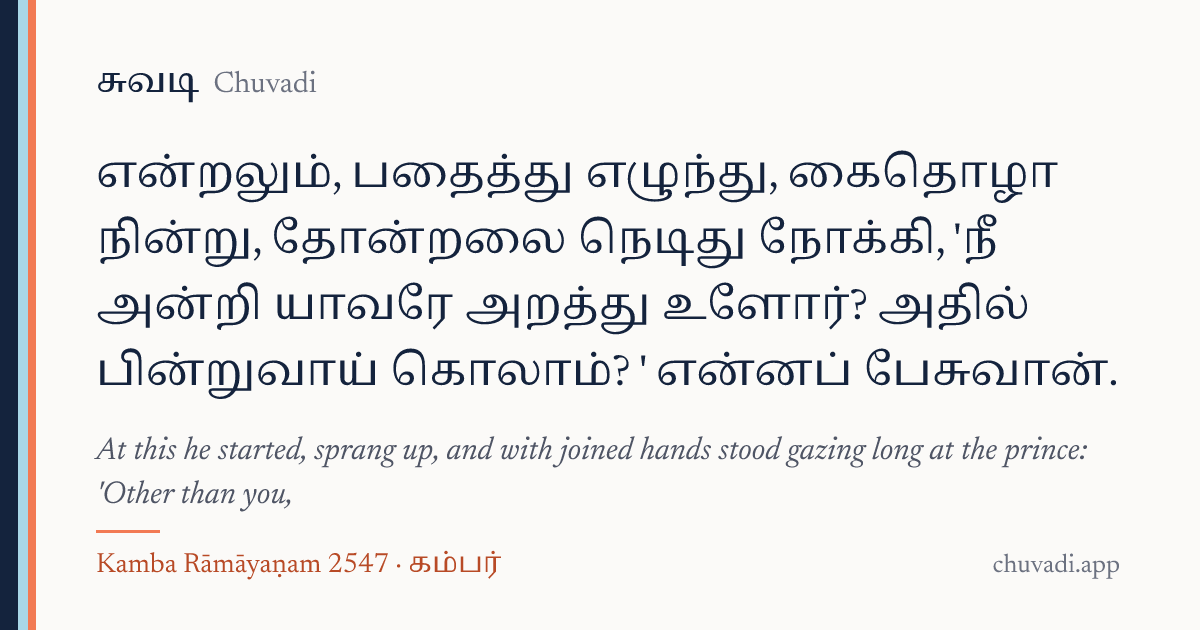
கம்பராமாயணம் 2547 · அயோத்தியா 12.98
பாடல் · The poem
Tap a word to see its gloss in the commentary and where else it occurs.
பொருள் · Meaning in Tamil
என்றலும் - என்று இராமன் கேட்டவளவில் (பரதன்); பதைத்து - துடித்து; எழுந்து -; கை தொழா நின்று - கைகூப்பி வணங்கி; தோன்றலை நெடிது நோக்கி - இராமனை நெடுநேரம் பார்த்து; நீ அன்றி - நீ யல்லாமல்; அறத்து உளோர் - தருமவழியில் பிறழாமல் நிற்பார்; யாவர் - யார் இருக்கிறார்கள்; அதில் - அவ்வறவழியில்; பின்றுவாய் கொல் - நீயும் பின்னிடுவாயோ; என்ன - என்று; பேசுவான் - மேலும் கூறுவான் ஆயினன்.
இராமனும் இப்படிக் கேட்டுவிட்டானே என்பது பதைப்புக்கும், நெடிது நோக்கியமைக்கும் காரணம், அறவழியில் மேற்சொல்ல முடியாமல் பின்தங்கி விடுதலைப் ‘பின்றுவாய்’ என்றான். ‘கொல்’ ஐயவினா. ‘ஆம்’ ‘ஏ’ அசைகள்.
ஆங்கிலம் · English translationAI
Translation
- At this he started, sprang up, and with joined hands
- stood gazing long at the prince: 'Other than you,
- who is there that stands within dharma? From it
- would you now fall back?' So he began to speak.
What the poem says
Paratan is shaken that Irāmaṉ, of all people, should ask such a question. He jumps up, joins his hands and stares at his brother for a long time.
Then he answers with a question of his own: if there is no one but Irāmaṉ who truly abides in dharma, is Irāmaṉ now going to retreat from it? The word he uses means to fall back, unable to go further along the path.