



கம்பராமாயணம் 2556 · அயோத்தியா 12.107
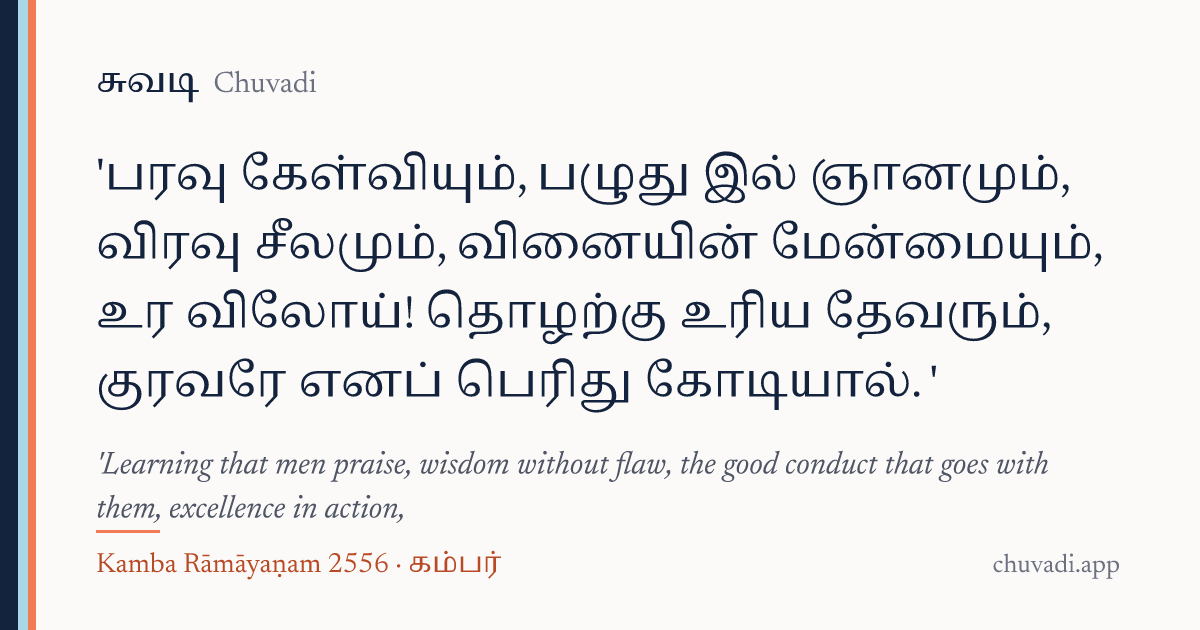
பாடல் · The poem
Tap a word to see its gloss in the commentary and where else it occurs.
பொருள் · Meaning in Tamil
“உர விலோய் - வலிமை பொருந்திய வில்லை உடையவனே; பரவு கேள்வியும் - புகழ்ந்து சொல்லப்படும் நூற்கேள்வியும்; பழுது இல் ஞானமும் - குற்றமற்ற நல்லுணர்வும்; விரவு சீலமும் - உடன் கொள்ளத்தக்க ஒழுக்கமும்; வினையின் மேன்மையும் - செய்தொழிலின் சிறப்பும்; தொழற்கு உரிய தேவரும் - வணங்குதற்கு உரிய தேவர்களும்; “குரவரே” - பெரியோர்களே; என - என்று; பெரிது கோடி - மிகவும் மனத்திற் கொள்வாய்.
கேள்வி, ஞானம், சீலம், வினை மேன்மை என்பனவற்றைக் ‘குரவர்’ என்றது உபசாரவழக்கு. பழுது - ஐயம், திரிபு. ஒன்றோ, மற்றொன்றோ எனல் ஐயம்; ஒன்றைப் பிறிதாக உணர்தல் திரிபு; இவை இரண்டும் இல்லாத மெய்யுணர்வே ஞானமாம். குரவர் இவர் என்பதைப் பின் கூறுவர்.
ஆங்கிலம் · English translationAI
Translation
- 'Learning that men praise, wisdom without flaw,
- the good conduct that goes with them, excellence in action,
- you of the mighty bow, and the gods worthy of worship:
- hold firmly that all these are found in the elders.'
What the poem says
Irāmaṉ says that learning, flawless wisdom, good conduct, excellence in action and even the gods to be worshipped are all, in effect, one's elders, the venerable ones whose word must be obeyed. Speaking of qualities as if they were persons is a figure of speech.
Flawless wisdom is knowledge free of doubt, which wavers between two things, and of error, which mistakes one thing for another. The next verse names who these elders are.