



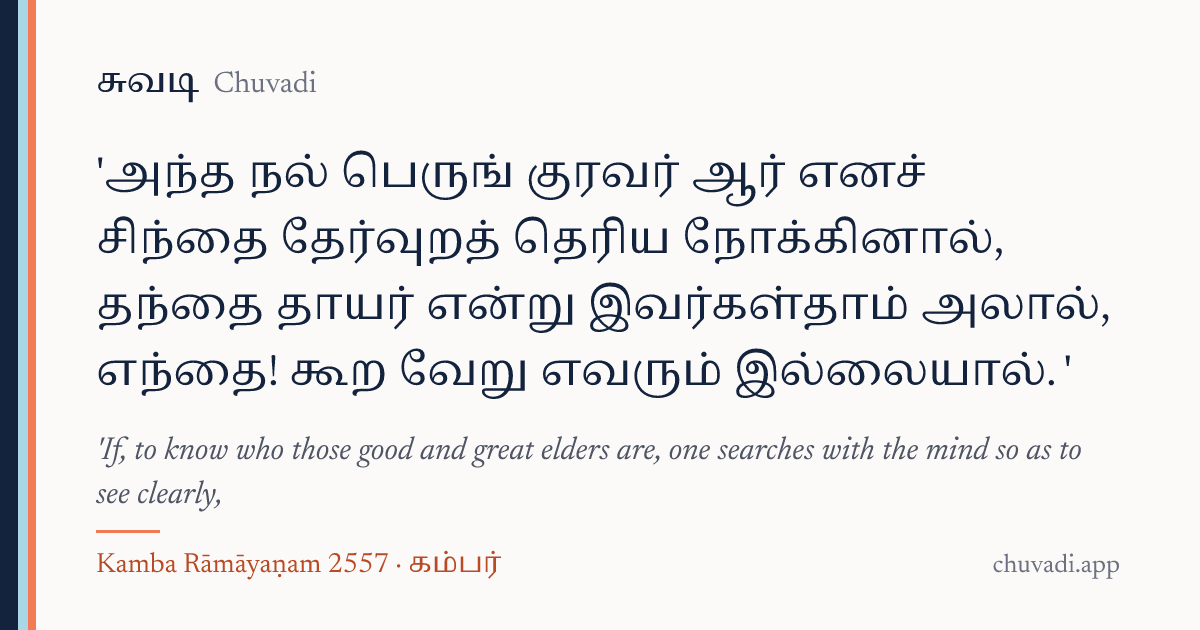
கம்பராமாயணம் 2557 · அயோத்தியா 12.108
பாடல் · The poem
Tap a word to see its gloss in the commentary and where else it occurs.
பொருள் · Meaning in Tamil
“எந்தை - என் அன்பிற் சிறந்த பரதனே!; அந்த நல்பெருங் குரவர் - நான் கூறிய சிறந்த பெருமையுடைய குரவர்கள்; ஆர் என - யார் என்று; சிந்தை தேர்வுறத் தெரிய நோக்கினால் - மனத்தால் மிக ஆராய்ந்து விளக்கப் பார்த்தால்; “தந்தை தாயர்” என்று இவர்கள் தாம் அலால் - தந்தையும் தாயுமே அல்லாமல், கூற - சிறப்பித்துக் கூற; வேறு எவரும் இல்லை - வேறு ஒருவரும் இல்லை.
“தந்தை தாயர்” - “உயர்திணை மருங்கின் உம்மைத் தொகையே பலர் சொல் நடைத்து” என்பதனால் (தொல். சொல். எச்ச. 25.) பொதுத்திணையாயினும் முடிந்தது. தம்பியை எந்தை என்றது அன்புபற்றி வந்த மரபு வழுவமைதி. குரவர் ஐவர் ஆயினும் (தாய், தந்தை, தம்முன், ஆசான், அரசன்) முன்னறியப் படுதலின், தாய் தந்தை அளவுக்கு ஏனையோர் சிறப்பிலர் என்பது கருத்து. அதுவே “தேர்வுறத் தெரிய நோக்கினால்” என்பதற்கும் கருத்தாம் என்க. “அரசன் உவாத்தியான் தாய்தந்தை தம்முன், நிகரில் குரவர் இவ் ஐவர் இவர் இவரைத், தேவரைப் போலத் தொழுது எழுக என்பதே, யாவரும் கண்ட நெறி” (ஆசாரக். 16.) என்பது கொண்டு குரவர் ஆவார் இவர் என
ஆங்கிலம் · English translationAI
Translation
- 'If, to know who those good and great elders are,
- one searches with the mind so as to see clearly,
- apart from these, the father and the mother,
- my dear, there is no one else to name.'
What the poem says
Tradition counts five elders who must be revered like gods: the king, the teacher, the mother, the father and the elder brother. The commentary quotes the Ācārakkōvai to this effect.
Looked at closely, Irāmaṉ says, the father and mother stand far above the rest. He calls his younger brother 'my father', an affectionate usage the grammarians allow.