



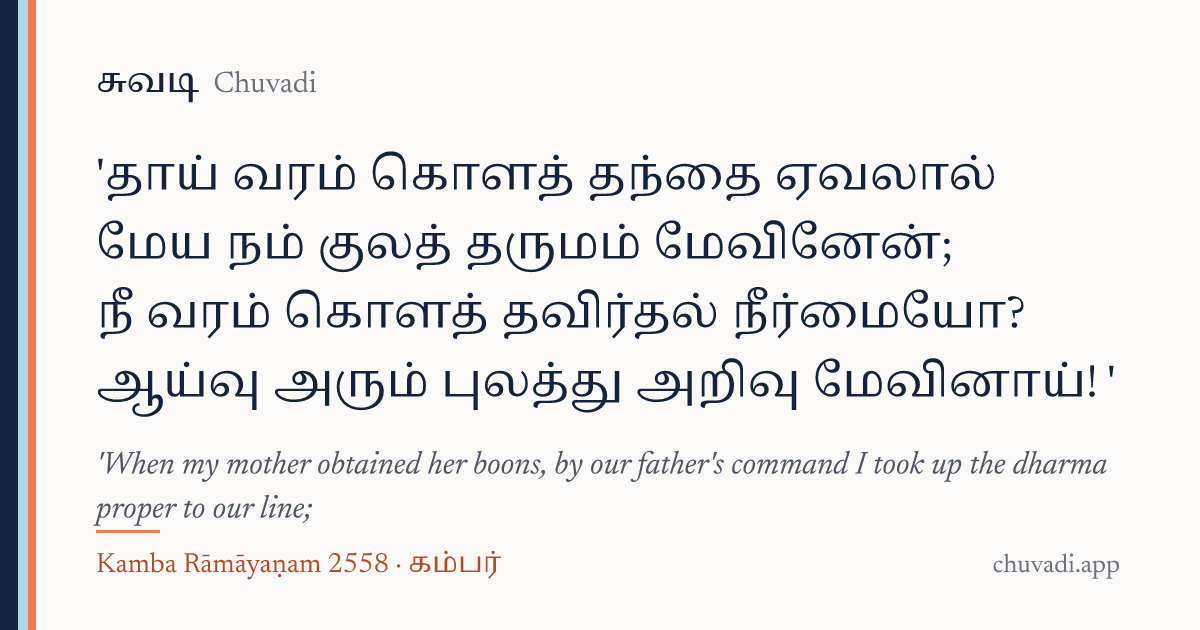
கம்பராமாயணம் 2558 · அயோத்தியா 12.109
பாடல் · The poem
Tap a word to see its gloss in the commentary and where else it occurs.
பொருள் · Meaning in Tamil
ஆய்வு அரும் - ஆராய்தற்கு அரிய; புலத்து - நூற்புலன்களான் ஆகிய; அறிவு - அறிவுணர்வை; மேவினாய் - அடைந்த பரதனே!; தாய் வரம் கொள - தாயாகிய கைகேயி வரம் பெற்றுக்கொள்ள; தந்தை ஏவலால் - தந்தையாகிய தயரதன் கட்டளையாலே; மேய - (தாய், தந்தையராகிய குரவர் சொற்படி நடத்தல் என்கிற) பொருந்திய; நம் குலத் தருமம் மேவினேன் - நம் குலத்திற்குரிய தருமத்தை மேற்கொண்டேன்; நீ வரம் கொள - நீ வேண்டிக்கொள்ள; தவிர்தல் - (அவ்அறநெறியை) விலக்கி ஒழுகுதல்; நீர்மையோ - நற்பண்பு ஆகுமோ? (நீயே கூறுக)
குரவர் சொற் கேட்டல் அறனாதல் நூன்முடிபு ஆதலின் நான் மேற் கொண்டது அறனே. நின்சொற் கேட்டல் எவ்வாறு அறனாகும் என்று மறுத்தான் இராமன். இனிப் பரதனுக்கும் தாய்வரங்கொளத் தந்தை ஏவலால் அரசாளுதல் அறமே என்றும் கூறினானாம். நுண்ணுணர்வாற் கற்றறிந்து நூல்களாற் பெற்ற ஞானம் கைவரப்பெற்ற நீ அறத்தின் கூறு இதுவே என்பதை அறியாது இராய் என்றானுமாம்.
ஆங்கிலம் · English translationAI
Translation
- 'When my mother obtained her boons, by our father's command
- I took up the dharma proper to our line;
- now, because you ask a boon of me, is it right to give it up,
- you who have gained the wisdom of learning hard to master?'
What the poem says
Irāmaṉ applies the principle. When Kaikēyi won her boons and their father gave the order, Irāmaṉ obeyed, as the dharma of their family requires. The scriptures agree that obeying one's elders is right, so what he did was right.
Paratan is not his elder, so abandoning that duty at Paratan's request would not be right. By the same logic, Paratan's ruling, by his mother's boon and his father's command, is right for him too, and a man of Paratan's learning should see that.