



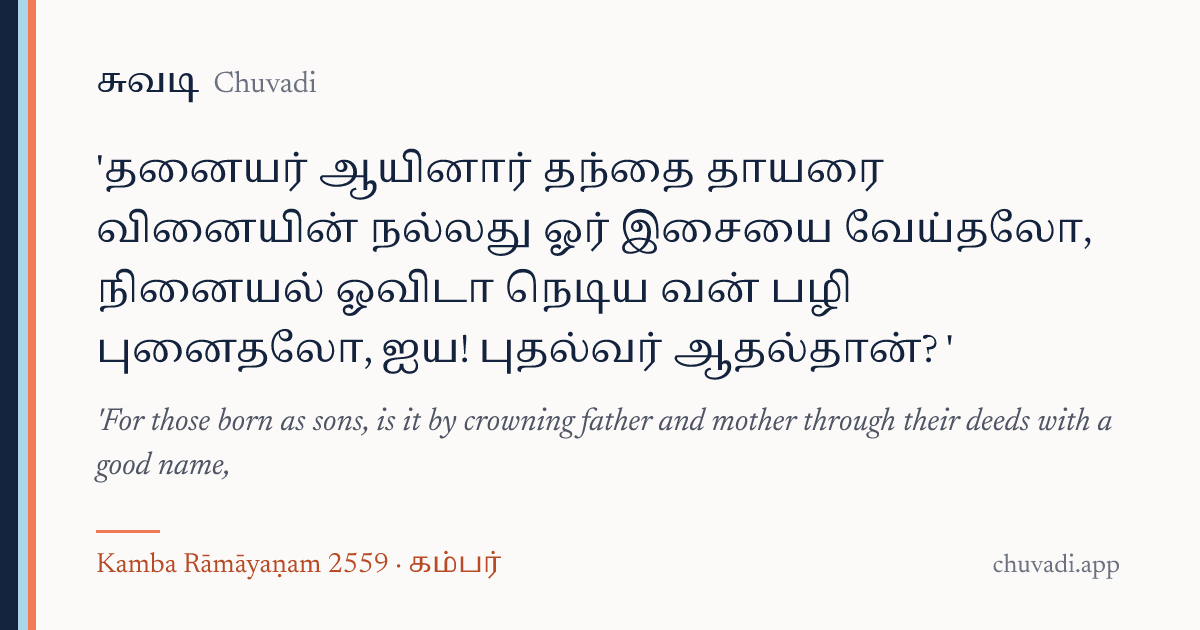
கம்பராமாயணம் 2559 · அயோத்தியா 12.110
பாடல் · The poem
Tap a word to see its gloss in the commentary and where else it occurs.
பாட வேறுபாடு · Project Madurai reads
பொருள் · Meaning in Tamil
“ஐய! - பரதனே; தனையர் ஆயினார் - மகனாகப் பிறந்தவர்கள்; புதல்வர் ஆதல்தான் - புதல்வர் என்னும் சிறப்பினைப் பெறுவது; தந்தை தாயரை - தம் தந்தையை, தாயை; வினையின் - தாம்செய்யும் செயல்களால்; நல்லது ஓர் இசையை வேய்தலோ - நல்லதாகிய ஒரு புகழை அடையும்படி செய்தலாலா? (அல்லது); நினையல் ஓவிடா - என்றும் மனத்தை விட்டு நீங்காத; நெடிய வன் பழி புனைதலோ - நீண்டகொடிய பழியை அணிவிப்பதனாலா? எதனால்?
புதல்வர் ஆதல் பெற்றோர்க்கு இசை வேய்தலால்தான் எனின் பெற்றோர் சொல்வழி நின்று செயல் ஆற்றுதலே அதனை உண்டாக்கும்; அவர் சொல்லுக்கு மாறுபடுவது அதனை உண்டாக்காது, பழியை ஆக்கும் என்பதாம். ‘தான்’ உரையசை. பிறப்பால் தனையர் ஆயினும் செயல்சிறப்பால் புதல்வர் ஆவர் என்பது கருத்து.
ஆங்கிலம் · English translationAI
Translation
- 'For those born as sons, is it by crowning father and mother
- through their deeds with a good name,
- or by decking them in a long, harsh disgrace the mind can never let go,
- my dear, that they become true sons?'
What the poem says
Irāmaṉ distinguishes being born a son from being a true son. A child becomes worthy of the name by bringing honour to his parents through his deeds, not by loading them with lasting shame.
Honour comes from carrying out one's parents' word; going against it brings only disgrace. If Irāmaṉ took back the kingdom, he would shame his father, who gave his word to Kaikēyi.