



கம்பராமாயணம் 2560 · அயோத்தியா 12.111
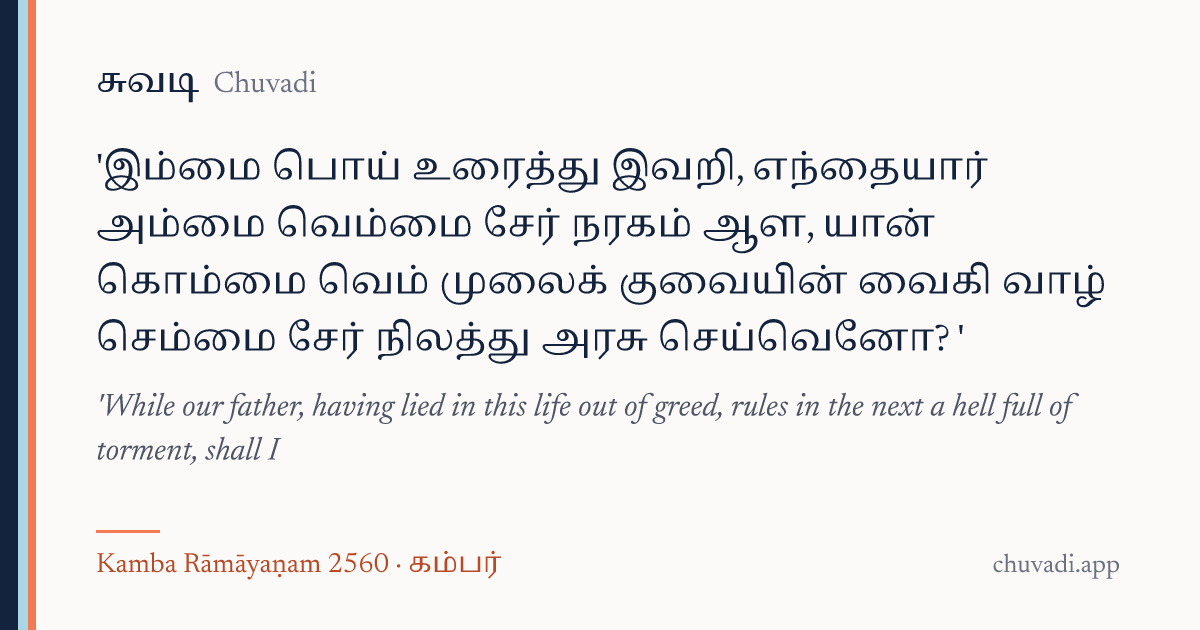
பாடல் · The poem
Tap a word to see its gloss in the commentary and where else it occurs.
பொருள் · Meaning in Tamil
எந்தையார் - என் தந்தையார்; இவறி - அரசு ஆசைப்பட்டு; இம்மை - இப்பிறப்பிலே; பொய் உரைத்து - (கைகேயிக்கு வரம் கொடுத்ததை மறுத்துப்) பொய் சொல்லி; அம்மை - மறுமையில்; வெம்மைசேர் - கொடுமை பொருந்திய; நரகம் ஆள - நரகத்தை அனுபவிக்க; யான் -; கொம்மை - திரண்ட; வெம் முலைக் குவையின் வைகி - விரும்பப்படும் முலைக்குவட்டின்மேல் தங்கி; வாழ் - வாழ்ந்து; செம்மை சேர் நிலத்து - (இதுகாறும்) செம்மை பொருந்திய நாட்டின்கண்; அரசு செய்வேனோ - அரசு செய்துகொண்டிருப்பேனோ? (இரேன்).
இவறுதல் - கைகேயிக்கு கொடுத்த வரத்தை நிறைவேற்றாது உலோபம் செய்தல். நான் அரசாள முற்பட்டால் எந்தையார் பொய்யுரைத்தாராய் நரகம் சேர்வர். தந்தையை நரகுக்கனுப்பித் தனையர் அரசாளுதல் தக்கதோ? புதல்வர் செய்யும் கடனோ? என்றான் இராமன். அரசாட்சியை இன்பம் அனுபவித்தல் என்னும் கருத்தில் “கொம்மை வெம்முலைக் குவையின் வைகி வாழ் அரசு” என்றான் என்க.
ஆங்கிலம் · English translationAI
Translation
- 'While our father, having lied in this life out of greed,
- rules in the next a hell full of torment, shall I
- lie on heaped, full, warm breasts, living at ease,
- and reign over this good and righteous land?'
What the poem says
If Irāmaṉ took the throne now, his father would in effect have broken his promise to Kaikēyi, holding back stingily what he had granted. He would be guilty of a lie and would go to hell for it.
Could a son send his father to hell so that he could enjoy the pleasures of kingship? Irāmaṉ pictures those pleasures bluntly as lying among women's breasts.