



கம்பராமாயணம் 2567 · அயோத்தியா 12.118
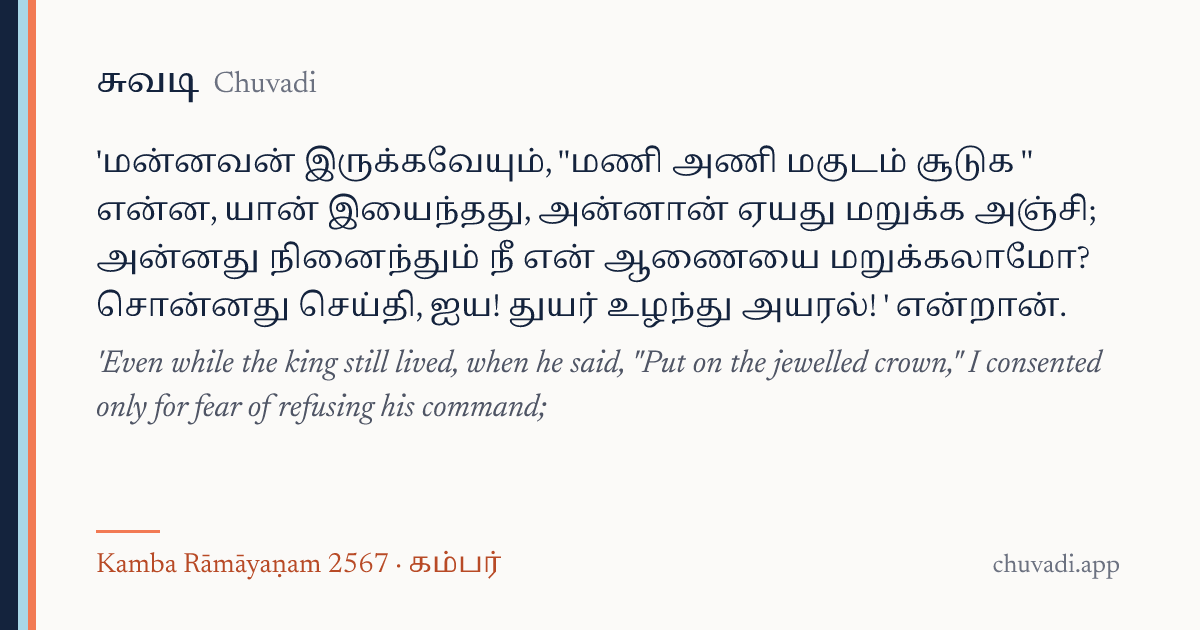
பாடல் · The poem
Tap a word to see its gloss in the commentary and where else it occurs.
பாட வேறுபாடு · Project Madurai reads
பொருள் · Meaning in Tamil
“ஐய! - பரதனே!; மன்னவன் இருக்கவேயும் - தயரதன் உயிரோடு இருக்கின்றபொழுதிலேயும்; “மணி அணி மகுடம் சூடுக” என்ன - (என்னை) மணிகளால் அழகிய திருமுடியைச் சூடி அரசாள்க என்று தயரதன் பணிக்க; யான் இயைந்தது - நான் உடன் பட்டது; (எதனால்?) அன்னான் ஏயது மறுக்க அஞ்சி - (தந்தையும், மன்னனும் ஆகிய) அவன் ஏவிய ஒன்றை மறுத்தற்குப் பயந்தே (அல்லவா?); அன்னது நினைந்தும் - அதன் உட்கருத்தை நினைந்த பிறகும்; நீ என் ஆணையை - நீ என்னுடைய கட்டளையை; மறுக்கலாமோ - மறுத்தல்செய்யலாமோ?; துயர் உழந்து அயரல் - துன்பத்திற் கலங்கிச் சோர்வு அடையாதே; சொன்னது செய்தி - நான் சொன்னதைச் செய்வாயாக; என்றான் - என்று சொன்னான்.
‘தாதை அப்பரிசு உரை செய’ (1382.) என்று முன்னர்க் கூறியதை இங்கு நினைவுகூர்க. தந்தையின் இடத்தில் என்னைப் பார்க்கின்ற நீ என் ஆணையை மறுக்கலாகுமோ என்று பரதனை இராமன் வினாவி அறிவுறுத்தினன். ‘என்னைப் போல உன்னை ஆக்கிக்கொள்’ என்று குறிப்பாற் கூறினான் எனலும் ஆம்.
ஆங்கிலம் · English translationAI
Translation
- 'Even while the king still lived, when he said, "Put on the jewelled crown,"
- I consented only for fear of refusing his command;
- knowing that, can you refuse my command?
- Do what I have said, my dear, and do not sink exhausted in grief,' he said.
What the poem says
Irāmaṉ points to his own example. When their father, while still alive, told him to be crowned, Irāmaṉ agreed only because he dared not refuse the king's command.
Paratan looks on Irāmaṉ as he would on their father, so how can he refuse Irāmaṉ's command now? He should follow Irāmaṉ's example, do as he is told, and stop wearing himself out with grief.