



கம்பராமாயணம் 2575 · அயோத்தியா 12.126
பாடல் · The poem
Tap a word to see its gloss in the commentary and where else it occurs.
பாட வேறுபாடு · Project Madurai reads
பொருள் · Meaning in Tamil
கூறிய - (இவ்வாறு) சொன்ன; முனிவனை - வசிட்டனை (பார்த்து); செங்கணான் - சிவந்த கண்களை உடையவனாகிய இராமன்; குவிந்த தாமரை சீறிய கைகளால் தொழுது - குவிந்திருக்கின்ற தாமரையைத் தன் அழகால் சீறி வென்ற கைகளால் வணங்கி; “ஆறிய சிந்தனை அறிஞ! - அடங்கிய மனத்தை உடைய அறிஞனே!; உரை ஒன்று கூறுவது உளது” - வார்த்தை ஒன்று சொல்ல வேண்டுவது உள்ளது; என - என்று; கூறல் மேயினான் - சொல்லத் தொடங்கினான்.
குவித்த கைகளுக்குக் குவிந்த தாமரையை உவமையாக்கிக் கூறினார். ‘செங்கண்’ கண் சிவந்திருத்தல் சிறந்த ஆடவர்க்குரிய இலக்கணம். “செங்கண் சிறுச்சிறுதே எம்மேல் விழியாவோ” (திவ்யப் 494.) என்னும் திருப்பாவையைக் காண்க. ‘ஆறிய சிந்தனை’ என்பது, ‘ஆன்று அவிந்து அடங்கிய கொள்கைச் சான்றோர்’ என்பது போலக் கூறியது. (புறநா. 191) ஆசிரியனாதலின் முதலில் வணங்கிப் பின் கூறுவான் என்றார்.
ஆங்கிலம் · English translationAI
Translation
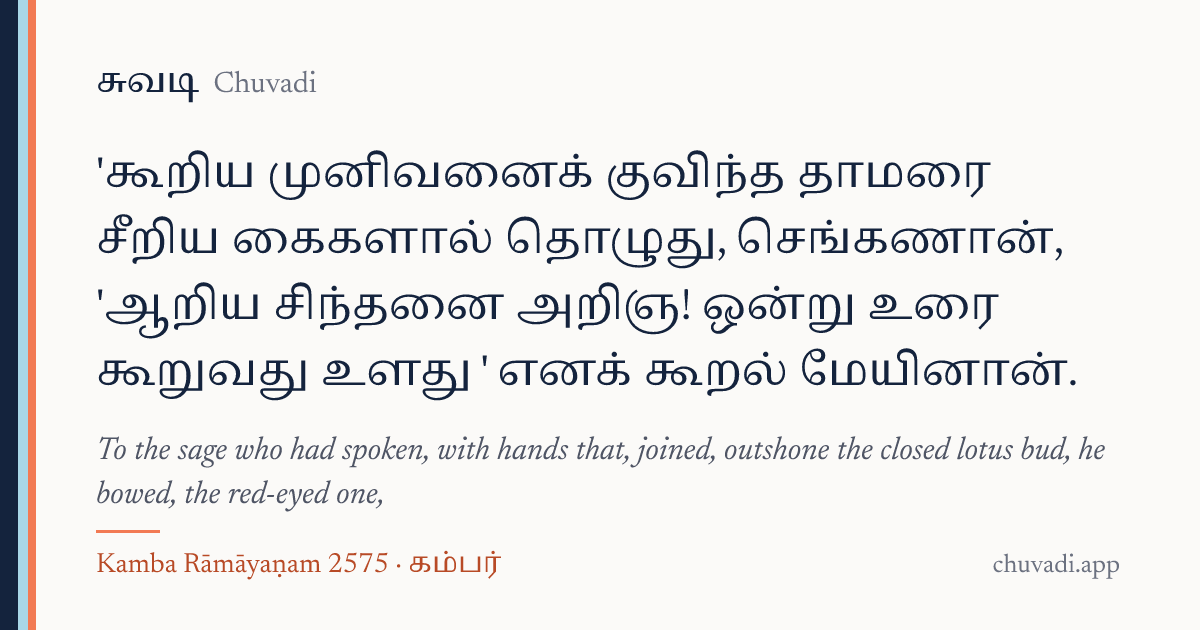
- To the sage who had spoken, with hands that, joined, outshone
- the closed lotus bud, he bowed, the red-eyed one,
- and said, 'Wise one of tranquil mind, there is one word
- I have to say,' and began to speak.
What the poem says
Because Vaciṭṭaṉ is his teacher, Irāmaṉ first bows to him with joined hands, which look lovelier than a closed lotus bud, and only then answers.
Eyes tinged with red were counted a mark of a noble man; the commentary cites Āṇṭāḷ's Tiruppāvai, which speaks of the Lord's red eyes. He addresses Vaciṭṭaṉ as a wise man whose mind is at peace, a phrase that echoes an old Puṟanāṉūṟu poem on calm and self-controlled sages.