



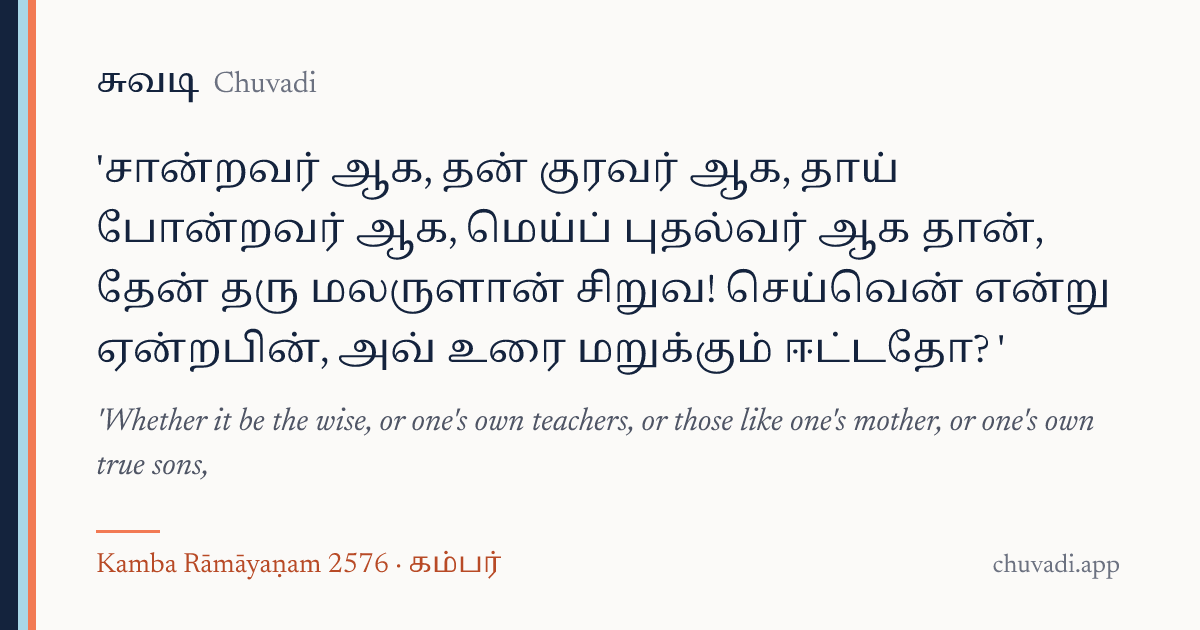
கம்பராமாயணம் 2576 · அயோத்தியா 12.127
பாடல் · The poem
Tap a word to see its gloss in the commentary and where else it occurs.
பாட வேறுபாடு · Project Madurai reads
பொருள் · Meaning in Tamil
“தேன் தரு மலருளான் சிறுவ! - தேனைத் தருகின்ற தாமரை மலரில் வீற்றிருக்கும் பிரமதேவனின் புதல்வ!; சான்றவர் ஆக - பெரியோர்களே ஆகுக; தன் குரவர் ஆக - தன் ஆசிரியரே ஆகுக; தாய் போன்றவர் ஆகுக - தாய் முதலியவரே ஆகுக, மெய்ப்புதல்வர் ஆக - சத்தியத்திற் பிறழாத தன் புதல்வர்களே ஆகுக; தான் - ஒருவன்; “செய்வேன்” என்று ஏன்றபின் - (இவர்களிடத்தில்) செய்வேன் என்று சம்மதித்த பின்; அவ் உரை மறுக்கும் ஈட்டதோ? - அந்த வார்த்தை முடியாது என்று மறுக்கத்தக்க தன்மையுடையதோ? (அன்று என்றபடி)
தாய் போன்றவர் எனவே தந்தை, தம்முன், அரசன் முதலிய நான்கு குரவர்களைக் குறிப்பிடாராயிற்று. ஒருவரிடம் ஒப்புக்கொண்டால் செய்தே ஆகவேண்டும், சத்தியம் பிறழ்தல் கூடாது என்றான்.
ஆங்கிலம் · English translationAI
Translation
- 'Whether it be the wise, or one's own teachers, or those
- like one's mother, or one's own true sons,
- son of the god in the honey-giving flower, once a man has said "I will do it"
- and agreed, is that word something he can take back?'
What the poem says
Irāmaṉ answers Vaciṭṭaṉ, who is himself a son of Piramaṉ. It does not matter whom a promise was made to: elders, teachers, mother and the like, or even one's own sons. Once a man has said 'I will do it', he cannot go back on his word.
'Those like one's mother' stands for the whole group of elders: father, elder brother, king and the rest.