



கம்பராமாயணம் 2578 · அயோத்தியா 12.129
பாடல் · The poem
Tap a word to see its gloss in the commentary and where else it occurs.
பொருள் · Meaning in Tamil
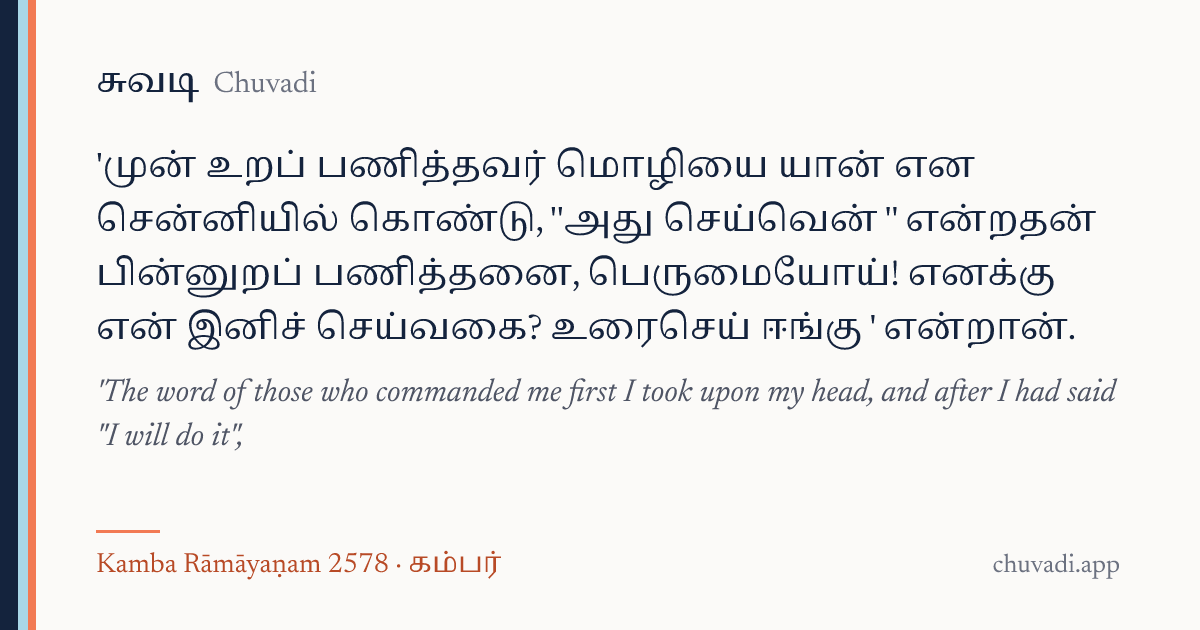
“பெருமையோய் - பெருமையுடைய குருவே; முன் உற - முற்பட; பணித்தவர் - கட்டளையிட்ட தாய் தந்தையர்; மொழியை -; யான் என சென்னியில் கொண்டு - யான் எனது தலைமேல் கொண்டு; “அது செய்வேன்” என்றதன் பின்னுற - அதனைச் செய்துமுடிப்பேன் என்று ஏற்றுக்கொண்டதன் பின்னால்; பணித்தனை - (நீ) கட்டளை இட்டாய்; இனிச் செய்வகை - இனிச் செயலாற்றும் வகை; எனக்கு என - எனக்கு யாது; ஈங்கு உரைசெய்” - இப்பொழுது சொல்லியருளுக; என்றான் - என்று கூறினான்.
குரவராகிய தாய் தந்தையர் ஆசிரியர் என்ற மூவருள் யாருடைய ஆணையை நிறைவேற்றுவது என்று பார்க்குமிடத்து, தாய் தந்தை மேலானவர் என்பது இராமன் கருத்து; ஆசிரியரே மேலானவர் என்பது வசிட்டன் கருத்தாக, வசிட்டன் ஆணையை இராமன் மேற்கொள்ள இயலாமைக்கு வேறு காரணம் வேண்டி நின்றது. மூவரும் ஆணையிடவும் ஆணை பெற்றால் அதனை நிறைவேற்றவும் செய்யவரும்போது - யாருடைய ஆணை முற்படுகிறதோ, முதலில் ஏற்றுக் கொள்ளப்படுகிறதோ அதை நிறைவேற்றியே தரல் வேண்டும். ஆதலின், சத்தியம், பிறழாமைக்கு வாயிலா முற்பட்ட தாய் தந்தையர் ஆணையை நிறைவேற்ற வேண்டியவனாகிறான் இராமன் என்பது கருத்து. ஆசிரியனாதலின் மிகப்பக்குவமாக மேல் வற்புறுத்தாதபடி தனக்கே உரிய சாதுர்யத்தோடு இராமன் பேசி வசிட்டனை மறுமொழி சொல்ல இயலாதபடி ஆக்கினன் என்பதை இங்குக் கருதல் வேண்டும். இதனானன்றோ கம்பர் இராமனைச் “சொல்லும் சொல் வல்லான்” (1740) என்றார் முன்னும்.
ஆங்கிலம் · English translationAI
Translation
- 'The word of those who commanded me first I took
- upon my head, and after I had said "I will do it",
- you have given your command; great one, for me
- what way of acting is there now? Tell me here,' he said.
What the poem says
Irāmaṉ sidesteps the question of which elder ranks higher. Whoever commands first must be obeyed first. His mother and father gave their order, and he promised to carry it out, before Vaciṭṭaṉ gave his.
To keep his word, he must carry out the earlier command. He puts this so tactfully, without pressing his teacher further, that Vaciṭṭaṉ has no reply. The commentary recalls that the poet elsewhere calls Irāmaṉ a master of speech.