



கம்பராமாயணம் 2588 · அயோத்தியா 12.139
பாடல் · The poem
Tap a word to see its gloss in the commentary and where else it occurs.
பொருள் · Meaning in Tamil
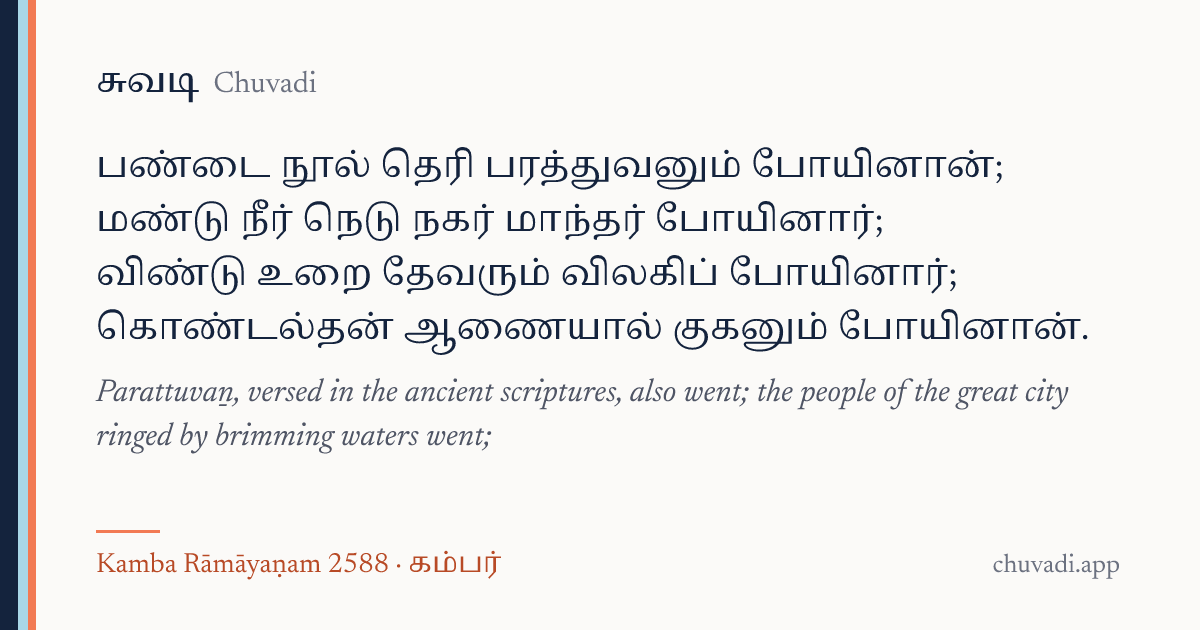
பண்டை நூல் தெரி பரத்துவனும் போயினான் - பழமையான வேதங்களை ஆராய்ந்தறிந்த பரத்துவாச முனிவனும் (தன்னிடத்திற்குச்) சென்றான்; மண்டு நீர் நெடுநகர் மாந்தர் போயினார் - நிறைந்த அகழி நீராற் சூழப்பெற்ற பெரிய அயோத்தி நகரவாசிகளாய மனிதர்களும் புறப்பட்டுச் சென்றார்கள்; விண்டு உறை தேவரும் விலகிப் போயினார் - வெளிப்பட்டு விண்ணிற் கூடிய தேவர்களும் அங்கிருந்து நீங்கித் தத்தம் இடம் சேர்ந்தார்கள்; கொண்டல்தன் - இராமபிரானது; ஆணையால் - கட்டளையால்; குகனும் போயினான் - குகனும் தன் இடமாகிய சிருங்கி பேரத்துக்குச் சென்றான்.
குகன் சற்றுப் பின்தங்கி இராமனது ஆணை பெற்றுச்சென்றானாதல் வேண்டும். விண்டு - வெளிப்பட்டு. மறைந்துள்ள தேவர்கள், தம் காரியசித்திக்காக இராமனை அயோத்தி செல்லவொட்டாது தடுக்க வெளிப்பட்டுக் கூடினார் ஆதலின் “விண்டு உறை தேவர்” என்று கூறினார்.
ஆங்கிலம் · English translationAI
Translation
- Parattuvaṉ, versed in the ancient scriptures, also went;
- the people of the great city ringed by brimming waters went;
- the gods who had come forth and gathered dispersed and went;
- and at the command of him who is like a rain cloud, Kukaṉ too went.
What the poem says
Everyone disperses. The sage Parattuvācaṉ returns to his hermitage, the citizens of Ayōttī set off home, and the gods, who had revealed themselves to stop Irāmaṉ from returning, withdraw to their own places.
Kukaṉ, the boatman chief who had ferried Irāmaṉ across the Kaṅkai, stays a little longer and then, at Irāmaṉ's bidding, returns to his town of Ciruṅkipēram.