



கம்பராமாயணம் 2594 · ஆரணிய 1.3
பாடல் · The poem
Tap a word to see its gloss in the commentary and where else it occurs.
பாட வேறுபாடு · Project Madurai reads
பொருள் · Meaning in Tamil
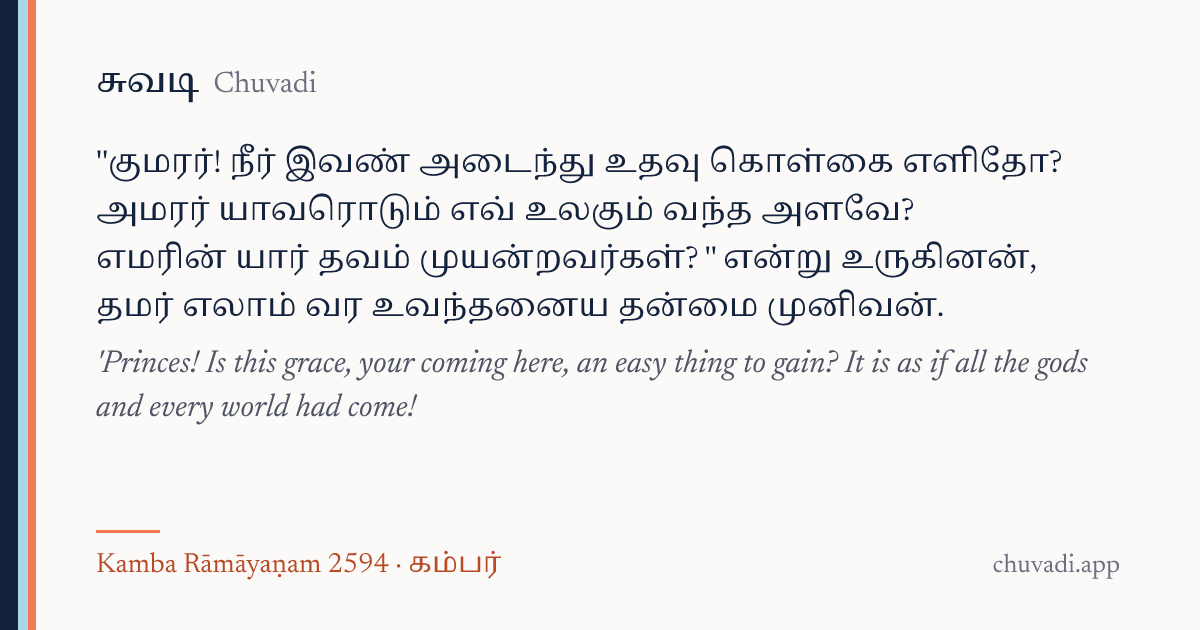
தமர் எலாம் வர உவந்தனைய - தம் சுற்றத்தார் யாவரும் வர அது கண்டு மகிழ்ந்தாற் போல; தன்மை முனிவன் - மகிழ்ச்சி நிலை அடைந்த அத்திரி முனிவர்; (இராமலக்குவரைக் கண்டு); “குமரர்! நீர் இவண் அடைந்து உதவு கொள்கை - தயரதன் மக்காள்! நீங்கள் இவ் விடத்தில் வந்து பெரும்பேறடைய அருளிய (நீங்கள் இங்கு வந்தது) தன்மை; எளிதோ- (எங்களுக்கு) கிடைத்தற்கு எளியதோ?; அமரர் யாவரொடும் எவ்வுலகும் வந்த அளவே - எல்லாத் தேவர்களோடும் எல்லா உலகங்களும் வந்த தன்மையதே!; எமரின் - எங்களைவிட; யார் தவம் முயன்றவர்கள்- யாரே தவ முயற்சியில் ஈடுபட்டவர்கள்?; என்று உருகினன் - என்று கூறி மனம் உருகினான்.
சுற்றம் சூழ இருப்பது உலகினர்க்குப் பெருமகிழ்வூட்டும். எனவே தமரெலாம் வர உவந்தனைய என்றார். எமரின் யார் தவம் முயன்றவர்கள் என்பதற்கு இவ்வரும்பேறு பெற்ற எம்போல் நல்வினைசெய்தார் யார் என்றுமாம். அமரர் - சாவில்லாதவர். தாம்தேடி அடைய வேண்டியவன் தன்னை நாடி வந்ததால் உவப்பு மிகுந்தது.
ஆங்கிலம் · English translationAI
Translation
- 'Princes! Is this grace, your coming here, an easy thing to gain?
- It is as if all the gods and every world had come!
- Who among men has laboured at penance more than we?' So he melted with feeling,
- the sage, glad as one to whom all his kin had come.
What the poem says
Attiri greets Irāmaṉ and Ilakkuvaṉ. Their visit, he says, is a blessing not easily won; it is as though the gods and all the worlds had arrived together, and no one's penance has borne richer fruit than his.
The poet compares the old sage's joy to that of a man surrounded by his whole family. The deeper point is that the one whom ascetics labour to reach has come of his own accord to the ascetic's door.