



கம்பராமாயணம் 26 · பால 2.6
பாடல் · The poem
Tap a word to see its gloss in the commentary and where else it occurs.
பொருள் · Meaning in Tamil
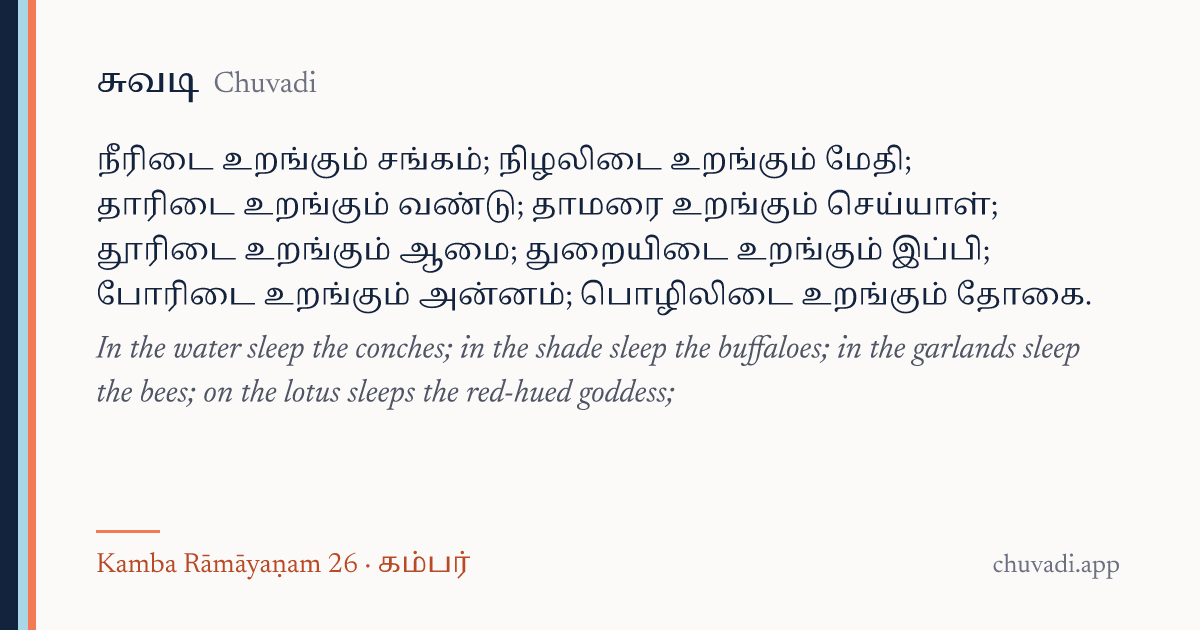
சங்கம் நீரிடை உறங்கும் - சங்குகள் தண்ணீரில் உறங்கிக்கொண்டிருக்கும்; மேதி நிழலிடை உறங்கும் - எருமைகள் மர நிழலில் உறங்கிக் கொண்டிருக்கும்; வண்டு தாரிடை உறங்கும் - வண்டுகள் மலர் மாலைகளிலே உறங்கிக்கொண்டிருக்கும்; செய்யாள் தாமரை உறங்கும் - திருமகள் (பெயர்தலின்றித்) தாமரை மலரிலே உறங்குவாள்; ஆமை தூரிடை உறங்கும் - ஆமைகள் சேற்றிலே உறங்கும்; இப்பி துறையிடை உறங்கும்; முத்துச் சிப்பிகள் நீர்த் துறைகளிலே உறங்கும்; அன்னம் போரிடை உறங்கும் - அன்னங்கள் நெற்போரிலே உறங்கிக் கிடக்கும்; தோகை பொழிலிடை உறங்கும் - மயில்கள் சோலைகளிலே உறங்கிக் கொண்டிருக்கும்.
பிறர் இடையீடின்றி நிம்மதியாக யாவும் தூங்குகின்றன. கவலை யின்றி, அச்சமின்றி, நிலை மாற்றமின்றித் தூங்குகின்றன. மலர் மாலை அணிந்தோர் நடமாடிக் கொண்டிருந்தாலும் அம் மாலைகளிலே வண்டுகள் உறங்குகின்றனவாம், பலர் ஊடாடும் நீர்த் துறைகளிலே முத்துச் சிப்பிகள் உறங்குகின்றன - இவையெல்லாம் எவ்வகை இடையீடும் இல்லாமல் பெறுகின்ற நிம்மதியையும் அச்சமின்மையையும் குறித்தன. முன்பாட்டில் 'வண்டும் திருமகளும் தாமரைப் படுவ' என்றார்; தேன் நாடி, உண்டபின் வேறு இடம் நாடும் வண்டோடு திருவையும் இணைத்துச் சொன்னார். ஒரு கால் செல்வத்தின் பொதுத்தன்மை நோக்கி அவ்வாறு கம்பர் கூறியிருக்கலாம். கோசல நாட்டில் திருமகள் நிரந்தரமாக; இடம் பெயர்தலின்றி செல்வம் தவறான வழியிலே பாயுமோ என்ற அச்சமின்றித் தூங்குகிறாள். 'திரு வீற்றிருந்த தீது தீர் நியமம்' என்று நக்கீரர் வருணித்த மாமதுரைக் கடைவீதி இங்கு நினைவில் எழும். உறங்கும் என ஒரே பொருளில் பன்முறை வந்தது சொற்பொருட் பின்வரு நிலையணி. 'தோகை' ஆகுபெயராய் மயிலைக் குறித்தது.
ஆங்கிலம் · English translationAI
Translation
- In the water sleep the conches; in the shade sleep the buffaloes;
- in the garlands sleep the bees; on the lotus sleeps the red-hued goddess;
- in the mud sleep the tortoises; at the bathing ghats sleep the pearl oysters;
- on the stacks of sheaves sleep the swans; in the groves sleep the peacocks.
What the poem says
Everything in Kōcalam sleeps in peace, undisturbed and unafraid. Conches sleep in the water, buffaloes in the shade, tortoises in the mud and swans on the stacks of harvested paddy. Bees sleep on the garlands of people walking about, and pearl oysters sleep at the busy bathing ghats. Nothing disturbs any creature.
Most striking, Lakṣmī, the goddess of fortune, who is known for moving from place to place, sleeps on her lotus here without stirring. Wealth stays in Kōcalam for good, and she need not fear it will flow into wrong hands. The repeated word "sleeps" is a deliberate figure of repetition.