



கம்பராமாயணம் 27 · பால 2.7
பாடல் · The poem
Tap a word to see its gloss in the commentary and where else it occurs.
பாட வேறுபாடு · Project Madurai reads
பொருள் · Meaning in Tamil
படை உழ எழுந்த பொன்னும் - கலப்பைகள் உழுததால் மேலே எழுந்த பொன்னும்; பணிலங்கள் உயிர்த்த முத்தும் - சங்குகள் ஈன்ற முத்துகளும்; இடறிய பரம்பில் - பரம்படித்த நிலங்களில்; காந்தும் - ஒளி வீசுகின்ற, இன மணித் தொகையும் - பல்வேறு இரத்தினத் தொகையும்; நெல்லின் பசுங்கதிரும் - நெல்லின் செறிந்த பசுங்கதிர்களும்; மீனும் - மீன்களும்; மென் தழைக் கரும்பும் - மென்மையான தாள்களையுடைய கரும்பும்; வண்டும் - வண்டுகளும்; கடைசியர் முகமும் - உழத்தியரின் முகங்களும் - போதும் - (தாமரை) மலரும்; கண் மலர்ந்து ஒளிரும் - கண் மலர்ந்து ஒளி வீசும்.
பொன் முதல் போது முடிய ஒன்பது பொருள்கள் கண் மலர்ந்து ஒளிரும் என்கிறார் கவிஞர். பொன், முத்து, மணித் திரள் ஆகியவை ஒளிக் கிரணங்கள் வீசுவதைக் கண் மலர்தல் என்றார். நெல் முற்றியதால் கதிரில் எழும் ஒளி கண்மலர்தலாயிற்று; அன்றி கதிர்தொறும் நெல்மணிகள் ஒளிர்ந்ததெனவும் கொள்ளலாம். மீனும் வண்டும் கண்போல் ஒளிர்தலுடையன. கரும்பு கண் மலர்ந்து ஒளிர்தலாவது கணுக்களுடன் விளங்குதல். போது கண்மலர்ந்து ஒளிர்தல் தேனொடு விளங்கி ஒளிர்வது என்பர் 'கண் மலர்ந்து ஒளிரும்' என்ற தொடர் இறுதியில் இருந்தாலும் பாடல் முழுவதையும் தொடர்புபடுத்தி விளக்குகிறது; கடைநிலைத் தீவகம். பலவற்றுக்கும் ஒப்புமை காட்டி இணைப்பதால் ஒப்புமைக் கூட்டணியாம்.
ஆங்கிலம் · English translationAI
Translation
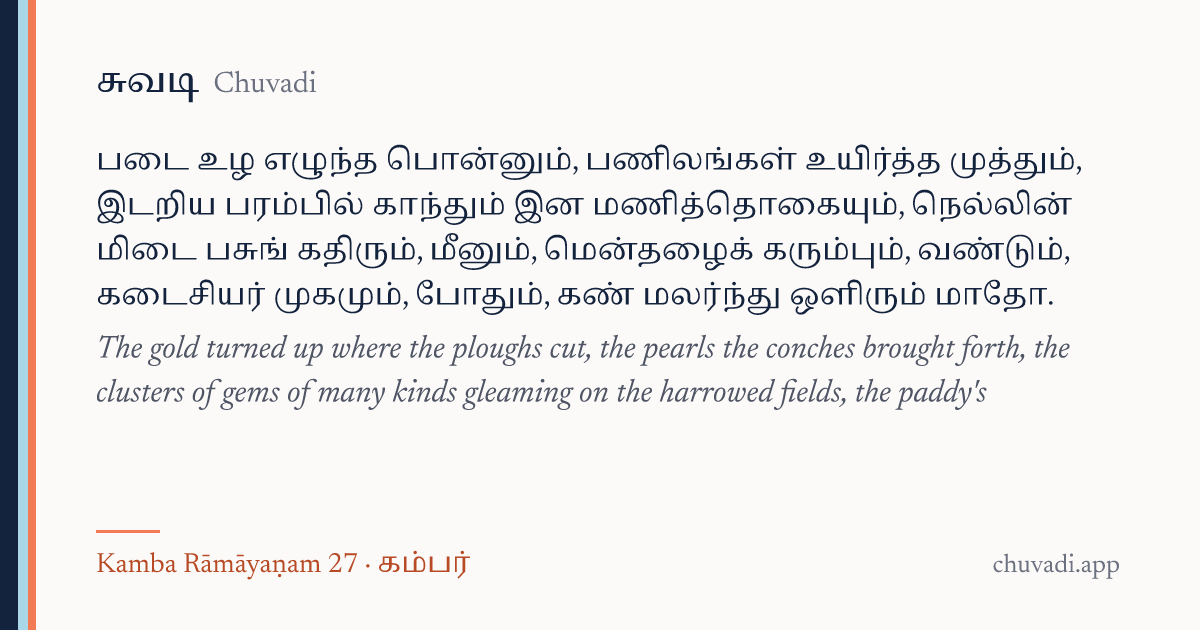
- The gold turned up where the ploughs cut, the pearls the conches brought forth,
- the clusters of gems of many kinds gleaming on the harrowed fields, the paddy's
- thick green ears, the fish, the soft-leaved sugarcane, the bees,
- the faces of the farm women, and the flowers: all open their eyes and shine.
What the poem says
Nine things in the fields "open their eyes and shine", each in its own way. Gold turned up by the plough, pearls from the conches and scattered gems flash with light. The ripe ears of paddy glow with their grains, and fish and bees have bright, eye-like spots. Sugarcane shows its joints, which Tamil calls "eyes". The farm women's faces light up with open eyes, and the flowers open their blooms.
The single phrase at the end of the verse governs everything listed before it, a figure in which one word lights up a whole sentence. Bringing so many things together under one point of likeness is also counted as a figure of comparison.