



கம்பராமாயணம் 260 · பால 5.92
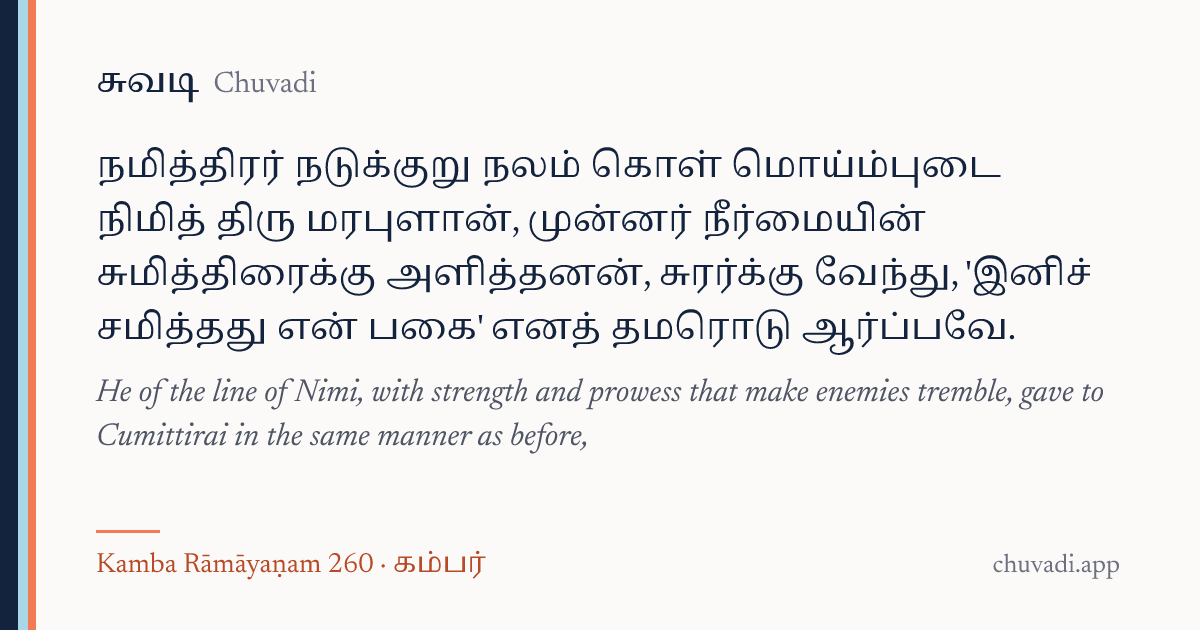
பாடல் · The poem
Tap a word to see its gloss in the commentary and where else it occurs.
பொருள் · Meaning in Tamil
நமித்திரர் நடுக்குறு நலம் கொள் - பகைவர்களை அஞ்சி நடுங்கச் செய்யும் வெற்றி நலம் கொண்ட; மொய்ம்பு உடை நிமித்திரு மரபுளான் - வலிமை மிகுந்தவனும் 'நிமி' பிறந்த மரபில் பிறந்தவனும் ஆன தசரத மன்னன்; முன்னர் நீர்மையின் - முன்னர் அவ்விரு தேவியர்க்கும் அளித்த தன்மையிலேயே; சுரர்க்கு வேந்து இனிச்சமித்தது என்பகை என - தேவர்களுக்கெல்லாம் தலைவனாகிய இந்திரன், எனக்கு உள்ள பகையெல்லாமே இன்றோடு அவிந்தது என்று சொல்லி; தமரொடு ஆர்ப்ப - தேவர்களான தமருடனே கூடி ஆரவாரிக்க; சுமித்திரைக்கு அளித்தனன் - தனது இளைய மனைவியான சுமித்திரை கையிலும் கொடுத்தான்.
நமித்திரர்: பகைவர். நடுக்குறு நலம்: நடுங்கச் செய்யும் வெற்றி. மொய்ம்பு: வலிமை. நிமி: சூரிய குல வேந்தருள் ஒருவன். இவனை இக்குவாகுவின் புதல்வன் என்பர். நீர்மை: தன்மை. இளைய தேவியான சுமித்திரைக்கும் முந்திய இரு தேவியர்க்கும் வழங்கிய தன்மையிலேயே வழங்கினான் என்பது இதன் குறிப்பாம். தயரத மன்னனின் இளைய மனைவி கைகேயி என்பான் வான்மீகி. “இளைய மென்கொடிய” இவ்விருவர்க் களையாள் என வேறிடங்களிலும் கம்பன் சுமித்திரையே இளைய மனைவி என்பதைக் குறிப்பிடுவதைக் காண்கிறோம். தமர்: தம்மவர்களான தேவரை உணர்த்தும்.
ஆங்கிலம் · English translationAI
Translation
- He of the line of Nimi, with strength and prowess
- that make enemies tremble, gave to Cumittirai in the same manner as before,
- while the king of the gods, saying 'Now my enmity is quenched!',
- shouted for joy along with his own.
What the poem says
The third share goes to Cumittirai. Intiraṉ, king of the gods, rejoices with the other gods, knowing that the sons to be born will end the power of his enemies, the rākṣasas.
Nimi is an ancestor of the Solar line. The commentary notes that in Kampaṉ, Cumittirai is the youngest queen, whereas Vālmīki makes Kaikēyi the youngest.