



கம்பராமாயணம் 2611 · ஆரணிய 1.20
பாடல் · The poem
Tap a word to see its gloss in the commentary and where else it occurs.
பொருள் · Meaning in Tamil
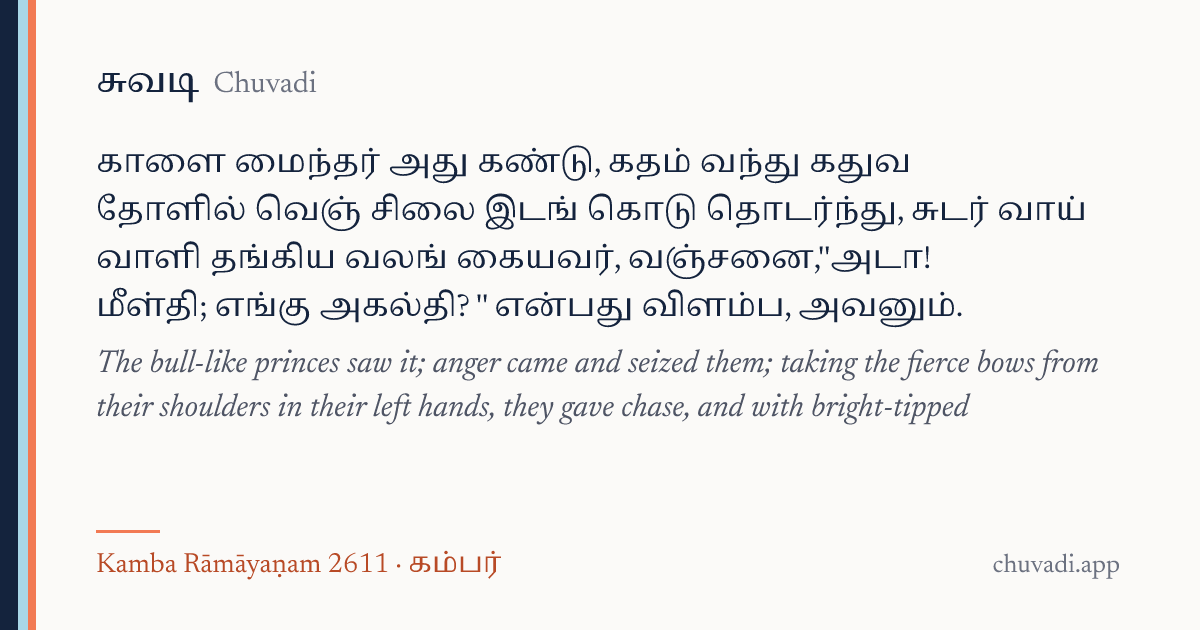
காளை மைந்தர் அது கண்டு கதம் வந்து கதுவ - இளம் எருது போன்ற இராமலக்குவர் அதனைப் பார்த்து, சினம் பிறந்து பற்றி; தோளில் வெஞ்சிலை இடங்கொடு - தோளிலே மாட்டிய கொடிய வில்லைத் தம் இடக்கையில் பிடித்துக்கொண்டு; சுடர் வாய் வாளி தங்கிய வலங் கையவர்- ஒளி பொருந்திய அம்புகள் கொண்ட வலக்கையினராய், தொடர்ந்து - அவ்விராதனைப் பின்தொடர்ந்து, அடா! வஞ்சனை மீள்தி எங்கு அகல்தி - ஏ அற்பனே! இச்செயல் வஞ்சகமானது; திரும்புவாயாக! நீ எங்கே செல்கிறாய்? என்பது விளம்ப - என்னும் சொற்களைக் கூற; அவனும் - அவ்வரக்கனும்.
காளை - பெருமிதம், வலிமை, நடை முதலியவற்றில் சிறந்ததால் ஆடவர்க்கு உவமை. அகல்தி -முன்னிலை ஏவல் ஒருமை வினைமுற்று.
ஆங்கிலம் · English translationAI
Translation
- The bull-like princes saw it; anger came and seized them;
- taking the fierce bows from their shoulders in their left hands, they gave chase, and with bright-tipped
- arrows held in their right hands they cried, 'Treachery! Ha!
- Turn back! Where are you off to?' And he in turn,
What the poem says
Seeing Cītai carried off, Irāmaṉ and Ilakkuvaṉ, compared to young bulls for their pride, strength and gait, take their bows in their left hands and arrows in their right and chase the demon, shouting at him to turn back from his cowardly act. The sentence runs on into the next verse, where Virātaṉ replies.