



கம்பராமாயணம் 2612 · ஆரணிய 1.21
பாடல் · The poem
Tap a word to see its gloss in the commentary and where else it occurs.
பாட வேறுபாடு · Project Madurai reads
பொருள் · Meaning in Tamil
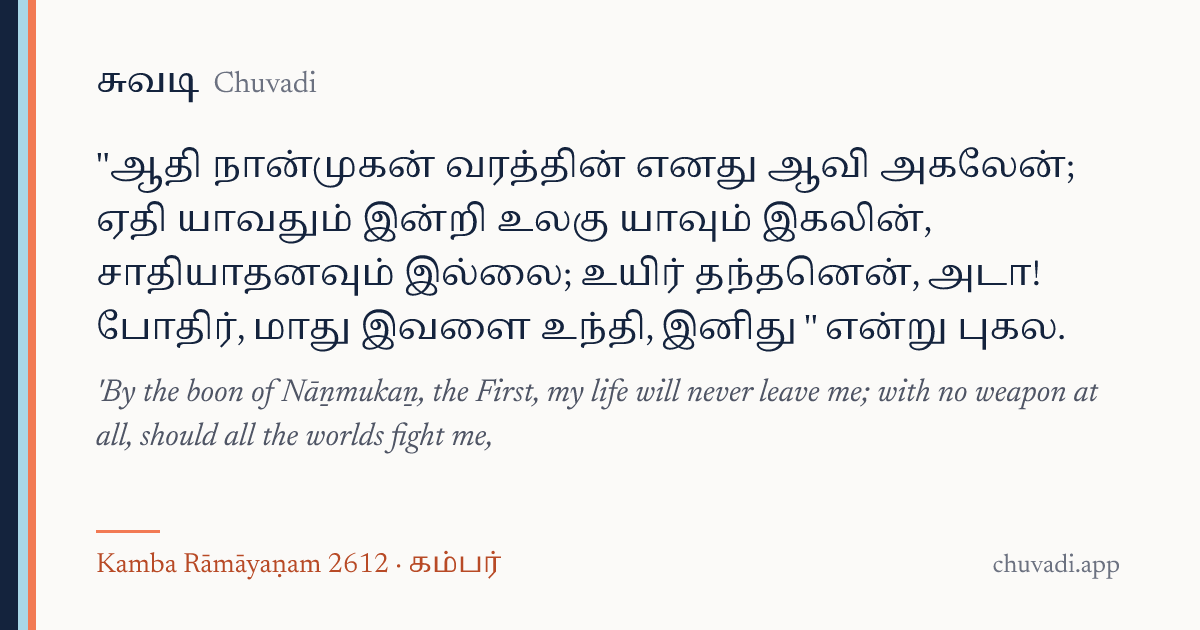
ஆதிநான் முகன் வரத்தின் - படைப்பில் முதலில் தோன்றிய பிரமன் எனக்குக் கொடுத்த வரத்தினால்; எனது ஆவி அகலேன் - என் உயிர் நீங்க மாட்டேன்; ஏதியாவதும் இன்றி - ஆயுதங்கள் ஒன்றும் இல்லாமலேயே; உலகு யாவும் இகலின் சாதியாதனவும் இல்லை - எல்லா உலகத்தவரும் எதிர்த்துப் போரிட்டாலும் நான் வெல்லக் கூடாதன இல்லை; அடா! உயிர் தந்தனென் - அற்பர்களே! உங்களுக்கு இரங்கி உயிர்ப்பிச்சை கொடுத்தேன்; மாது இவளை உந்தி இனிது போதிர் - இப்பெண்ணை என்னிடம் விட்டு இனிதே செல்லுங்கள்; என்று புகல -என்று விராதன் சொல்ல,
தேவர்களில் முதலில் வைத்து எண்ணப்படுபவன் நான்முகன் எனலும் ஆம். ஏதி - காரணம் எனலுமாம். இனி விராதன் இறப்பதை முன்னமே தெரிவிக்கும் அமங்கலப் பொருள் படக் கூறும் நெறி: அடா- இவ்வாறு நான் செய்வன தகாதனவே. உயிர்தந்தனென் - என் உயிரைக் கொடுத்து விடுகிறேன், மாதிவளை உந்தி இனிது போதிர்- இப்பெண்ணை அழைத்துக் கொண்டு இனிதே செல்வீர் என்பதாம். போதிர் - முன்னிலை ஏவல் பன்மை வினைமுற்று.
ஆங்கிலம் · English translationAI
Translation
- 'By the boon of Nāṉmukaṉ, the First, my life will never leave me;
- with no weapon at all, should all the worlds fight me,
- there is nothing I could not win. I have given you your lives, little men!
- Leave this woman and go your way in peace,' he said.
What the poem says
Virātaṉ boasts that a boon from Nāṉmukaṉ, the four-faced creator, keeps him from dying, and that unarmed he could defeat all the worlds. He spares the brothers' lives and tells them to leave Cītai and go.
The poet has worded the speech so that it also carries an unlucky second meaning that foretells his end: 'what I do is wrong; I give up my life; take this woman and go in peace'.