



கம்பராமாயணம் 2621 · ஆரணிய 1.30
பாடல் · The poem
Tap a word to see its gloss in the commentary and where else it occurs.
பொருள் · Meaning in Tamil
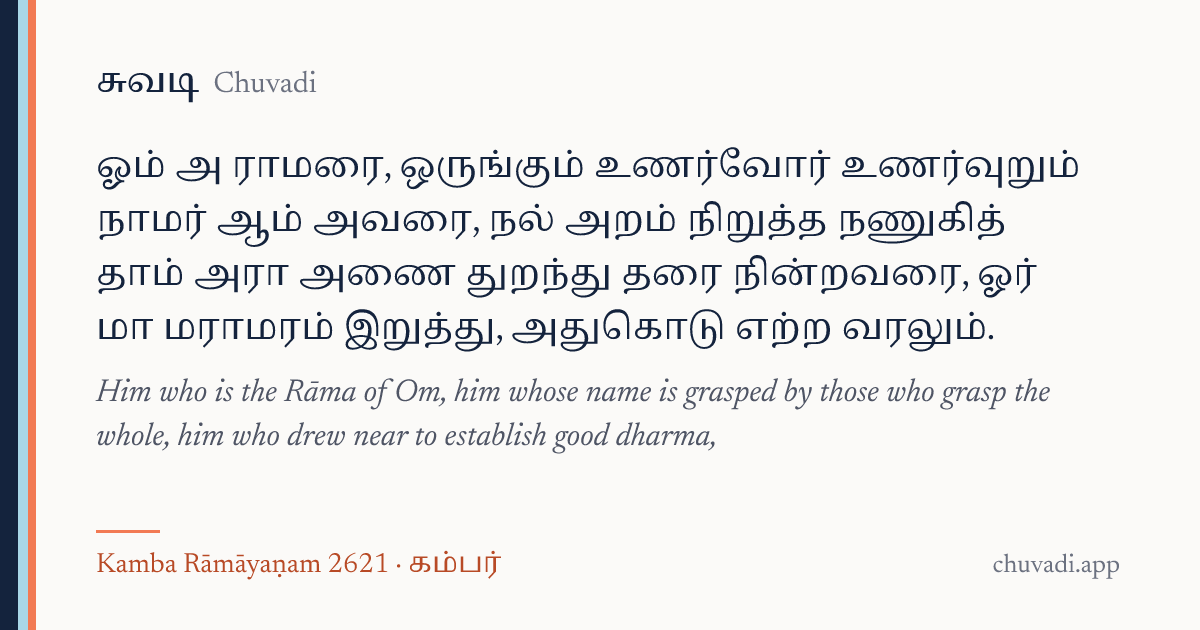
ஓம் அ ராமரை - ஓம் எனும் பிரணவ மந்திரப் பொருளாகிய இராம பிரானை; ஒருங்கும் உணர்வோர் உணர்வுறும் நாமர் ஆம் அவரை - முற்றும் உணர்ந்த பெரியோரே அறியத்தக்க இராமன் எனும் திருப்பெயர் கொண்ட அவரை; நல்லறம் நிறுத்த - சிறந்த தருமத்தை நிலை நிறுத்தற்காக; தாம் அரா அணை துறந்து தரை நணுகி நின்றவரை - தமக்குரிய ஆதிசேடனாம் பள்ளியை விட்டு நீங்கி உலகில் வந்து அவதரித்தவரை; ஓர் மா மராமரம் இறுத்து - ஒரு பெரிய ஆச்சா மரத்தைப் பிடுங்கி ஒடித்து; அது கொடு எற்ற வரலும் - அதனைக் கொண்டு அடிக்க வரவும்.
இராமனின் நிலையை அறியாது விராதன் இவ்வாறு செய்கிறான் என்பது தோன்ற “ஓம் அ ராமரை” எனக் கவி சிறப்பித்துக் கூறுகிறார். ஓம் ராமரை என ஓமங்களால் விளங்கும் வேள்வியும் வேள்விப்பயனுமாய் விளங்கும் இராமனை எனவும் குறிப்பர். இராம நாமம் என்பது நல்லறிவுடையோர் அறியும் பொருளாக விளங்குவது (இராமர் என்ற சொல்லைக் கொண்ட இச்செய்யுள் இடைச் செருகல் என்பர் சிலர்) திருவனந்தாழ்வான் இலக்குவனாய் அவதரித்ததையும் ஒருவாறு குறிப்பிடும். இது திரிபு எனும் சொல்லணி கொண்டது.
ஆங்கிலம் · English translationAI
Translation
- Him who is the Rāma of Om, him whose name is grasped by those who grasp the whole,
- him who drew near to establish good dharma,
- leaving his serpent couch, and stood upon the earth: at him, breaking off one
- huge marā tree, the demon came on, to strike with it.
What the poem says
Virātaṉ tears up a great tree to club Irāmaṉ with, not knowing whom he attacks. The poet reminds us: this is the one who is the meaning of the sacred syllable Om, whose name only the wise truly understand, who left his couch on the serpent Ātiśēṣaṉ to come to earth and set dharma right.
The verse is a sound-play, repeating the syllables of 'Rāma' and 'marāmaram' across the lines. The commentary notes that some think the verse a later insertion.