



கம்பராமாயணம் 2623 · ஆரணிய 1.32
பாடல் · The poem
Tap a word to see its gloss in the commentary and where else it occurs.
பாட வேறுபாடு · Project Madurai reads
பொருள் · Meaning in Tamil
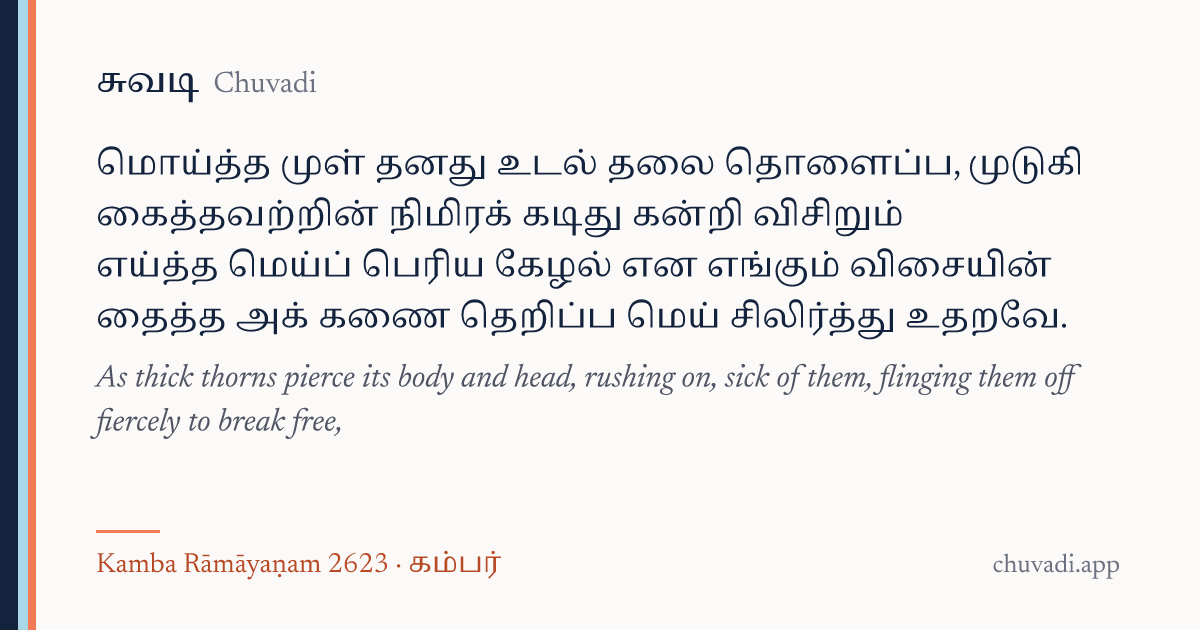
தனது உடல் தலை மொய்த்த முள் தொளைப்ப - தன் உடம்பினிடத்து மிகுதியாக அம்பு துளைத்துச் செல்ல, முடுகி கைத்து அவற்றின் நிமிரக் கடிது கன்றி விசிறும் - விரைந்து மனம் வெறுப்புற்று அவ்வம்புகளிலிருந்து விடுபடச் சிதறச்செய்யும்; எய்த்த பெரிய மெய் கேழல் என - வருந்திய பெரிய உடலை உடைய காட்டுப்பன்றியைப் போல; எங்கும் விசையின் தைத்த அக்கணை தெறிப்ப -(விராதன்) தன் உடல் எங்கும் வேகமாக ஊடுருவிய (இராமனின் அவ்வம்புகள் சிதறி விழுமாறு; மெய் சிலிர்த்து உதற - உடலைச் சிலிர்த்துக் கொண்டு உதறவும்; ஏ - ஈற்றசை.
முள் - முள்போல் கூரிய அம்பு, இராமனின் அம்பு தைக்கப்பெற்ற அரக்கனின் உடல் பெரிய காட்டுப்பன்றிக்கு உவமையாயிற்று. முன்பாடலில் இராமனைச் சிங்க ஏற்றிற்கு உவமித்த உயர்வும் இங்கு விராதனை இழிந்த பன்றிக்கு உவமித்த இழிவும் ஒப்பு நோக்கத் தக்கது. எய்த்த கேழல் என்பதற்கு முள்ளம்பன்றி எனவும் கூறுவர்.
ஆங்கிலம் · English translationAI
Translation
- As thick thorns pierce its body and head, rushing on,
- sick of them, flinging them off fiercely to break free,
- like a huge, weary boar: so, as everywhere the arrows driven in with force
- sprang out, he bristled his body and shook himself.
What the poem says
Virātaṉ shakes off the arrows like a great wild boar shaking off thorns that have stuck in it, or, as some take it, a porcupine. The commentary contrasts the images: Irāmaṉ was just compared to a lion, while the demon is now likened to a lowly pig.