



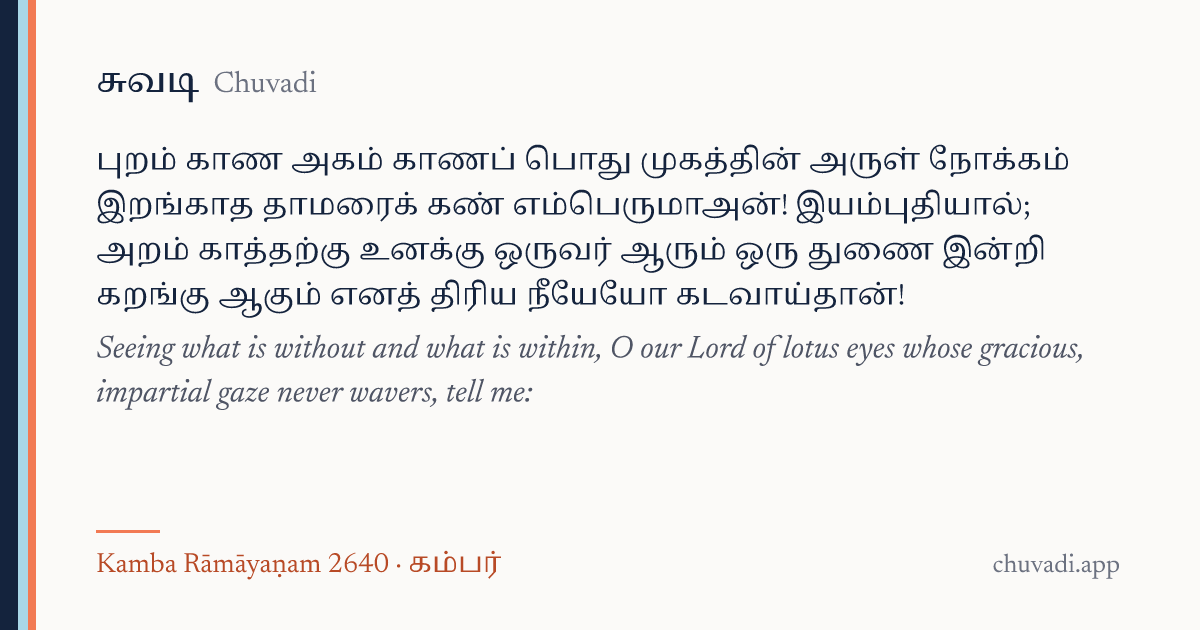
கம்பராமாயணம் 2640 · ஆரணிய 1.49
பாடல் · The poem
Tap a word to see its gloss in the commentary and where else it occurs.
பொருள் · Meaning in Tamil
பொது முகத்தின் அருள்நோக்கம் இறங்காத் தாமரைக்கண் எம்பெருமாஅன் - நடுநிலையில் நின்று அருட்பார்வை நீங்காத செந்தாமரை போன்ற கண்ணுடைய எங்கள் பெருமானே! புறம் காண அகம் காண- ஒவ்வொரு பொருளின் உள்ளும் புறமும் கண்டு (வியாபித்து); அறம்காத்தற்கு - தருமத்தைப் பாதுகாத்தற்கு; உனக்கு ஒருவர் ஆரும் ஒருதுணை இன்றி - உனக்கு வேறு ஒருவர் எவரும் ஒரு சிறு துணையும் செய்யாமல், கறங்கு ஆகும் எனத் திரிய - காற்றாடி போலச் சுற்றித்திரிவதற்கு; நீயேயோ கடவாய்தான் - நீ தானோ கடமைப்பட்டாய், இயம்புதி - எனக்குக் கூறுவாய். ஆல்- அசை.
பரம்பொருள் எல்லாப் பொருள்களிலும் பரவிநின்று அறங்காத்து அருள்புரிவதை இப்பாடல் விளக்கும். இறங்காத - முன் பின் தாழாத. அறங்காக்கக் காற்றாடி போல் திரிந்த நிலையை முன் யானை காத்த நிகழ்ச்சியில் காணலாம். துணையின்றி அறங்காப்பதால் 'தருமத்தின் தனி மூர்த்தி' ஆவான் (2568). புறமாகிய ஊனக் கண்ணாலும் அகமாகிய ஞானக் கண்ணாலும் காண - எனவும் உரைப்பர். எம்பெருமாஅன் - அண்மைவிளி அளபெடுத்து வந்தது.
ஆங்கிலம் · English translationAI
Translation
- Seeing what is without and what is within, O our Lord of lotus eyes
- whose gracious, impartial gaze never wavers, tell me:
- to guard dharma, with no one at all to stand beside you,
- must you alone keep wheeling about like a whirligig?
What the poem says
Virātaṉ asks Irāmaṉ, whose lotus eyes look on all beings alike and see both the outside and the inside of everything, why he alone must keep spinning around like a toy windmill to protect dharma, with no one to help him. The rescue of the elephant in the previous verse is an example of this restless guardianship.