



கம்பராமாயணம் 2650 · ஆரணிய 1.59
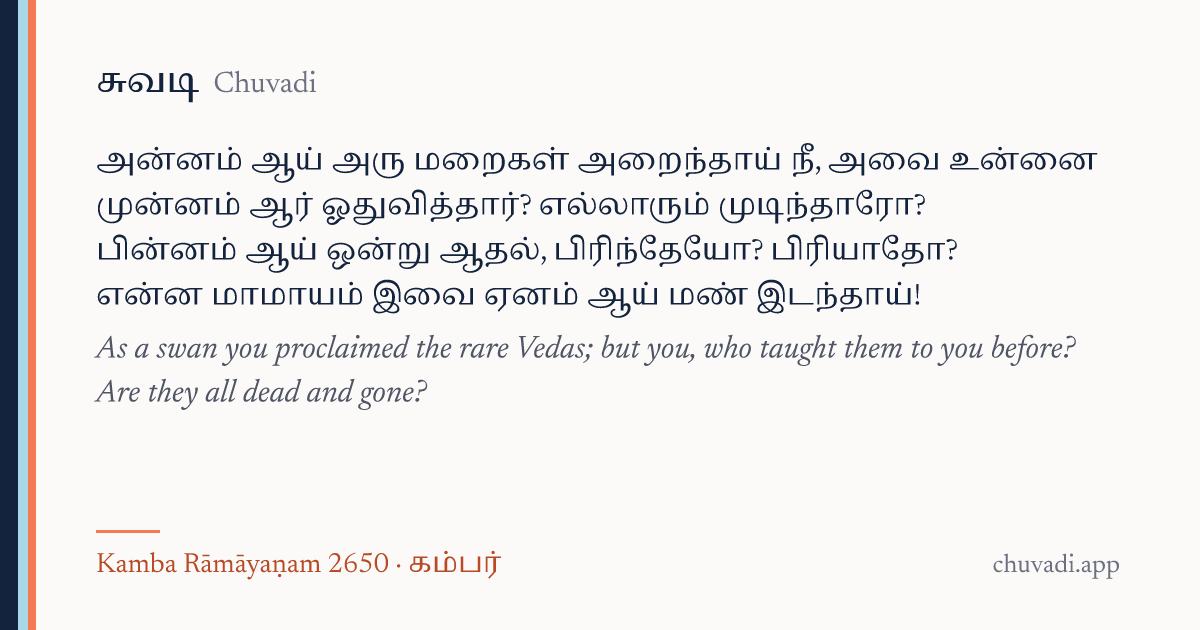
பாடல் · The poem
Tap a word to see its gloss in the commentary and where else it occurs.
பொருள் · Meaning in Tamil
ஏனம் ஆய் மண் இடந்தாய் - வராகமாய் நிலத்தைத் தன் கொம்பால் குத்தி எடுத்த திருமாலாம் இராமனே; நீ அன்னமாய் அருமறைகள் அறைந்தாய் - நீ அன்னப் பறவையாகிப் பிரமனுக்கு அரிய வேதங்களை அருளினாய்; அவை முன்னம் உன்னை ஆர் ஓதுவித்தார்- அவ் வேதங்களை முன்னர் யார் உனக்குக் கற்பித்தார்?; எல்லாரும் முடிந்தாரோ? - அவர்கள் இறந்து விட்டார்களோ?; பின்னம் ஆய் ஒன்று ஆதல் பிரிந்தேயோ - பின்னப் பட்டு வேறாய் அமைந்தவை பின் ஒன்றாய் அமையும் என்பது ஒன்றிலிருந்து பிரிந்து வந்தவையோ?; பிரியாதோ- அல்லது பிரியாது தனித்துள்ளவையோ?; என்ன மாமாயம் இவை? - இவ்வாறு உன் பெரிய மாயங்கள் இவையோ? (விளங்கவில்லையே).
நீ சுய அறிவுடையவன் என்பது தோன்ற 'முன்னம் ஆர் ஓதுவித்தார்?' என்ற கேள்வி உளது. உயிரும் கடவுளும் வேறுபட்ட நிலை என்ற கொள்கையை மறுத்துப் 'பின்னம் ஆய் ஒன்று ஆதல் பிரிந்தேயோ' என்ற தொடர் காட்டும். ஏனமாய் மண்ணிடந்த கதை: முன்னொரு காலத்தில் பூமியைப் பாய் போலச் சுருட்டிக் கடலில் ஒளித்த இரணியாக்கன் என்பவனைத் திருமால் வராகமாக அவதரித்துக் கொன்று பூமியைத் தன் கொம்பால் எடுத்துக் கொண்டு வந்து விரித்தருளினார்.
ஆங்கிலம் · English translationAI
Translation
- As a swan you proclaimed the rare Vedas; but you,
- who taught them to you before? Are they all dead and gone?
- Is becoming one, having been many, a parting? Or no parting at all?
- What great illusions are these, O you who as a boar dug up the earth!
What the poem says
Taking the form of a swan, Tirumāl taught the Vedas to Piramaṉ; but who taught him? The question implies that his knowledge is his own. Virātaṉ then puzzles over how the one becomes many and the many one, whether souls are separate from God or not, and calls it all his great illusion.
He addresses him as the Boar who dug up the earth: the demon Iraṇiyākkaṉ had rolled the earth up like a mat and hidden it in the sea, and Tirumāl as a boar killed him and raised the earth on his tusk.