



கம்பராமாயணம் 2664 · ஆரணிய 2.1
பாடல் · The poem
Tap a word to see its gloss in the commentary and where else it occurs.
பொருள் · Meaning in Tamil
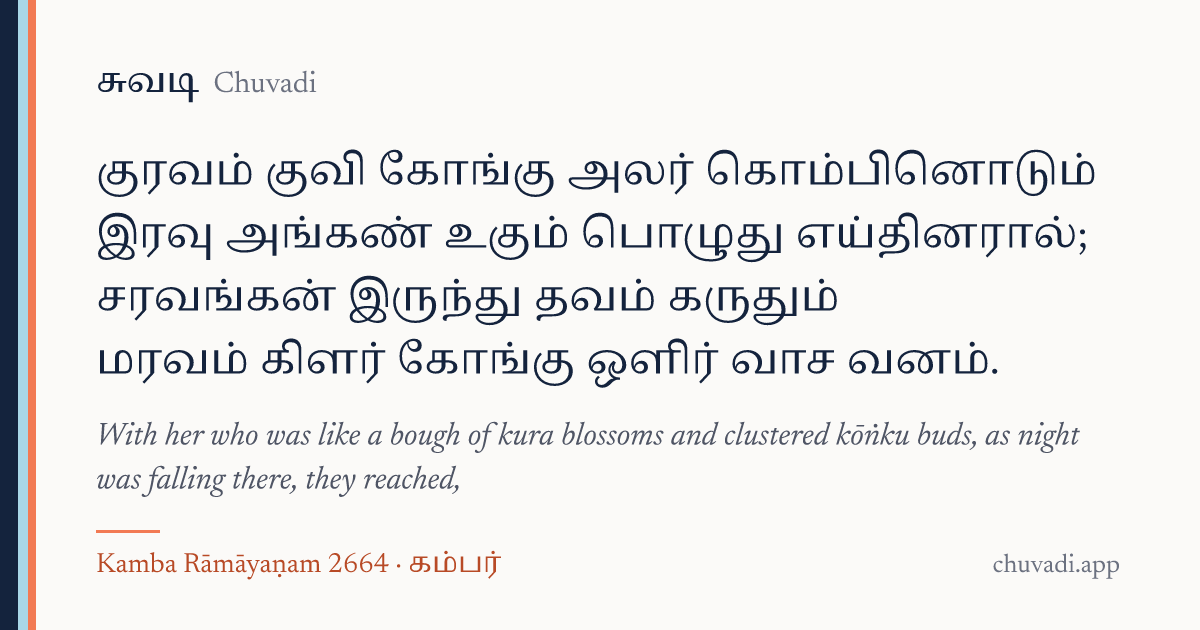
குரவம் குவிகோங்கு அலர் - குரா மலரும் குவிந்த கோங்கு அரும்புகளும் மலர்ந்த - கொம்பினொடும் - பூங் கொம்புபோன்ற சீதையுடன்; சரவங்கன் இருந்து தவம் கருதும் - சரபங்க முனிவன் தங்கியிருந்து தவத்தைச் செய்கின்ற; மரவம் கிளர் கோங்கு ஒளிர் வாச வனம்- மராமரத்திலிருந்து வளர்ந்தோங்கும் தேன் விளங்கு மணங்கொண்ட வனத்தை; இரவு அங்கண் உகும் பொழுது எய்தினர் - இரவு நேரம் அவ்விடத்தே சேரும்பொழுதில் அடைந்தனர், ஆல் - அசை.
குரவமலரணிந்த, குவிந்த கோங்கு போன்ற முலைகளை உடைய சீதை எனலுமாம். மரவம் என்பது வெண்கடம்பு எனவும் குங்குமமரம் எனவும் கொள்வர். சரவங்கன் - சரபங்கன் எதுகை நோக்கித்திரிந்தது. இரவு அங்கு அணுகும் பொழுது எனவும் பிரிப்பர். குரவம் கோங்கு என்பன முதலாகு பெயர்கள். கொம்பு - உவமவாகுபெயர். இது முதல் கலிவிருத்தம். மூச்சீரடி வஞ்சி விருத்தமாகவும் கொள்வர்.
ஆங்கிலம் · English translationAI
Translation
- With her who was like a bough of kura blossoms and clustered kōṅku buds,
- as night was falling there, they reached,
- where Caravaṅkaṉ dwelt intent on penance,
- a fragrant forest bright with marava and blossoming kōṅku.
What the poem says
The chapter of Carapaṅkaṉ's release from birth begins. At nightfall Irāmaṉ, Ilakkuvaṉ and Cītai, who is like a flowering branch, reach the sweet-smelling forest where the sage Carapaṅkaṉ performs his penance. His name is altered here to Caravaṅkaṉ to fit the rhyme. The name is explained as 'he who defeated the arrows of the god of love'.