



கம்பராமாயணம் 2683 · ஆரணிய 2.20
பாடல் · The poem
Tap a word to see its gloss in the commentary and where else it occurs.
பொருள் · Meaning in Tamil
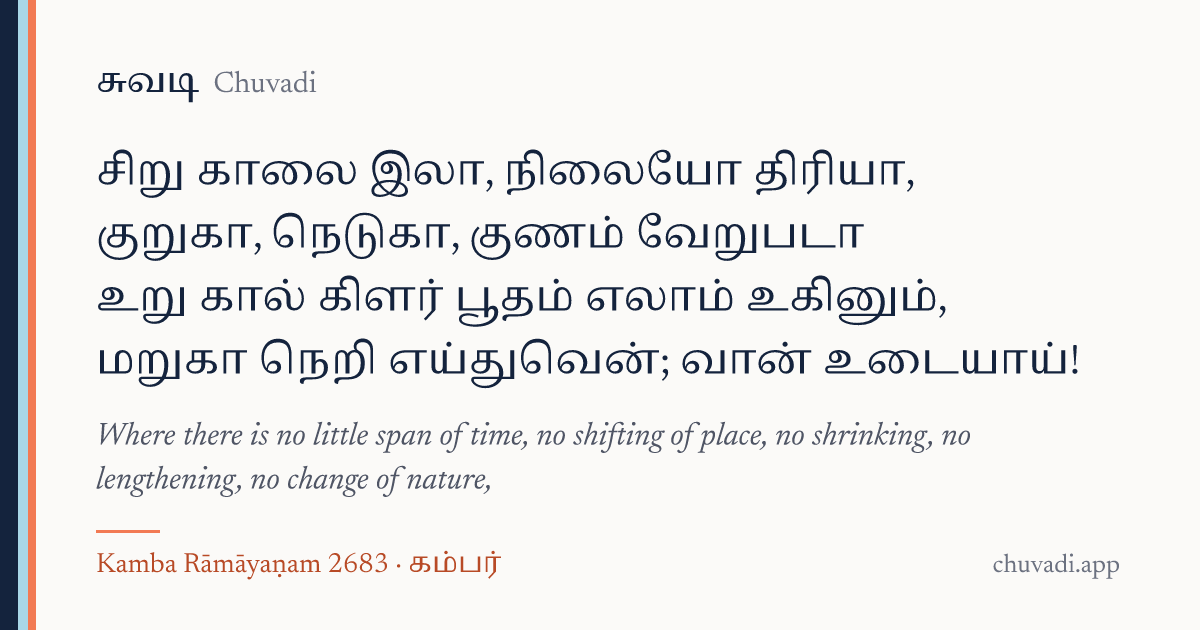
வான் உடையாய் - சுவர்க்க நாட்டை உடைய இந்திரனே! சிறு காலை இலா - சிறிய பொழுது இல்லாததும், நிலையோ திரியா-இடம் விட்டுப் பெயராததும்; குறுகா - காலத்தால் குறுகிப் போகாததும், நெடுகா- அக்காலத்தில் பெருகி நீளாததும்; குணம் வேறுபடா- தன்மையில் மாறுபடாததும், உறு கால் கிளர் பூதம் எலாம் உகினும் - பொருந்திய காற்று முதலாக விளங்கும் ஐம்பூதங்கள் எல்லாம் விழுந்து அழிந்தாலும்; மறுகா நெறி எய்துவென் - அழியாத முத்தி நெறியை அடைவேன் (என்றான்).
மறுகா நெறி - மாறாத முத்தி நெறி என்பது மற்ற பதவிகளை விட மேலானது. மற்றவை உருவாலும் காலத்தாலும் தன்மையாலும் பல மாறுபாடுகள் அடையும். இதுவோ அத்தகைய மாறுபாடு அடையாது. இதனைச் சடாயு 'பூதங்கள் விளியும் நாளும் போக்கிலா உலகம் புக்க' (3530) நிலையுடன் ஒப்பிடத்தக்கது. இதில் சரபங்கரின் உறுதிப்பாடு புலனாகிறது.
ஆங்கிலம் · English translationAI
Translation
- Where there is no little span of time, no shifting of place,
- no shrinking, no lengthening, no change of nature,
- though all the elements, with the rising wind, should fall away,
- that unwavering path I shall reach, O lord of heaven!
What the poem says
Carapaṅkaṉ declares his goal: not Piramaṉ's world but final liberation, a state outside time and place that neither shrinks nor grows nor changes, and that survives even when the five elements are dissolved. Other heavens alter with time; this does not. The commentary compares Caṭāyu's later attainment of a world that remains when the elements perish.