



கம்பராமாயணம் 2686 · ஆரணிய 2.23
பாடல் · The poem
Tap a word to see its gloss in the commentary and where else it occurs.
பாட வேறுபாடு · Project Madurai reads
பொருள் · Meaning in Tamil
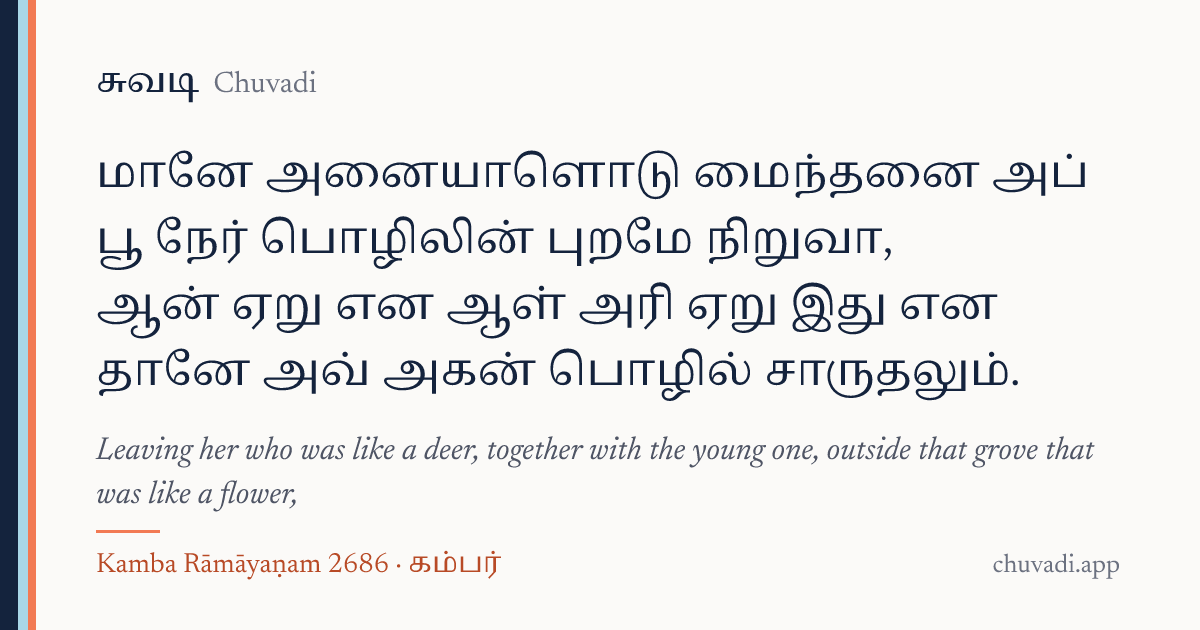
மானே அனையாளொடு மைந்தனை - மான் போன்ற சீதையோடு இளையவனாம் இலக்குவனையும்; அப் பூநேர் பொழிலின் புறமே நிறுவா- அந்தப் பூக்கள் நிறைந்த சோலையில் வெளியே இருக்கச் செய்து; ஆன் ஏறு என - காளை போலவும்; ஆள் அரிஏறு என - வலிய ஆண் சிங்கம் ஒப்பவன் எனவும்; தானே அவ்அகன் பொழில் சாருதலும் - தான்மட்டும் அந்த அகன்ற (சரபங்கரின்) தவச் சாலையை அடைதலும்; இது - அசை.
மைந்து- இளமை, மைந்தன்- இளையவனாம் இலக்குவனைக் குறித்தது. இராமனை இலக்குவன் தந்தை எனக் கொள்வதால் இவ்வாறு கூறலுமாம். மைந்தன் - வலிமை உடையவன் எனவும் கூறுவர். இராமன் நடைக்குக் காளையும் ஆண் சிங்கமும் உவமையாக 'மாகமடங்கலும் மால்விடையும்... நாண நடந்தான்' என வருவதைக் காணலாம் (697). ஆள் - மற்ற விலங்குகளை அடக்கி ஆள்கின்ற எனவும் ஆம். நிறுவா- நிறுவி உடன்பாட்டு வினையெச்சம்.
ஆங்கிலம் · English translationAI
Translation
- Leaving her who was like a deer, together with the young one,
- outside that grove that was like a flower,
- like a bull, like a ruling lion,
- he went by himself into that wide grove.
What the poem says
Irāmaṉ leaves Cītai with Ilakkuvaṉ outside the flowering grove and goes into the hermitage alone, walking with the gait of a bull or a lion, comparisons the poet also used for him in the first book.