



கம்பராமாயணம் 2688 · ஆரணிய 2.25
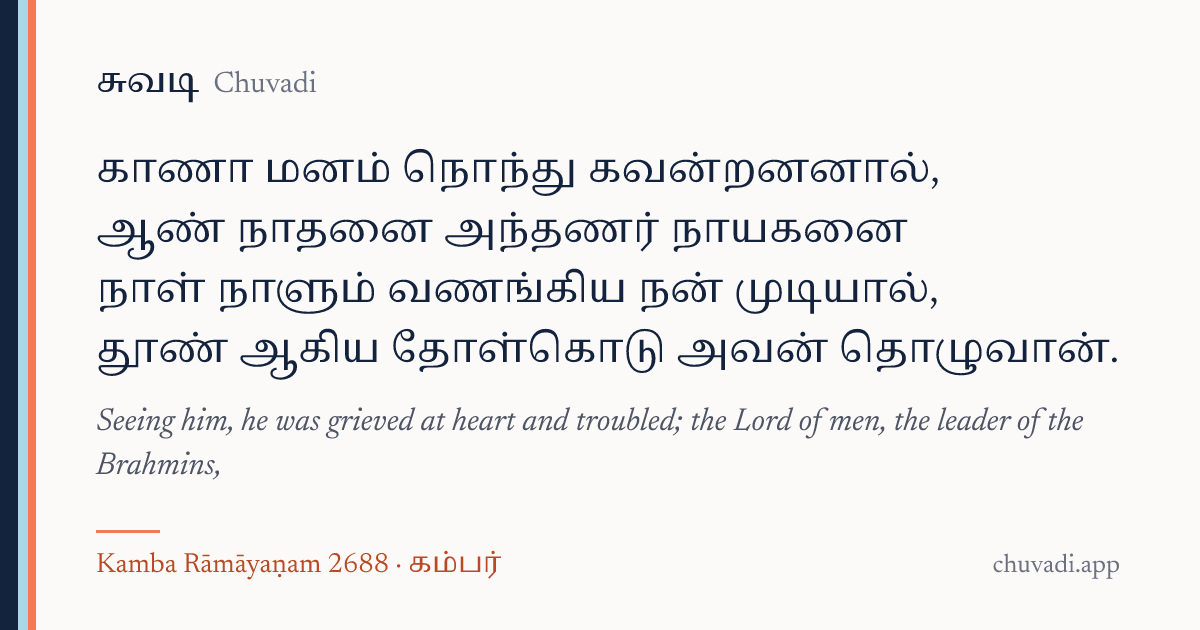
பாடல் · The poem
Tap a word to see its gloss in the commentary and where else it occurs.
பாட வேறுபாடு · Project Madurai reads
பொருள் · Meaning in Tamil
காணா - (அங்கு இந்திரன் இராமனைப்) பார்த்து; மனம் நொந்து கவன்றனன் - மனம் நோயுற்றுக்கவலை கொண்டான் ஆக; ஆண்நாதனை - ஆண்களின் தலைவனை (புருஷோத்தமனை); அந்தணர் நாயகனை - அந்தணராம் முனிவர்க்குத் தலைவனாம் இராமனை; நாள் நாளும் வணங்கிய நன்முடியால் - நாள் தோறும் தொழுகின்ற தன்மேலான சிரத்தால்; தூண் ஆகிய தோள் கொடு அவன் தொழுவான் - தூண் போன்ற தன் புயங்கள் பட இராமனின் திருவடிகளை இந்திரன் வணங்குவான்; ஆல் - அசை.
கண்டு மனம் நொந்து கவன்றனன் என்பதால் பரமபத வாழ்வை விட்டுத் தனக்காக மனித வடிவெடுத்ததுடனன்றிக் காடுகளில் கால் நோவ வருந்தி இராமன் திரிதலைக் கண்ட நிலையை அறியலாம். இராமன் திருவடிகளில் இந்திரன் தலையும் தோளும் படத் தொழுதான் என்பதால் மார்பு கால் முதலிய பிற உறுப்புகளாலும் வணங்கினான் என அறியலாம். இது உபலட்சணம்.
ஆங்கிலம் · English translationAI
Translation
- Seeing him, he was grieved at heart and troubled;
- the Lord of men, the leader of the Brahmins,
- with the fine crowned head that bowed to him day after day
- and with his pillar-like shoulders, he worshipped.
What the poem says
Intiraṉ is distressed to see that the Supreme Lord has left his heavenly state and taken human form for the gods' sake, and now wanders on foot through forests. He prostrates himself at Irāmaṉ's feet, head and shoulders touching the ground; naming those parts implies a full prostration.