



கம்பராமாயணம் 2701 · ஆரணிய 2.38
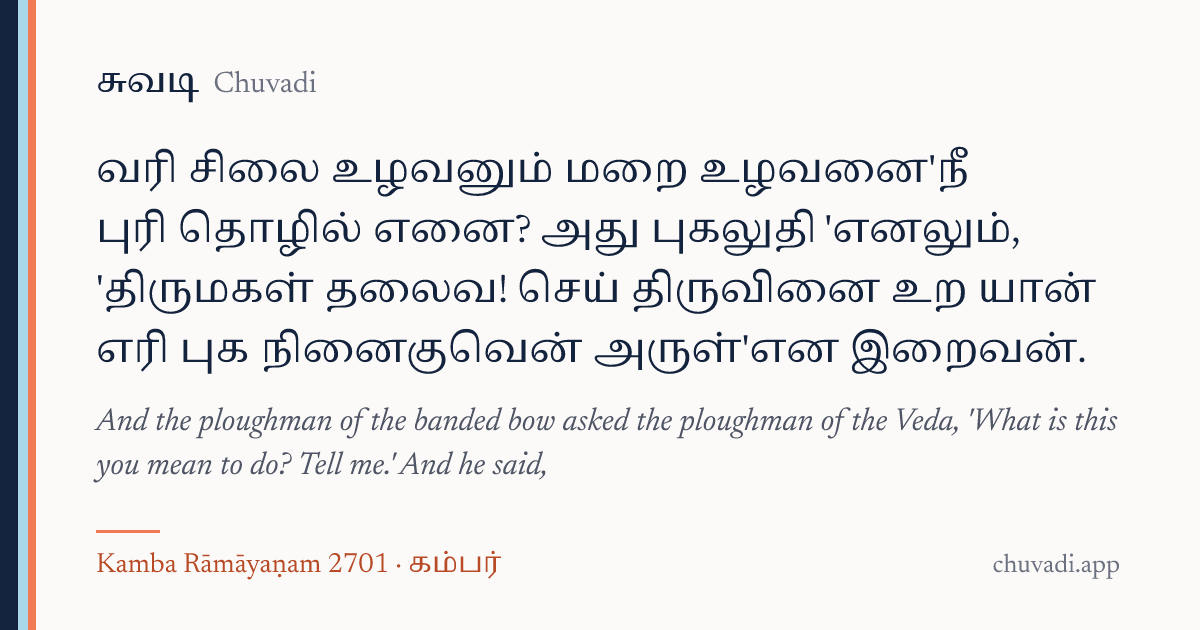
பாடல் · The poem
Tap a word to see its gloss in the commentary and where else it occurs.
பொருள் · Meaning in Tamil
வரிசிலை உழவனும் - கட்டமைந்த வில்லில் வல்ல இராமனும்; மறை உழவனை - வேதம் வல்ல சரபங்கரை நோக்கி; நீபுரி தொழில் எனை அது புகலுதி எனலும் - நீ செய்ய விரும்பிய செய்கை என்ன? அதனைக் கூறுவாயாக எனக் கேட்டதும்; திருமகள் தலைவ செய் திருவினை உற - இலக்குமி கணவனே, செம்மையான மோட்சத்தை அடையும்படி, யான் எரிபுக நினைகுவென் அருள் என - நான் தீயில் புக எண்ணினேன், நீ விடை அருள்க என்று வேண்டவும்; இறைவன் - இராமன்.
சிலை உழவன், மறை உழவன் என்பன முன்னர் வாளுழவன் என்ற தொடர் (1371) வந்தது போன்றது. குறளில் வில்லேர் உழவர் சொல்லேர் உழவர் என்பவையும் காண்க. (குறள் 872). செய் இருவினை எனப் பிரித்து முன் செய்த நல்வினை தீவினை எனவும் கூறுவர். அவை அறின் மோட்சம் கிடைக்கும் என்பதாம்.
ஆங்கிலம் · English translationAI
Translation
- And the ploughman of the banded bow asked the ploughman of the Veda, 'What
- is this you mean to do? Tell me.' And he said,
- 'Lord of Tiru! That I may reach the blessed state, I
- mean to enter the fire; grant me this.' And the Lord,
What the poem says
Irāmaṉ, who ploughs with the bow, asks the sage, who ploughs with the Veda, what he intends; the image recalls the Tirukkuṟaḷ's 'ploughmen of the bow' and 'ploughmen of the word'. Carapaṅkaṉ, calling him the husband of Tirumakaḷ, says he wishes to enter the fire to attain liberation, and asks his blessing. The sentence runs into the next verse.