



கம்பராமாயணம் 2715 · ஆரணிய 3.8
பாடல் · The poem
Tap a word to see its gloss in the commentary and where else it occurs.
பொருள் · Meaning in Tamil
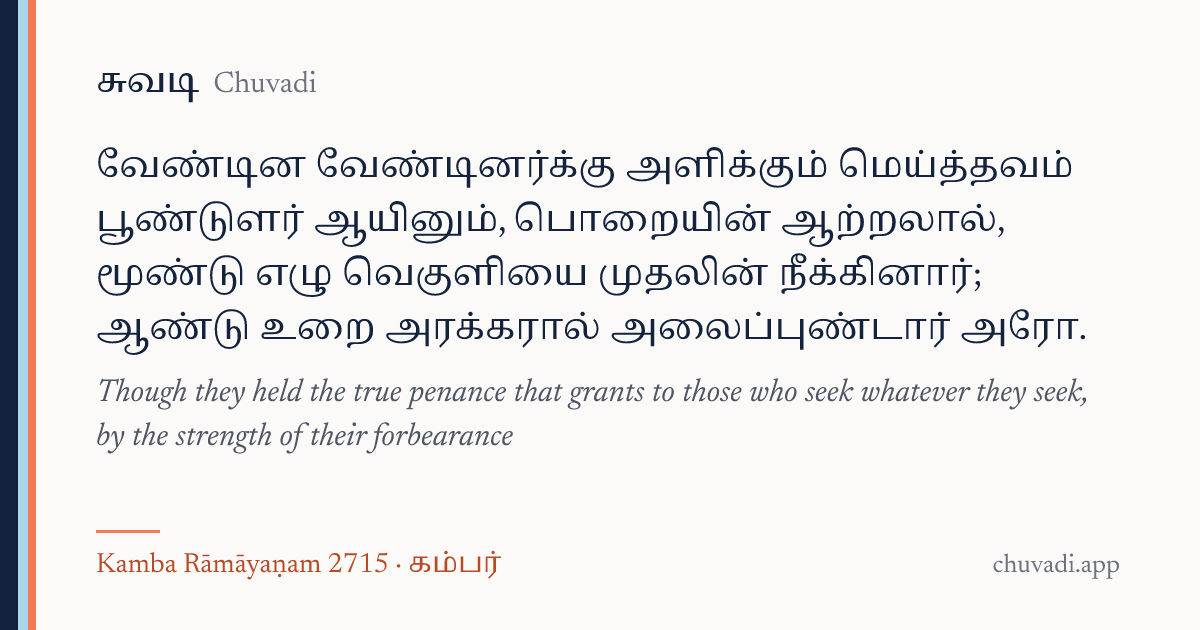
வேண்டின வேண்டினர்க்கு அளிக்கும் மெய்த் தவம் பூண்டுளர் ஆயினும் - விரும்பிச் செய்தவர்க்கு அவர்கள் விரும்பியவற்றை விரும்பிய வண்ணமே தரும் நற்றவம் மேற்கொண்டுள்ளவர் ஆனாலும், பொறையின் ஆற்றலால் - பொறுமை என்னும் வலிமையால், மூண்டு எழு வெகுளியை முதலின் நீக்கினார் - மேன்மேல் மிக்கு வரும் சினத்தை வேரொடு களைந்தார்கள். (ஆதலால்); ஆண்டு உறை அரக்கரால் அலைப்புண்டார் - அக்காட்டில் தங்கியிருந்து இராக்கதர்களால் வருத்தமுற்றார். அரோ- அசை.
இதனால் நிறை மொழி மாந்தராம் அம்முனிவர்கள் தம் தவ வலிமையால் அவ்வரக்கரைச்சினந்து சபித்து அழிக்காதிருத்தற்குக் காரணம் கூறப்பெற்றது. கூடா ஒழுக்கமாகிய பொய்த்தவத்திலிருந்து நீக்குதற்கு 'மெய்த்தவம்' என்றார். தவத்தின் பயன் எய்த முதலில் சினத்தை நீக்கிப் பின் பொறுமையைப் பெற வேண்டும் என்பதாம். பொறை - காரணம் பற்றியோ, மடமை பற்றியோ ஒருவன் தமக்கு மிகை செய்த போது தாம் அதனை அவன் இடத்துச் செய்யாது பொறுத்தல் ஆகும். தவத்தின் ஆற்றல் வேண்டிய வேண்டியாங்கு எய்தலாம்.
ஆங்கிலம் · English translationAI
Translation
- Though they held the true penance that grants to those who seek
- whatever they seek, by the strength of their forbearance
- they had first rooted out the anger that flares up;
- and so they were harried by the demons who lived there.
What the poem says
The poet explains why such powerful sages did not simply curse the demons. Their genuine penance could have given them anything, but practising forbearance, they had uprooted anger first of all. Having renounced anger, they could not use their power against their tormentors.