



கம்பராமாயணம் 2719 · ஆரணிய 3.12
பாடல் · The poem
Tap a word to see its gloss in the commentary and where else it occurs.
பொருள் · Meaning in Tamil
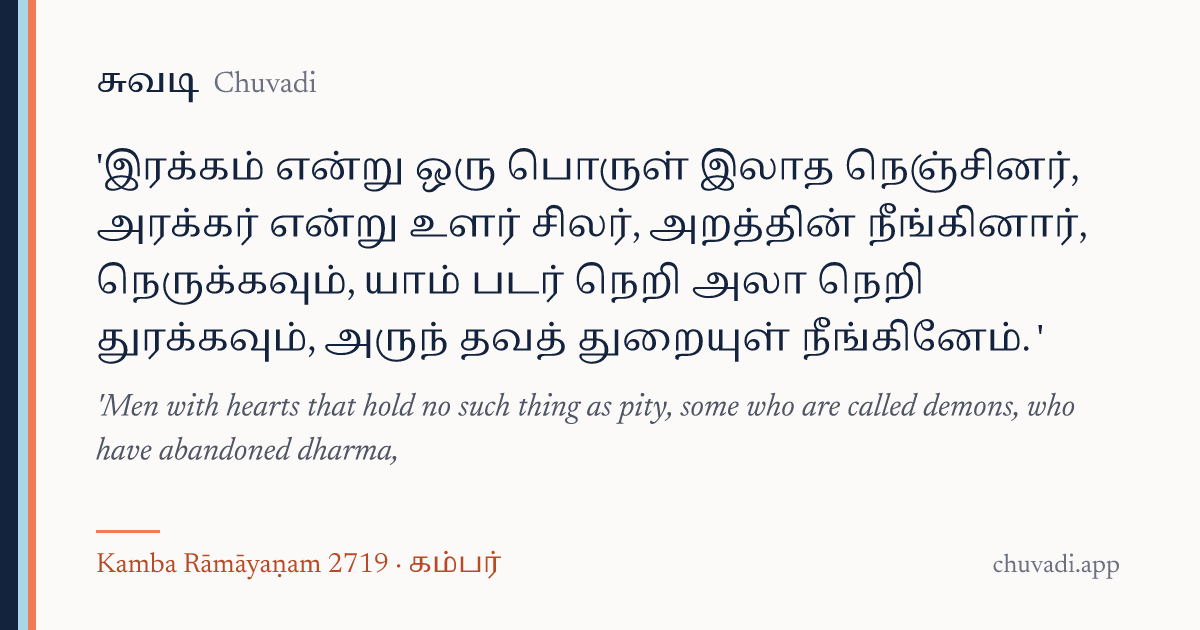
இரக்கம் என்று ஒரு பொருள் இலாத நெஞ்சினர் - இரங்குதல் என்று கூறும் ஒரு செய்கை ஒரு சிறிதும் இல்லாத மனம் உடையவர்களும்; அறத்தின் நீங்கினார் - தருமத்திலிருந்து நீங்கியவர்களுமான; அரக்கர் என்ற சிலர் உளர் - இராக்கதர் என்று சொல்லப்பட்டுச் சிலர் இருக்கின்றனர்; நெருக்கவும் யாம்படர் நெறி அலாநெறி துரக்கவும் - (அவர்கள் எங்களை) வருத்துவதால் நாங்கள் ஒழுகுதற்குரிய நல்லொழுக்கம் அல்லாத் தீயொழுக்கத்தில் செலுத்துவதனாலும்; அருந்தவத் துறையுள் நீங்கினேம் - அரிய தவத்தின் வழியிலிருந்து விலகினோம்.
ஒரு பொருள் - ஒப்பற்ற செல்வமுமாம். இரக்கம் என்ற பண்பைப் பொருளாகக் கூறுவது வைசேடிகமதம் பற்றி என்பர். சினத்தைப் பொருள் என்று கூறும் குறள். அரக்கர் அறத்தின் நீங்கினர், முனிவர்களாகிய நாங்கள் தவத்துறையுள் நீங்கினோம் என்ற இரு கூற்றுக்களும் ஒப்பிட்டு மகிழற்குரியவை. உறையுள் எனக் கொண்டு தவஞ் செய்யுமிடம் எனவும் உரைப்பர். துறையுள் - உருபுமயக்கம்.
ஆங்கிலம் · English translationAI
Translation
- 'Men with hearts that hold no such thing as pity,
- some who are called demons, who have abandoned dharma,
- by pressing us and driving us onto a path not ours to walk,
- have forced us from the way of hard penance.'
What the poem says
The sages describe their plight. Pitiless demons, who have abandoned dharma, crowd and harass them and force them off the path of penance. The commentary notes the neat balance: the demons have left dharma, and because of them the sages have had to leave their penance.