



கம்பராமாயணம் 2737 · ஆரணிய 3.30
பாடல் · The poem
Tap a word to see its gloss in the commentary and where else it occurs.
பொருள் · Meaning in Tamil
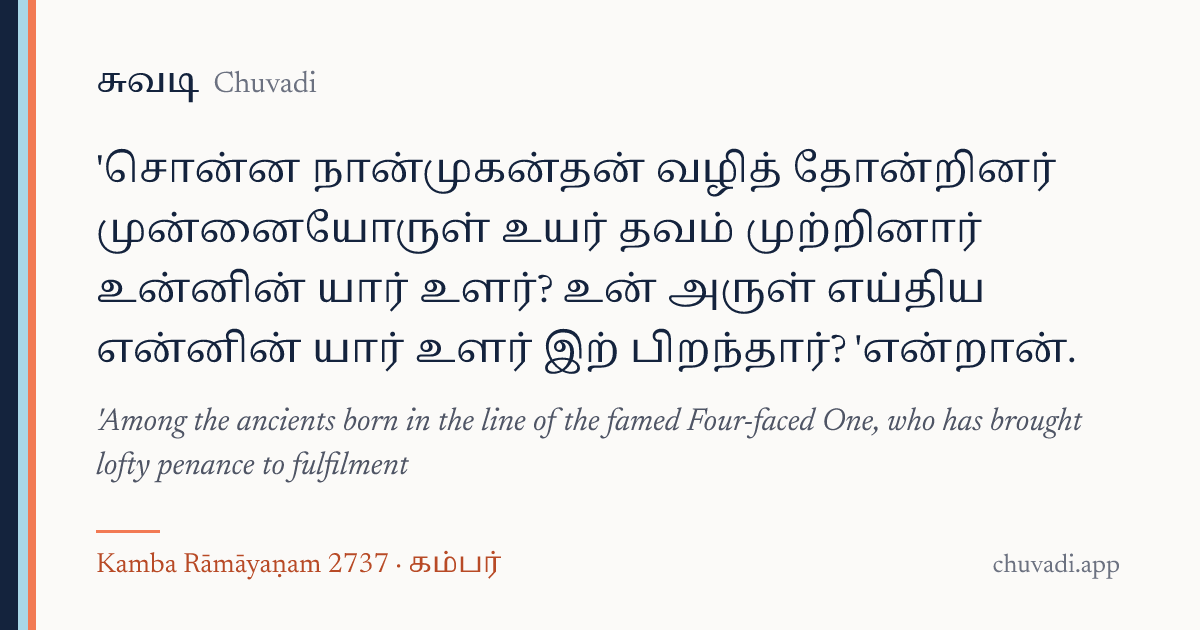
சொன்ன நான்முகன் தன்வழித் தோன்றினர் முன்னையோருள் - சிறப்பாகக் கூறப் பெற்ற பிரமனின் வமிசத்தில் பிறந்தவர்களாகிய முதன்மை பெற்ற பண்டைய முனிவர்களுள்; உயர்தவம் முற்றினார் உன்னின் யார் உளர் - சிறந்த தவத்தை முற்றச் செய்தவர் உன்னைப் போல வேறு எவர் இருக்கின்றனர்?; உன் அருள் எய்திய இற்பிறந்தார் என்னின் யார் உளர் என்றான் - உன் அருளை அடைந்த இல்வாழ்க்கையில் தோன்றினோர் என்னைப் போலப் பேறு பெற்றவர் வேறு எவர் உள்ளார் எனக் (இராமன் கூறினான். சொன்ன - ஆன்றோர் யாவரும் புகழ்ந்து கூறிய என்றுமாம். நான்முகன் வழியில் தோன்றியவர் அந்தணர் ஆவர். உயர்தவம் முற்றினார் என்ற தொடர் 'சுதீக்கணன்' என்ற பெயரினை (2657) விளக்கி நிற்கிறது. இற்பிறந்தார் - நற்குடியில் பிறந்து இல்லறத்திலே வாழ்பவர்; உன்னின் - ஆலோசித்தால் என்றுமாம், முனிவரின் அருளைப் பெற்றதால் என்னினும் பேறு பெற்றவர் யாருமில்லை என்றான், தற்புகழ்ச்சியன்று.
ஆங்கிலம் · English translationAI
Translation
- 'Among the ancients born in the line of the famed Four-faced One,
- who has brought lofty penance to fulfilment
- as you have? And among those born to a household,
- who is there like me, who has won your grace?' he said.
What the poem says
Irāmaṉ answers Cutīkkaṇaṉ's humble question by turning the praise back. Among all the sages descended from Piramaṉ, none has perfected austerity as he has; and among men of good family living in the world, none is as fortunate as Irāmaṉ, who has received his grace.
The commentary notes that Irāmaṉ's claim to be the most fortunate is not self-praise, since the good fortune he names is the sage's own favour.