



கம்பராமாயணம் 2738 · ஆரணிய 3.31
பாடல் · The poem
Tap a word to see its gloss in the commentary and where else it occurs.
பாட வேறுபாடு · Project Madurai reads
பொருள் · Meaning in Tamil
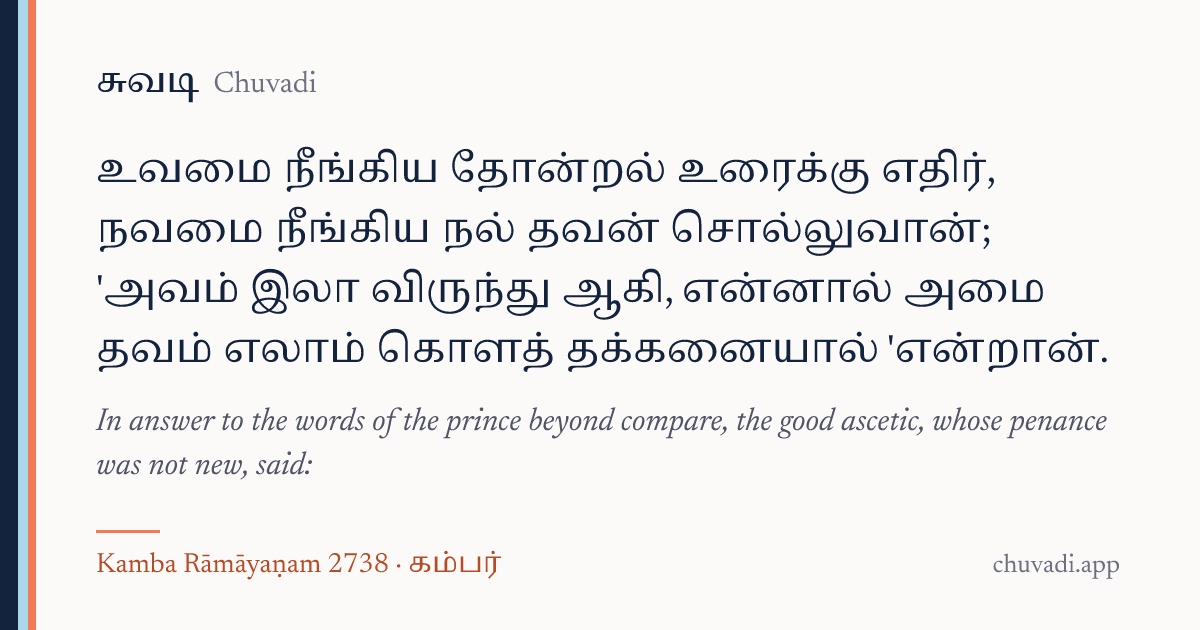
உவமை நீங்கிய தோன்றல் உரைக்கு - உவமை கூறுவதற்கு எதுவுமில்லாத தலைவனாம் இராமன் கூறிய மொழிக்கு; எதிர் நவமை நீங்கிய நல்தவன் சொல்லுவான் - மறு மொழியாகப் புதுமை நீங்கிய (பழைய) தவத்தை உடைய சுதீக்கண முனிவர் பின்வருமாறு கூறினார்; அவம் இலா விருந்து ஆகி - வீண் போகாத நல்ல விருந்தினன் ஆகி, என்னால் அமை தவம் எலாம் கொளத் தக்கனை என்றான் - என்னால் இதுவரை செய்தமைந்துள்ள என் தவப் பயன்கள் எல்லாவற்றையும் நீ ஏற்றுக் கொள்ளத்தக்கவன் ஆவாய் என்று கூறினான். ஆல் - அசை
தமது நற்செயல்களைப் பெரியோர் ஆண்டவனுக்குக் காணிக்கை ஆக்கும் சாத்துவிகத் தியாகம் இது எனப்படும். நவமை என்பது வட சொல்லடியாக வந்த புதுச் சொல்லாக்கம். விருந்தினர்க்குரிய தகுதியாவது அறிவு ஒழுக்கங்களில் உயர்ந்து நிற்றல் - கொளத் தக்கணை' எனப் பாடம் கொண்டு - காணிக்கை (தட்சணையாக ஏற்றுக் கொள்க என்பர்.
முதனூலாம் வான்மீகத்தில் சுதீக்கணர் தாம் தவம் செய்து சம்பாதித்த இந்த உலகில் இராமன் சீதையோடும் இலக்குவனோடும் இன்பமாக இருக்குமாறு கூறுவார். இராமனோ தான் சுயமாகவே உலகங்களைச் சம்பாதித்துக் கொள்வதாகக் கூறித் தாங்கள் வசித்தற்குரிய இடத்தை மட்டும் ஏற்பாடு செய்யுமாறு வேண்டுகிறான். கம்பரோ அகத்தியர் ஆச்சிரமத்திற்குச் செல்லும் வழியில் சுதீக்கணனைச் சந்தித்ததாகக் கொண்டு வரலாற்றைக் கூறுகிறார்.
ஆங்கிலம் · English translationAI
Translation
- In answer to the words of the prince beyond compare,
- the good ascetic, whose penance was not new, said:
- 'Being a guest who is never received in vain, all the penance
- I have built up, you are worthy to take,' he said.
What the poem says
Cutīkkaṇaṉ, whose austerities are of long standing, replies that Irāmaṉ is a guest whose welcome is never wasted, and offers him the entire merit of his penance.
The commentary calls this the selfless offering of one's good deeds to God. One reading takes the last words as 'accept it as a gift-offering'. In the Sanskrit telling the sage offers Irāmaṉ the worlds he has earned and Irāmaṉ declines, saying he will earn his own; Kampaṉ instead places the meeting on the road to Akattiyaṉ.