



கம்பராமாயணம் 2739 · ஆரணிய 3.32
பாடல் · The poem
Tap a word to see its gloss in the commentary and where else it occurs.
பொருள் · Meaning in Tamil
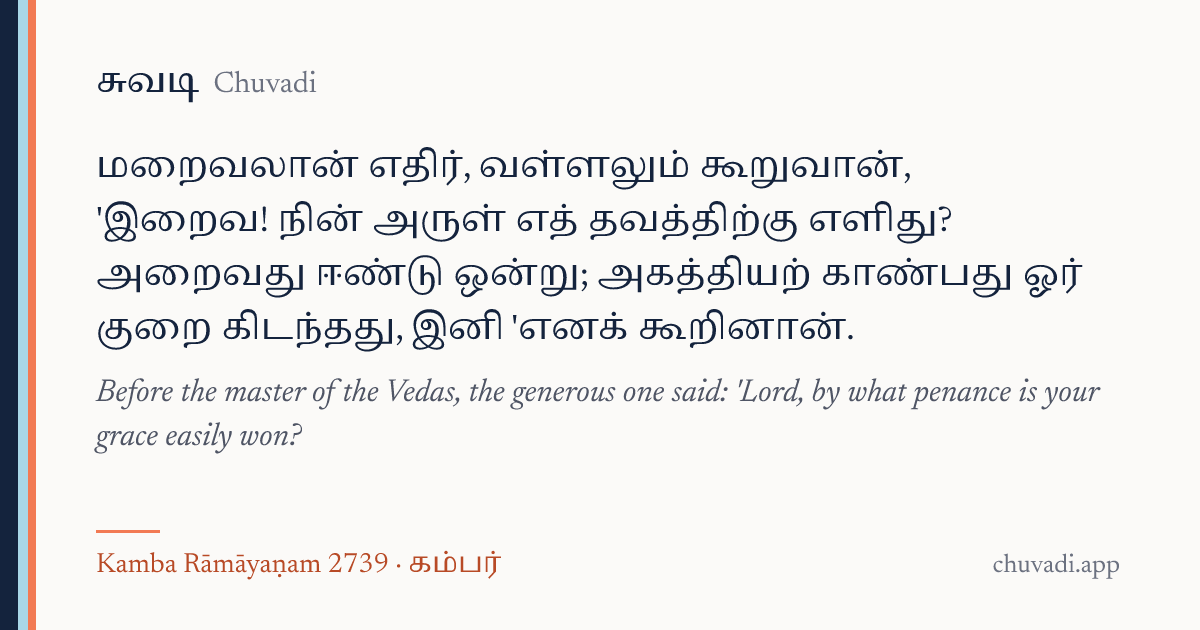
வள்ளலும் மறைவலான் எதிர் கூறுவான் - இராமனும் வேதங்களில் வல்லவராம் சுதீக்கணர் முன் பின்வருமாறு சொல்வான்; இறைவ நின் அருள் எத்தவத்திற்கு எளிது - தலைவரே! உன் கருணை எத்தகைய தவத்தினால் பெறக்கூடிய எளிமை உடையது?; அறைவது ஈண்டு ஒன்று - நான் தெரிவிப்பது இங்கு ஒன்றுள்ளது (யாதெனில்); இனி அகத்தியற் காண்பது ஓர் குறைகிடந்தது எனக் கூறினான் - இப்பொழுது அகத்திய முனிவரைச் சென்று தரிசிப்பது என்ற ஒரு மனக்குறை உள்ளது என்று சொன்னான்.
'உம் அருளே எத் தவத்தாலும் அடைதற்கு எளிதன்று. அதனை உம்மால் நான் எளிதில் அடைந்தேன்' என்று கூறினான் இராமன். வான்மீகத்தில் இராமன் 'என் முயற்சியாலேயே தவப்பயனைப் பெற விரும்புகிறேன் என்ற கருத்தைக் கொண்டே 'நின் தவம் எத்தவத்திற்கு எளிது' எனக் கூறியதாகவும் கொள்வர். குறை - இன்றியமையாதது. நிறைவுறாதது.
ஆங்கிலம் · English translationAI
Translation
- Before the master of the Vedas, the generous one said:
- 'Lord, by what penance is your grace easily won?
- There is one thing to tell you here: to see Akattiyaṉ
- is a need that remains for me now,' he said.
What the poem says
Irāmaṉ gently declines the gift of the sage's merit. Grace like Cutīkkaṇaṉ's, he says, is not easily won by any penance, and he already has it. What he still lacks is a meeting with Akattiyaṉ.
The commentary links this to the Sanskrit version, where Irāmaṉ says he wishes to earn the fruit of penance by his own effort.