



கம்பராமாயணம் 2740 · ஆரணிய 3.33
பாடல் · The poem
Tap a word to see its gloss in the commentary and where else it occurs.
பாட வேறுபாடு · Project Madurai reads
பொருள் · Meaning in Tamil
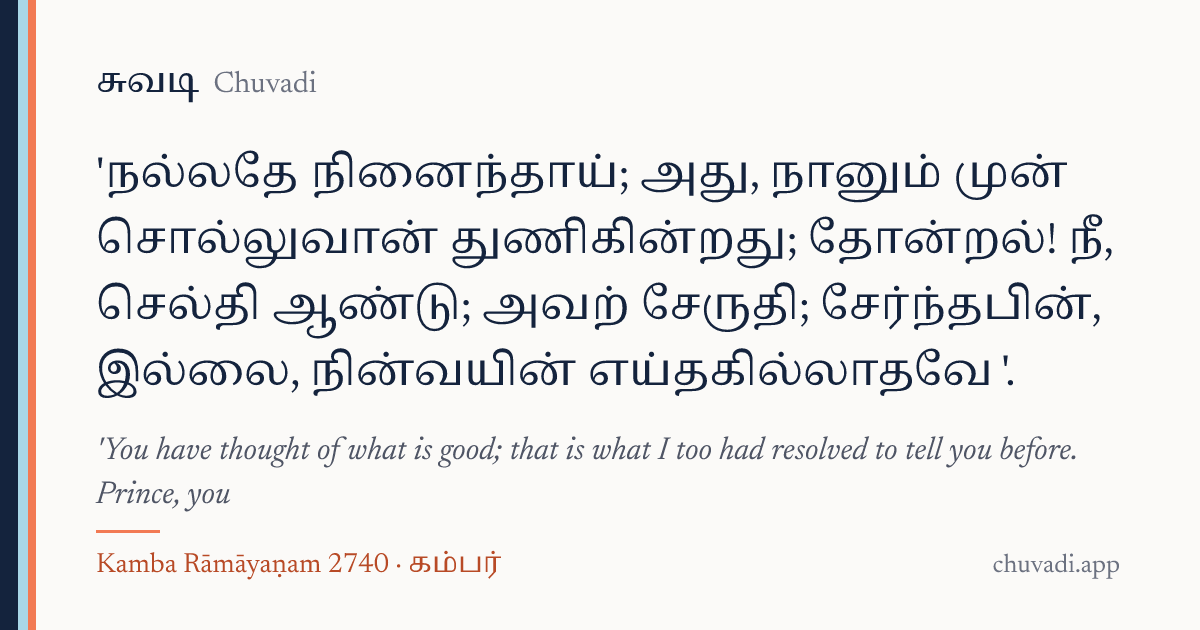
தோன்றல் நீ நல்லதே நினைந்தாய் - சிறந்தவனே! நீ நல்ல செயலையே எண்ணினாய்; அது நானும் முன் சொல்லுவான் துணிகின்றது - அதனையே நான் கூட முன்பே உனக்குச் சொல்லும்படி நிச்சயித்தது; ஆண்டு செல்தி - அவ்வகத்தியர் ஆச்சிரமத்திற்குப் போவாயாக, அவற் சேருதி - அம்முனிவனைச் சேர்வாயாக,; சேர்ந்தபின் இல்லை நின்வயின் எய்தகில்லாதவே - அம்முனிவனை அடைந்த பின்னர் உன்னிடத்தில் அடையாத பேறுகள் ஒன்றுமில்லை.
நல்லதே நினைத்தாய் என்றது அகத்தியர் அருளும் படைக்கலன்களைப் பெறுவதையும் அவற்றால் இராவணனை அழிக்கப் போவதையும் சுதீக்கணர் ஞானக் கண்ணால் அறிந்து கூறியது. இதன் விளக்கமாக அடுத்த பாடலில் (2664) 'சேருதல் செவ்வியோர் நன்று தேவர்க்கும், யாவர்க்கும் நன்று' என்ற அடிகள் உள்ளன.
துணிகின்றது என்பது கால வழுவமைதி. செல்தி என்ற வினைமுற்றை வினையெச்சப் பொருளில் கொண்டு, சென்று சேருதி எனப் பொருள்கொள்வர்.
ஆங்கிலம் · English translationAI
Translation
- 'You have thought of what is good; that is what I too
- had resolved to tell you before. Prince, you
- go there; join him; once you have joined him,
- there is nothing that will not come to you.'
What the poem says
Cutīkkaṇaṉ approves Irāmaṉ's wish: he had meant to suggest the very same thing. Once Irāmaṉ reaches Akattiyaṉ, he says, there will be no blessing left beyond his reach.
The commentary explains that the sage foresees, with the eye of wisdom, that Akattiyaṉ will give Irāmaṉ divine weapons, and that with them Irāvaṇaṉ will be destroyed.