



கம்பராமாயணம் 274 · பால 5.106
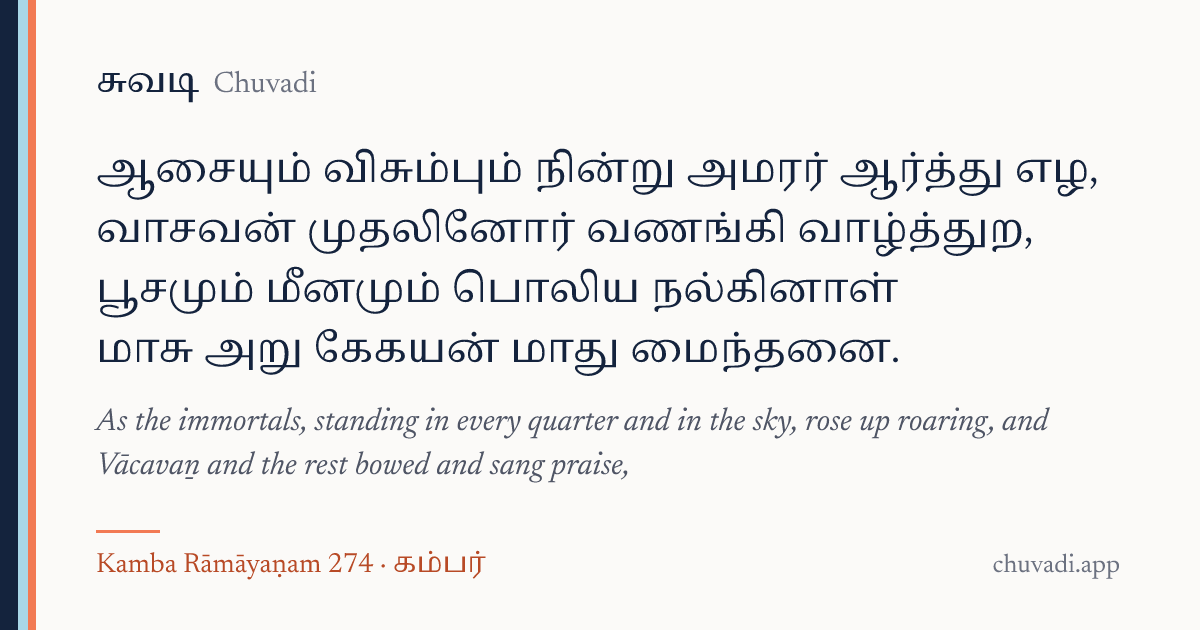
பாடல் · The poem
Tap a word to see its gloss in the commentary and where else it occurs.
பொருள் · Meaning in Tamil
ஆசையும் விசும்பும் நின்று - எல்லாத்திசைகளிலும் வானிலும் நின்று; அமரர் ஆர்த்து எழ - தேவர்கள் ஆரவாரம் செய்து எழுந்திருக்கவும்; வாசவன் முதலினோர் - இந்திரன் முதலிய தேவர்கள் எல்லோரும்; வணங்கி வாழ்த்துஉற - வணங்கி, வாழ்த்தித் துதிக்கவும்; மாசு அறு கேகயன் மாது - குற்றமற்ற கேகய மன்னன் மகளான கைகேயி; பூசமும் மீனமும் பொலிய மைந்தனை நல்கினாள் - பூச நட்சத்திரமும், மீன ராசியும் பொலிந்து விளங்க, ஒரு மகனைப் பெற்றாள்.
ஆசை: திசை. விசும்பு: வானம். வாசவன்: தேவேந்திரன். வசுக்களுக்குத் தலைவன் என்பதால் வாசவன் எனப் பெயர் பெற்றான். தேவர்கள் திசைகளிலும் நின்று ஆர்த்து எழவும், இந்திரன் முதலான தேவர்களெல்லாம் வணங்கி வாழ்த்தவும், பூசமும், மீனமும் பொலிந்து தோன்றவும் கைகேயி மைந்தனைப் பெற்றாள் என்பது கருத்து. புனர்பூசத்துக்கு அடுத்த நட்சத்திரமான பூசம் பரதன் பிறந்த நட்சத்திரமாகும். பரதன் இலக்கினம் மீனம். தமக்குக் கிடைத்த பேற்றினை எண்ணிப் பூசமும், மீனமும் பொலிந்தன என்பது குறிப்பு.
ஆங்கிலம் · English translationAI
Translation
- As the immortals, standing in every quarter and in the sky, rose up roaring,
- and Vācavaṉ and the rest bowed and sang praise,
- with Pūcam and Pisces shining bright, there bore
- a son the flawless daughter of the Kēkaya king.
What the poem says
Kaikēyi gives birth to Paratan, under the star Pūcam (Puṣya), next after Irāmaṉ's Puṉarpūcam, with Pisces in the ascendant. Intiraṉ, here called Vācavaṉ, 'lord of the Vasus', leads the gods in praise.
The star and the sign 'shine' as if proud of their good fortune.