



கம்பராமாயணம் 2757 · ஆரணிய 3.50
பாடல் · The poem
Tap a word to see its gloss in the commentary and where else it occurs.
பொருள் · Meaning in Tamil
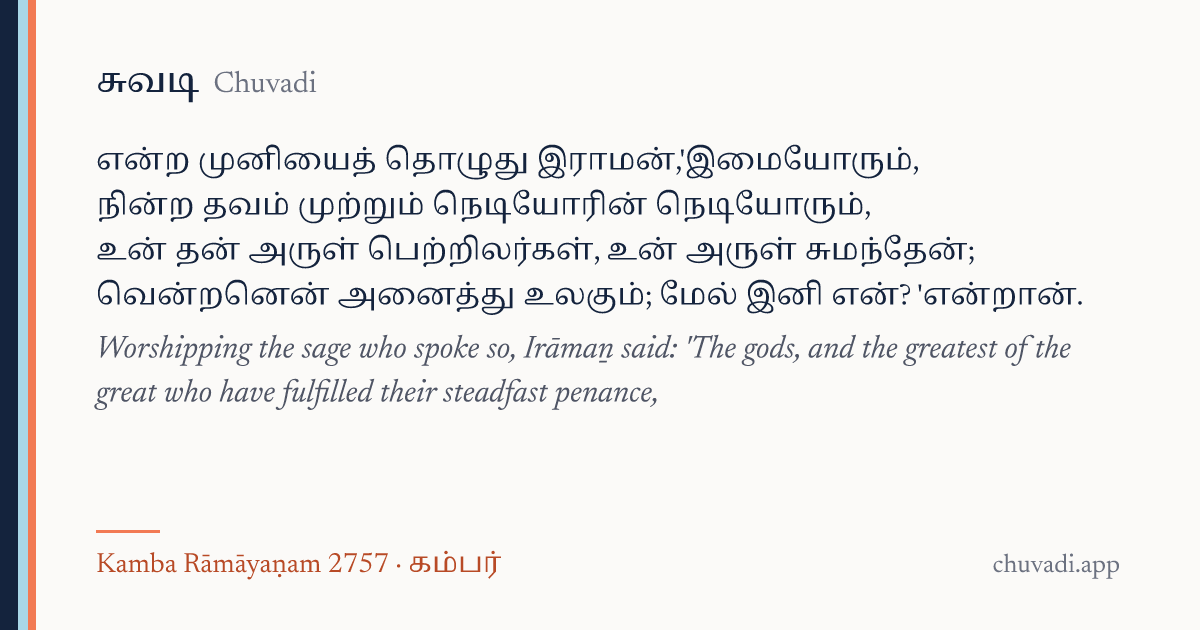
என்ற முனியை இராமன் தொழுது - என்று கூறிய அகத்திய முனிவரை இராமன் வணங்கி; இமையோரும் நின்ற தவம் முற்றும் நெடியோரின் நெடியோரும் - தேவர்களும், தாம் செய்ய வேண்டிய தவத்தை முழுதும் செய்து முடித்த மேலோர் யாவர்க்கும் மேலான மா முனிவர்களும்; உன்தன் அருள் பெற்றிலர்கள் - உன்னுடைய கருணையைப் பெற்றார் இல்லை; உன் அருள் சுமந்தேன் - உன் கருணையைப் பெற்றேன்; அனைத்து உலகும் வென்றனென் - (ஆகையால் எல்லா உலகங்களையும் வென்றவனானேன்; மேல் இனி என் என்றான் - இதற்கு மேலாக இனி எனக்குக் கிடைக்கும் நன்மை என்ன உள்ளது என்று கூறினான்.
உன்னருள் சுமந்தேன் என்றது என் தகுதிக்கு மேலாக நீ எனக்கு அருள் புரிந்தாய் என்பதாம். அகத்தியர் தனக்குப் பின்னர்த் தெய்வப் படைக் கலன்களை அருளுவதை முன்னரே எண்ணிக் கூறியதுமாம். முன்னர் அகத்தியர் இராமனை 'அருட்கு அரச!' (2679) என்று கூறிய நிலையில் தான் அகத்தியரின் 'அருள் சுமந்தேன் எனக் கூறிய இராமன் நிலை எண்ணிப் பார்த்தற்குரியது. எல்லா உலகையும் அகத்தியர் அருளால் வெல்லும் நம்பிக்கை இராமனிடம் புலப்படுகிறது. இதனால் அகத்தியரை இராமன் மிக உயர்வாக எண்ணிய எண்ணம் வெளிப்படுகிறது.
ஆங்கிலம் · English translationAI
Translation
- Worshipping the sage who spoke so, Irāmaṉ said: 'The gods,
- and the greatest of the great who have fulfilled their steadfast penance,
- have not won your grace; I carry your grace;
- I have conquered all the worlds; what more is there now?'
What the poem says
Irāmaṉ returns the compliment. Neither the gods nor the most accomplished ascetics have received such favour from Akattiyaṉ as he has; carrying that grace, he feels he has already won every world and has nothing left to wish for.
'I carry your grace' implies a kindness beyond his deserving. It also looks ahead to the divine weapons the sage is about to give him, through which he will indeed conquer.