



கம்பராமாயணம் 2767 · ஆரணிய 4.1
பாடல் · The poem
Tap a word to see its gloss in the commentary and where else it occurs.
பொருள் · Meaning in Tamil
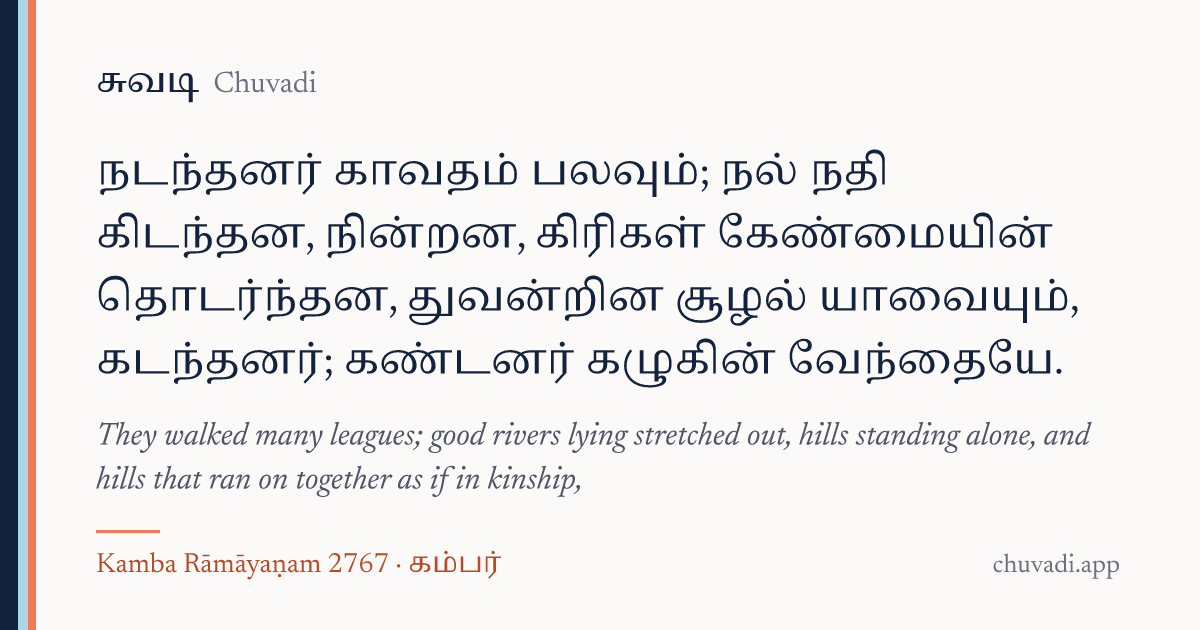
(இராமன் முதலிய மூவரும்) காவதம் பலவும் நடந்தனர் - பல காத வழியும் நடந்தவர்களாய், கிடந்தன நல் நதி - இடையே ஓடும் சிறந்த ஆறுகளையும்; நின்றன கேண்மையின் தொடர்ந்தன கிரிகள் - ஆங்காங்கே நிலைபெற்றனவாயும் உறவுள்ளன போலத் தொடர்ச்சியாகவுள்ளனவுமான மலைகளும், துவன்றின - நெருங்கியிருந்தன; சூழல் யாவையும் கடந்தனர் - இத்தகைய மலைகள் சூழ்ந்திருந்த காடுகளையும் தாண்டிச் சென்றனர்; கழுகின் வேந்தைக் கண்டனர் - சடாயு எனும் கழுகரசனைப் பார்த்தனர்; ஏ - அசை.
காவதம் - காதம். கிடந்தன - படுத்திருந்தன எனக் கூறும் வகையில் நீண்டு விளங்கின என்றும் உரைப்பர். நின்றன என்பது தனித் தனியாய் இருந்த மலைகள். தொடர்ந்தன என்பது மலைத் தொடர்ச்சிகள். நல்நதி - புண்ணிய ஆறுகள் என்றும் ஆம்.
ஆங்கிலம் · English translationAI
Translation
- They walked many leagues; good rivers lying stretched out,
- hills standing alone, and hills that ran on together as if in kinship,
- crowding close: all the country around
- they crossed; and they saw the king of the vultures.
What the poem says
A new canto begins, telling how Irāmaṉ, Ilakkuvaṉ and Cītai meet Caṭāyu, king of the vultures, on the way from Akattiyaṉ's hermitage to Pañcavaṭi. They walk many leagues past rivers and through country crowded with hills, some standing alone and some in ranges linked like kinsfolk, until they come upon the great bird.
In the Vaiṣṇava tradition Caṭāyu is honoured as an elder, since he was a friend of Tacarataṉ and regarded as his elder brother.