



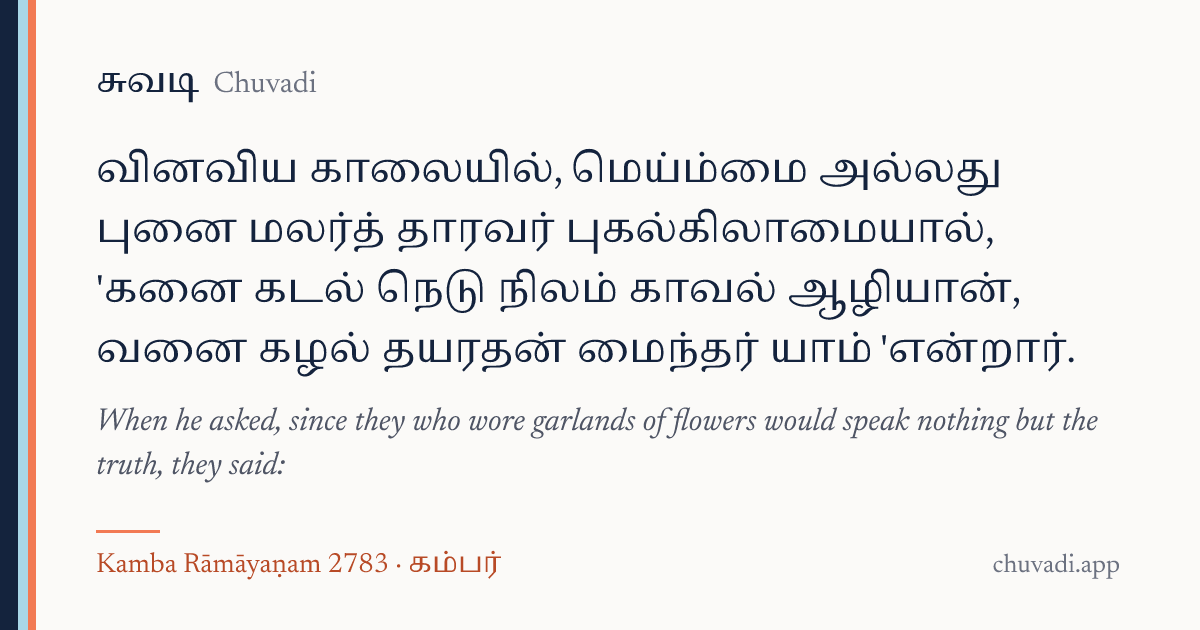
கம்பராமாயணம் 2783 · ஆரணிய 4.17
பாடல் · The poem
Tap a word to see its gloss in the commentary and where else it occurs.
பொருள் · Meaning in Tamil
வினவிய காலையில் - கேட்ட பொழுது; மெய்ம்மை அல்லது புகல்கிலாமையால் புனை மலர்த் தாரவர் - உண்மை அல்லாமல் வேறொன்றைப் பேசுவதில்லை ஆதலால் அழகிய பூமாலை அணிந்த இராமலக்குவர்; கனைகடல் நெடுநிலம் காவல் ஆழியான் - ஒலிக்கும் கடலால் சூழ்ந்த பெரிய உலகம் யாவையும் காக்கும் ஆணைச் சக்கரமுடையவனும்; வனை கழல் தயரதன் மைந்தர்யாம் என்றார் - தரித்த வீரக்கழலுடையவனுமாகிய தயரதனுடைய மக்கள் நாங்கள்' எனக் கூறினர்.
முன்னம் அறியாதவரிடம் உண்மையைக் கூறக் கூடாது என்பது அரசியல் நீதி. எனினும் இராமலக்குவர் எத்தகையோரிடமும் அஞ்சாது உண்மை கூறும் தனிப் பண்புடையவர்களாவர். புனை - அழகு. தயரதன் - தசரதன் என்பதன் திரிபு. பத்துத் திக்குகளிலும் தன் தேரைச் செலுத்தி வெற்றி கண்டவன்; அரக்கர் தேர் பத்தை வென்றவன்; கருடனைத் தன் தேர்க் கொடியாகக் கொண்டவன் எனவும் பல காரணம் கூறுவர்.
புகல்கிலாமை என்பதிலுள்ள கில் என்பது உறுதிப் பொருளை உணர்த்தும் இடைநிலை.
ஆங்கிலம் · English translationAI
Translation
- When he asked, since they who wore garlands of flowers
- would speak nothing but the truth, they said:
- 'Of him whose wheel of rule guards the wide earth girt by the roaring sea,
- Tacarataṉ of the bound anklets, we are the sons.'
What the poem says
Asked who they are, the brothers answer at once and truthfully that they are the sons of King Tacarataṉ, whose rule guards the whole sea-girt earth.
The commentary points out that statecraft advises against revealing oneself to strangers, but Irāmaṉ and Ilakkuvaṉ never speak anything but the truth, whatever the risk. It also gives traditional explanations of the name Tacarataṉ, 'he of the ten chariots'.