



கம்பராமாயணம் 2915 · ஆரணிய 5.101
பாடல் · The poem
Tap a word to see its gloss in the commentary and where else it occurs.
பொருள் · Meaning in Tamil
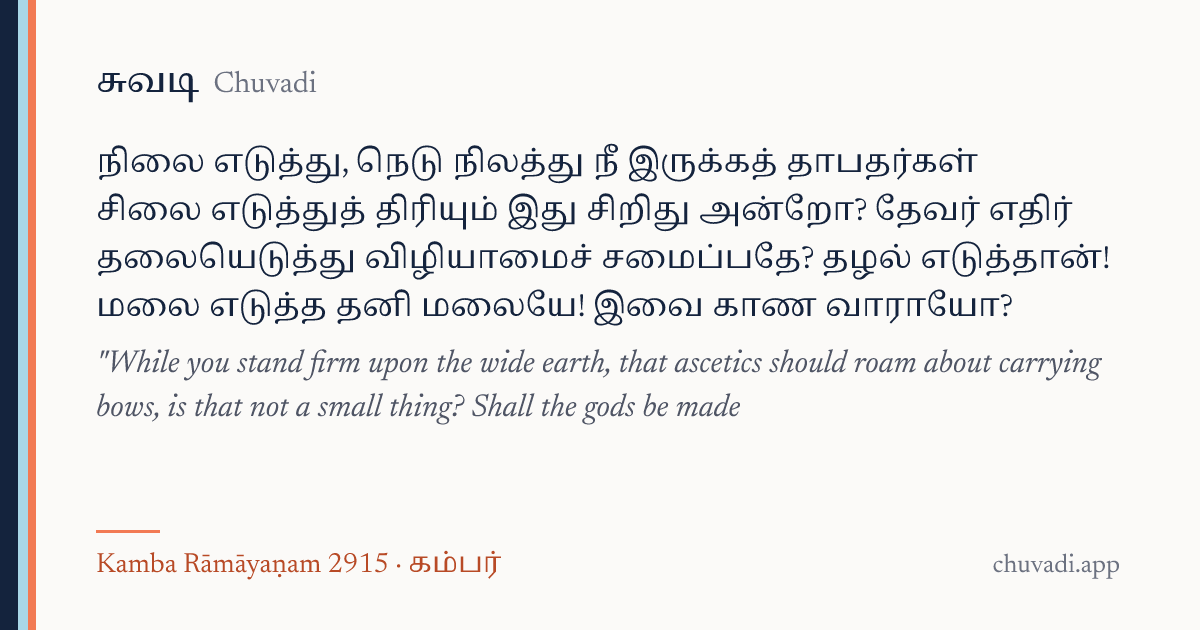
தழல் எடுத்தான் மலை எடுத்த தனி மலையே - தீயைக் கையில் ஏந்திய சிவனின் கயிலை மலையைக் கையால் எடுத்த ஒப்பற்ற மலை போன்ற அண்ணாவே! நீ நெடுநிலத்து நிலை எடுத்து இருக்க - நீ இந்தப் பெரிய உலகில் நிலை பெற்ற புகழால் விளங்கி நிற்கும் போது; தாபதர்கள் சிலை எடுத்துத் திரியும் இது சிறிது அன்றோ - தவம் புரிவோர் வில்லேந்தி நடமாடுவது உன் புகழுக்கு இழுக்கல்லவா?; (அன்றியும்) தேவர் எதிர் தலை எடுத்து விழியாமைச் சமைப்பதே - தேவர்கள் முன்னே தலை நிமிர்ந்து பார்க்காமல் வெட்கி நிற்பதும் ஆகக்கூடியதோ?; இவை காண வாராயோ - (எனக்கு நேர்ந்த இச் சிறுமைகளை) நீ பார்க்க வரமாட்டாயா?
தாபதர் - இராமலக்குவர். தவவேடம் பூண்டு வனத்தில் இருந்த நிலையை இது சுட்டும். 'இவை காண' என்பது தன் உறுப்புகள் அறுப்புண்டு துன்புறும் நிலையைக் காண எனவும் பொருள்படும். சமைத்தல் - அமைத்தல்.
சிவன் கையில் அனலேந்தியது - தாருக வன முனிவர்கள் சிவனை அழிக்க ஏவிய தீயினைச் சிவன் தன் கையில் ஏந்திய செயலைக் குறிக்கும். மலை இராவணனுக்கு உவம ஆகுபெயர்.
ஆங்கிலம் · English translationAI
Translation
- "While you stand firm upon the wide earth, that ascetics
- should roam about carrying bows, is that not a small thing? Shall the gods be made
- to lift their heads and stare me in the face? You who lifted the mountain of him who holds fire,
- peerless mountain yourself! Will you not come to see this?"
What the poem says
Cūrppaṇakai's first cry is to Irāvaṇaṉ, the peerless mountain who lifted Kailāsa, the mountain of Śiva, who holds fire in his hand. She asks whether it does not shame him that mere ascetics roam his world carrying bows. She says she cannot face the gods now, and begs him to come and see what has been done to her.
The ascetics are Irāmaṉ and Ilakkuvaṉ, dressed as hermits in the forest.